
PSG's European triumph turns violent
PSG's second straight Champions League title sparked nationwide riots in France — 780 arrests, one death, and a far-right political offensive that exposed a fracture far deeper than soccer.

At a Glance
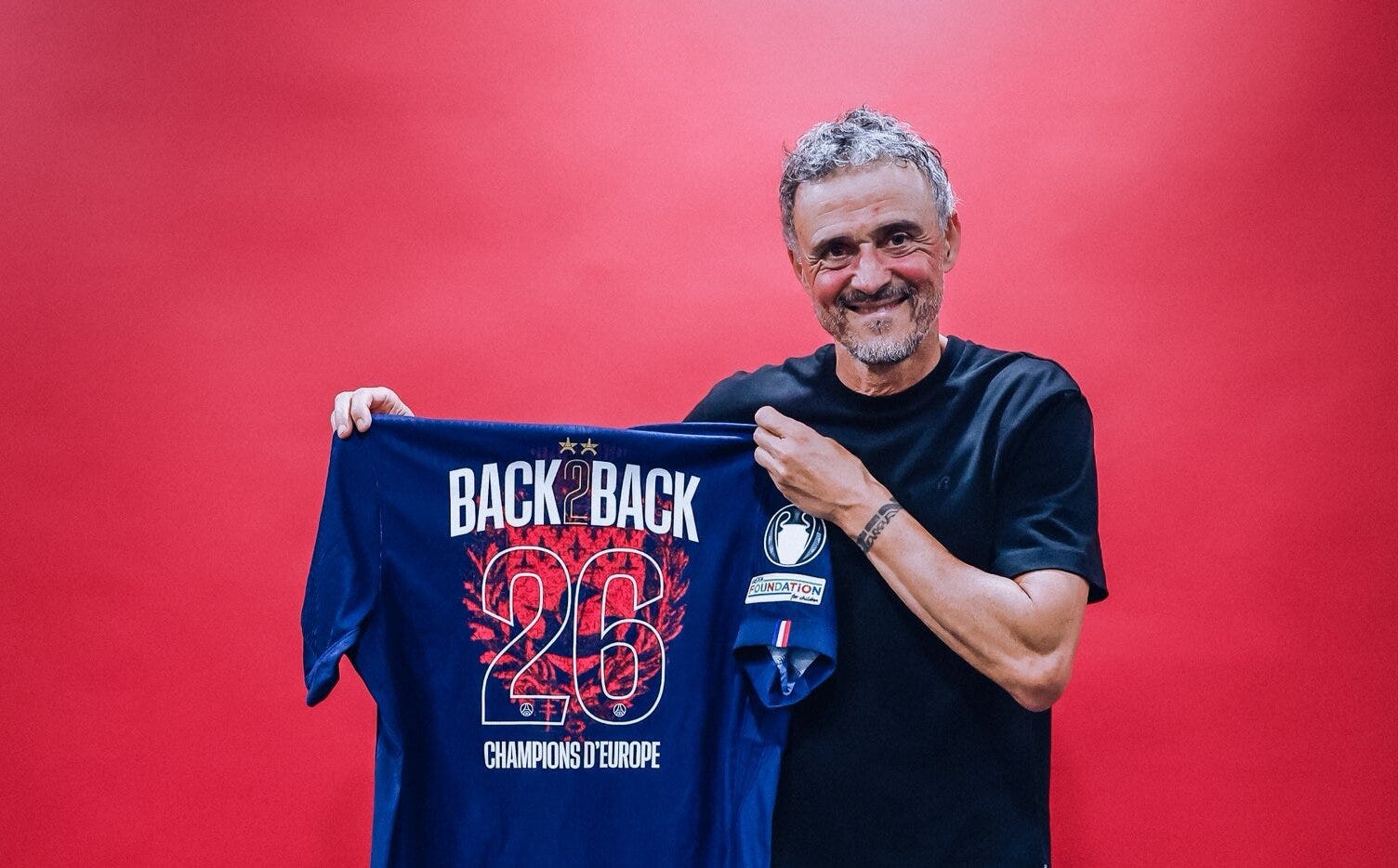
PSG defeated Arsenal on penalties (1-1 AET, 4-3) in Budapest on May 30, 2026, claiming its second straight Champions League title.
The night that followed descended into violence across 71 French cities: 780 arrests, 219 civilians injured including 8 seriously, and one death on the Paris ring road.
France’s far right — joined by international figures including Elon Musk and Italy’s Matteo Salvini — immediately exploited the unrest to advance an identitarian political agenda, igniting a controversy that transcended the security balance sheet.
This image is used for illustrative purposes only.
The title and its aftermath
The final in Budapest lived up to its billing. Facing Arsenal — the North London club that has dominated English soccer in recent years without yet claiming a European title — PSG ground out a draw and won on penalties (1-1 after extra time, 4-3 in the shootout), in what reporters on the ground described as a grueling, suffocating contest. It was the club’s second consecutive Champions League trophy, following last year’s 2025 victory against Inter Milan in Munich.
In Paris, celebrations erupted the moment the final whistle blew. Hundreds of thousands poured into the streets, onto the Champs-Élysées and around the Parc des Princes stadium. Then the violence started.
A night of riots in 71 cities
The unrest hit several flashpoints simultaneously. Near the Porte de Saint-Cloud — one of the gateways into central Paris from the south — groups clashed with police, damaging six vehicles, a bakery, and a restaurant. Fireworks mortars were fired at officers, who responded with tear gas. In the 8th arrondissement (district), a police precinct was attacked before officers dispersed the crowd. In the 10th arrondissement, a car rammed the terrace of a restaurant after its occupants had fired mortars at police — two people were injured, one of them seriously. In Rennes, western France, looting was reported.
By Sunday morning, the Interior Ministry’s tally was stark. Laurent Nuñez, France’s Interior Minister, announced 780 arrests nationwide — a 32% increase over the same night in 2025, when 592 people had been detained after PSG’s first title. Of those 780, 457 were taken into police custody for questioning. 57 police officers and gendarmes were injured, one of them seriously in the city of Agen in southwestern France. On the civilian side, 219 people were injured in clashes, 8 of them seriously.
One man in his twenties died overnight after his motocross bike struck concrete barriers installed on a ring road exit ramp in the Paris area during the celebrations. The Paris Prosecutor’s Office opened an investigation; the precise connection between his death and the riots has not been formally established.
Violence was not limited to France. In Budapest itself, clashes broke out among supporters after the match, with vandalism reported throughout the host city.
Nuñez called the scenes “absolutely unacceptable” and confirmed that a standard security deployment would be in place for Sunday’s victory parade at the Champ-de-Mars park — where up to 100,000 people were expected to welcome the players before a reception at the Élysée Palace hosted by President Emmanuel Macron.
The political exploit: a story of its own
The night of May 30 triggered not only a security tally but a rhetorical race — one that France’s far right entered with remarkable speed.
Marine Le Pen, Rassemblement National’s longtime leader and three-time French presidential candidate, wrote on X that only in France does a soccer club’s victory spark riots. Bruno Retailleau, a declared candidate in the 2027 presidential race, seized the moment. Marion Maréchal, a leader within the ID Libertés party and a fixture of French nationalist politics, described the rioters as “hordes from the suburbs” and called for Interior Minister Nuñez’s resignation. Éric Zemmour, leader of the Reconquête party, proposed “expelling those who turn every gathering into a battlefield” — without specifying where, given that the overwhelming majority of those arrested are French nationals.
The backlash reached beyond France. Elon Musk amplified footage of the incidents. Matteo Salvini, Italy’s deputy prime minister and head of the far-right Lega party, focused exclusively on the riots rather than the sporting achievement. Geert Wilders, the leader of the Netherlands’ far-right Party for Freedom (PVV), posted what critics called an overtly racist statement linking the Paris suburbs to Africa, drawing widespread condemnation.
This sequence deserves to be read for what it may be: a coordinated — or at the very least simultaneous — attempt to use post-match violence to delegitimize what PSG’s victory can symbolically represent: a club owned by a Qatari state-backed investment vehicle, with a squad drawn heavily from France’s multiethnic suburbs and the Arab world. The conflation of “rioters” and “PSG supporters” is rhetorically convenient, but insufficiently supported by available evidence to be stated as fact.
The mechanics of a recurring fracture
This is not France’s first time through this sequence. When PSG won its first European title in 2025, 592 arrests were already made. After France’s 2022 World Cup victory, similar scenes played out. Each time, the same debate resurfaces: how do you separate legitimate mass celebration from the minority that turns it into violence?
The security response — thousands of officers mobilized — was not enough. This suggests that the relevant variable is not solely police numbers, but something more structural: to what extent do French cities have the tools to contain mass popular celebrations without them devolving into riots? No available source answers that question definitively, but it is being posed with increasing urgency.
At a European level, the question also raises a governance issue for UEFA, the Union of European Football Associations, which oversees the Champions League and selects host cities. Its mandate currently extends only to security inside stadiums. Whether — and how — it could be asked to set standards for the nights that follow, in the streets of host and winning cities alike, remains an open question.
The Bottom Line
PSG won. France celebrated. And part of the country burned cars.
The real question is not how many nights like this France can absorb. It is whether the political actors who profit from those images have any interest in seeing them stop — or whether their strategy, on the contrary, depends on their continuation.
Sources: Euronews · CNews · France Info · AFP