
PSG's Champions League win leaves Paris with a deadly night
At least two people died in Paris on the night PSG claimed its second straight UEFA Champions League title — one in a road accident, others pulled from the Seine.

At a Glance
A 24-year-old motorcyclist was killed on Paris’s inner ring road near Porte Maillot after striking a concrete barrier placed by the city to block access to an exit ramp.
One man drowned in the Seine on the same night; a second man was found in the river the following morning — his death confirmed, circumstances still under investigation.
Judicial inquiries have been opened into each case; more than 700 people were arrested across France in the aftermath of the celebrations.
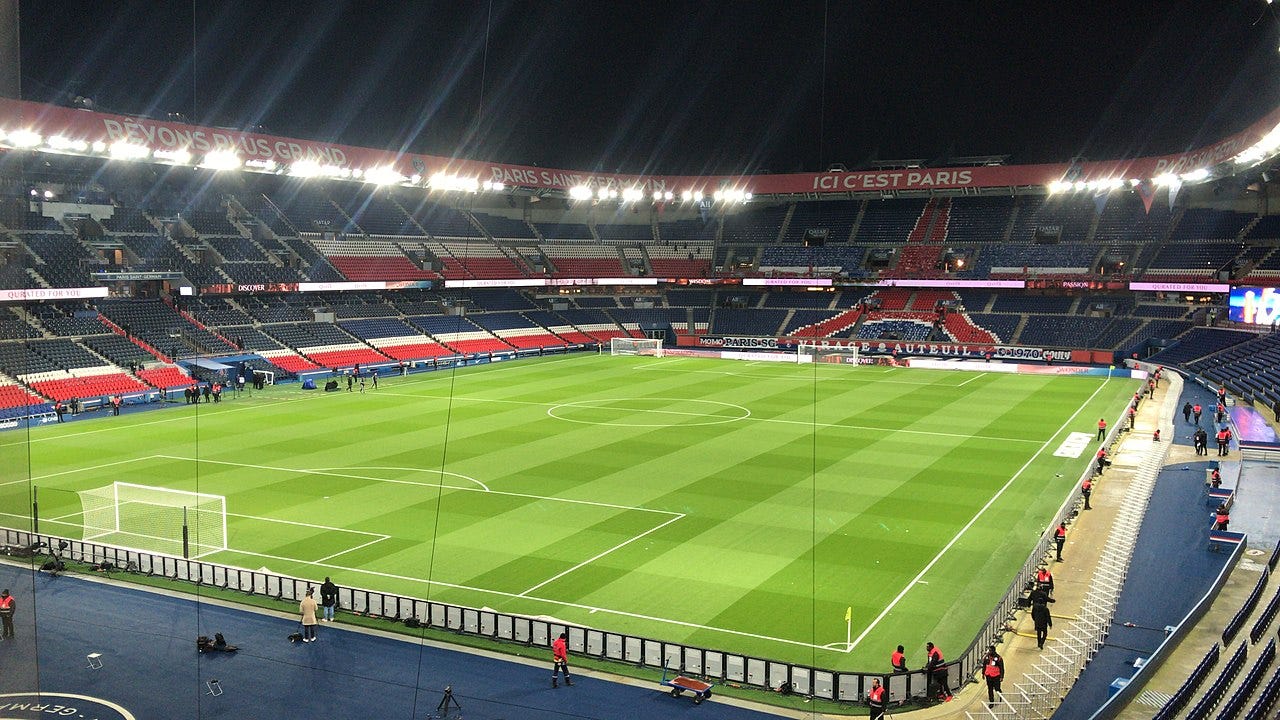
This image is used for illustrative purposes only.
A concrete barrier, two crashes, one death
In the early hours of the night of May 30 into May 31, two vehicles struck the same concrete barrier positioned under a bridge on the Boulevard Périphérique — Paris’s inner ring road — near the Porte Maillot exit. The barrier had been placed by the city to close off an exit ramp. The two collisions occurred approximately one hour apart.
The first involved a scooter carrying two riders. Both survived, but with multiple fractures. The second crash was fatal: a motorcyclist born in 2002 struck the same obstacle and died at 2:20 a.m. The Paris prosecutor’s office announced Monday the opening of a judicial inquiry to determine the cause of death. The adequacy of the barrier’s signage and its visibility during nighttime celebration conditions are among the questions the investigation will need to address.
Two men in the Seine
The river added its own grim dimension to the night.
Around 9 p.m. on May 30, in the 5th arrondissement — one of central Paris’s historic Left Bank neighborhoods — police received a call about a man who had fallen into the Seine. Witnesses reported he had jumped in voluntarily before going under. A river rescue unit from the Paris Fire Brigade pulled him out; emergency medical services transferred him to hospital in critical condition. His death was confirmed in the days that followed. A judicial inquiry has been opened.
On the morning of May 31, a second man was found in the Seine near the Pont Louis-Philippe bridge, in the 4th arrondissement — steps from the Île Saint-Louis and Notre-Dame Cathedral. He had reportedly fallen in near the Pont-au-Change during the celebrations. Emergency responders were unable to revive him. Whether his death brings the confirmed toll to three remains subject to ongoing judicial proceedings.
Analysis — The hidden cost of unmanaged celebration
When cities open up to the crowd
Major sporting victories routinely transform European capitals into scenes of spontaneous mass celebration — and with them come hazards that organized crowd management is designed to prevent. The scale of what unfolded in Paris on the night of May 30 was striking even by those standards: more than 700 people arrested across France, dozens of officers injured, fires set, acts of vandalism reported, and at least one teenager stabbed in separate violence on the margins of the festivities.
Against that backdrop, the deaths on the ring road and in the Seine were not isolated accidents. They were the extreme end of a night in which large numbers of people moved through the city in conditions — darkness, density, euphoria, likely intoxication — that multiply risk in ways no single authority fully controls.
The Porte Maillot accident illustrates one specific tension: the concrete barrier placed there was legally authorized, and municipalities routinely close off exits to redirect traffic during major events. But the question the inquiry will have to answer is whether the signage was adequate for nighttime, high-density conditions — in short, whether the obstacle was visible enough to those who had no reason to expect it.
Two deaths in the Seine: what the investigations will need to untangle
The circumstances of the two Seine fatalities differ and cannot be treated as a single story. One man reportedly jumped voluntarily — a fact that raises questions about his state of mind that the judicial inquiry, not speculation, will need to answer. The second fell in near the Pont-au-Change, under circumstances that remain less documented.
What neither case establishes, at this stage, is a direct causal link to the match itself. People drown in the Seine during large Parisian gatherings for many reasons — intoxication, reckless celebration, or entirely unrelated distress. The ongoing inquiries exist precisely to make that distinction. Conflating the two cases, or anchoring them too firmly to the football result, would be premature.
PSG gave Paris a second European night of glory. The city now owes the families of those who did not come home a full accounting of what happened in its margins.
The bottom line
At least two deaths confirmed. A third still under judicial examination. More than 700 arrests. The question this night poses is not whether cities should celebrate — they should, and they will — but whether the infrastructure of celebration is ever truly ready for the scale of what erupts when a city wins.
Sources: France Info · AFP · Paris Prosecutor’s Office · Le Parisien · Ouest-France