
Power grids: five EU states push back against Brussels
Five EU states reject Brussels' centralized grid planning model. A standoff that could derail Europe's green transition and raise consumer energy bills.

At a Glance
Bulgaria, Finland, France, Poland, and Sweden are accusing the European Commission — the bloc’s executive arm — of overreaching into national energy policy with a one-size-fits-all planning model
The coalition is calling for a Europe built on coordinated regional systems, not a fully centralized energy union directed from Brussels
Their core concern: massive cross-border power lines built out of sync with national grid upgrades, leaving expensive infrastructure underused while consumers foot the bill through higher electricity prices
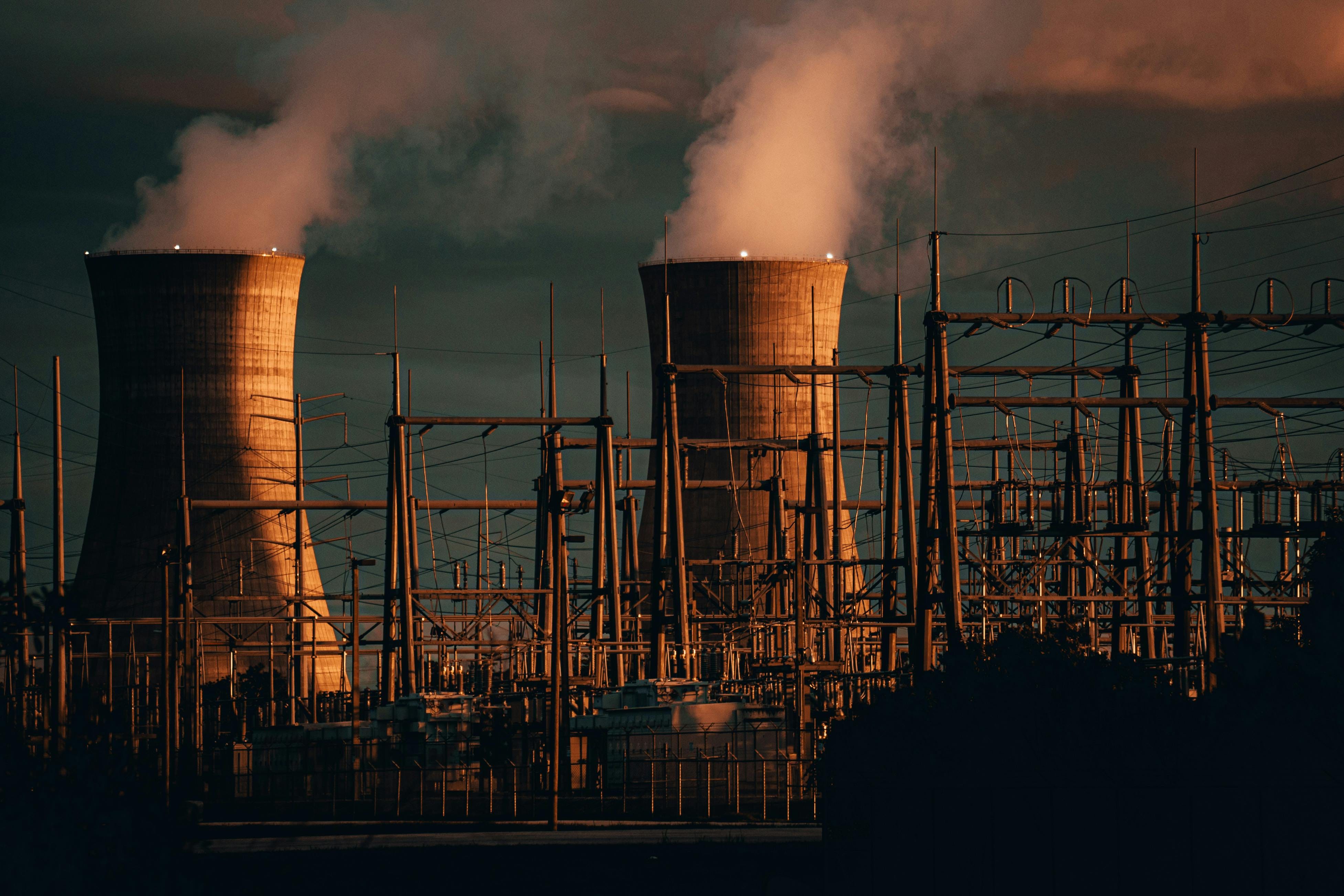
Five capitals say no to Brussels
In December 2025, the European Commission — the EU’s executive arm — launched an ambitious legislative proposal to overhaul the rules governing trans-European energy infrastructure. The centerpiece: a “central scenario,” a unified planning framework designed to guide long-term electricity grid investments across all 27 member states. The stated goal — accelerating integration and decarbonization — is beyond political dispute. The method is not.
Bulgaria, Finland, France, Poland, and Sweden have jointly signed an internal document pushing back hard against this approach. These five countries — spanning an energy landscape as varied as French nuclear power, Nordic hydroelectricity, and Polish coal — agree on one thing: the Commission is overstepping the bounds of national competence.
A single blueprint, a structural problem
The coalition’s central argument is methodological. A unified planning scenario, they contend, wrongly assumes there is only one path to achieving the EU’s energy and climate targets. In reality, national electricity systems are the product of decades of political choices, geographic constraints, and industrial histories that cannot be reduced to a standardized model.
The practical risk, as laid out in the document: cross-border interconnections could be planned without alignment with ongoing domestic grid upgrades, leaving costly infrastructure stranded — and underused — while consumers absorb the losses through their electricity bills.
The five signatories are proposing an alternative architecture: coordinated regional systems in which national transmission operators — France’s Réseau de Transport d’Électricité (RTE) and Sweden’s Svenska kraftnät, for instance — retain technical authority over planning. The Commission would be repositioned as a coordinator, not a director. Think of it as the difference between a federal agency setting binding national standards and one that convenes states around shared objectives while leaving implementation to them.
An old tension, sharpened by urgency
This jurisdictional conflict is not new — but the post-Ukraine energy shock has given it new intensity. Since Russia’s 2022 invasion, the EU has sharply accelerated its push for energy security, electrifying industry and integrating renewables at an unprecedented pace. That urgency gave the Commission political cover to expand its strategic oversight role — which, in turn, appears to have transformed a technical coordination question into a live sovereignty dispute.
It is plausible that the alignment of five governments as politically and energetically diverse as France and Poland — whose energy postures diverge sharply — signals something beyond a technical disagreement. This could indicate a structured political resistance to any further extension of Brussels’ decision-making perimeter over critical infrastructure.
A critical coalition, not a dissident one
The five countries are not walking away from European cooperation. They explicitly acknowledge the need for cross-border interconnections to achieve decarbonization and energy security. This is not a veto — it is a counter-proposal: deepen and extend existing regional planning frameworks rather than replace them with a top-down, Brussels-designed blueprint.
Within the European Parliament — the EU’s directly elected legislative body — the bill’s lead lawmaker, MEP Tsvetelina Penkova (Socialists and Democrats, Bulgaria), broadly supports a stronger EU-level planning architecture anchored in a central scenario. She is also pushing to preserve some national input and build in transparency safeguards. The tension, in other words, does not stop among member state governments — it runs through the institutions themselves.
Analysis — What this standoff actually reveals
The five-country pushback exposes a deep contradiction at the heart of Europe’s energy union project. The EU needs integrated planning to meet its climate targets — power grids don’t respect borders, and infrastructure investment operates on 20- to 30-year horizons. But member states continue to treat their electricity networks as a sovereign asset, on a par with their defense capabilities or tax systems.
What is at stake here is not merely a disagreement over planning methodology. It is a fundamental question about which level of government is the legitimate decision-maker for critical infrastructure investment. National grid operators hold operational knowledge that Brussels does not possess. The Commission holds a pan-European strategic vision that national operators, by design, will never produce on their own.
Beyond a certain threshold of centralization, member states choose to block rather than delegate — even when the goal they claim to share depends on exactly that delegation.
The Bottom Line
Will five member states be enough to redraw the institutional architecture of Europe’s energy transition — or will their united front simply force the Commission to adjust its method without abandoning its ambition? The answer, in the legislative negotiations ahead, will say a great deal about what the energy union is actually worth, and how wide the gap remains between its declared objectives and its decision-making reality.
Sources: Euronews