
Portugal shuts down: general strike paralyzes the country
Prime Minister Luís Montenegro's labor reform has triggered a second major general strike in six months — and ordinary Portuguese are paying the price this morning.

In a matter of hours, Portugal ground to a halt. Hospitals running nearly empty, schools shut on the day of a national exam, metro lines stopped, nearly 190 flights canceled: the general strike of June 3, 2026 is not a symbolic gesture. It is a political warning directed squarely at the head of government.
At a Glance
Strike participation rates in hospitals of the National Health Service (SNS) reached between 95% and 100% during the overnight shift, according to the CGTP-IN labor federation.
Nearly 190 flights were canceled across Lisbon, Porto, and Faro airports, according to early figures; metro systems in both major cities are largely shut down.
The strike directly targets the “Trabalho XXI” package, a labor code reform covering more than 100 changes that the PSD/CDS-PP coalition government advanced after nine to ten months of negotiations failed to produce a consensus with unions.
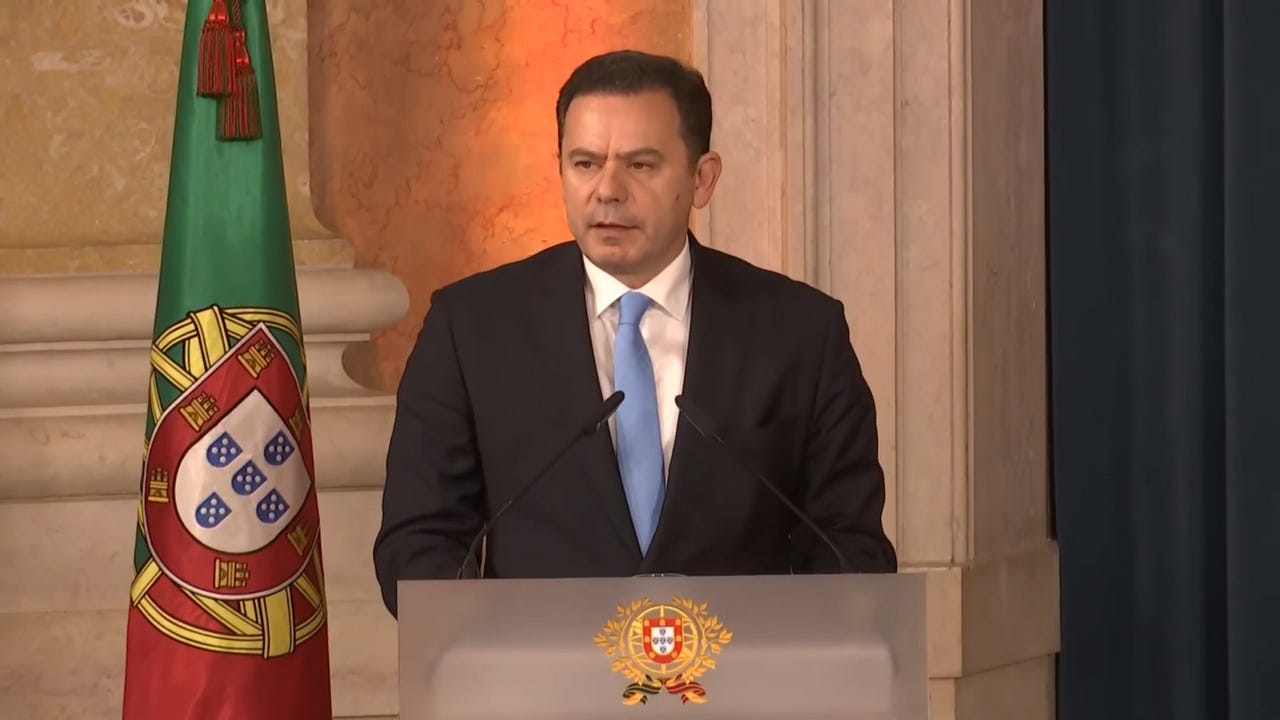
This image is used for illustrative purposes only.
A health system already stretched — now brought to its knees
Portugal’s SNS — its universal public health system, broadly comparable to Canada’s Medicare or the United Kingdom’s NHS — was already operating under chronic strain. Today’s near-total work stoppage has made that fragility impossible to ignore.
In Lisbon, São Francisco Xavier and São José hospitals reported full participation in the strike. Santa Maria Hospital, one of the largest in the country, reached 90%. In Porto, São João Hospital and the ULS Viseu Dão Lafões unit were fully paralyzed. In Coimbra, the Bissaya Barreto maternity ward and the university hospital complex came to a complete stop.
What makes this day particularly critical: for the first time, operators at SNS 24 — Portugal’s medical triage hotline that directs millions of patients to appropriate services — joined a general strike. Wait times could reach three hours on a line already buckling under demand.
Transport paralyzed, exams caught in the crossfire
The disruption extends well beyond hospitals. In education, the strike hit at the worst possible moment: this Wednesday was the scheduled day for the national sixth-grade Portuguese language exam. Multiple schools remained closed across Sintra, Coimbra, Fundão, and Castelo Branco, among other cities.
José Feliciano da Costa, secretary-general of FENPROF, Portugal’s main teachers’ federation, was blunt: the Education Minister refused to postpone the exam — a decision that, in his view, reflects exactly how much this government values the concerns of workers.
Transportation tells the same story. Lisbon’s metro is entirely stopped. In Porto, four of six lines are closed. Ferry services across the Tagus River are partially suspended. Train traffic is disrupted. And in the air, 190 flights have been canceled across Lisbon, Porto, and Faro, according to early figures.
“Trabalho XXI”: when a government breaks the social contract
The trigger is clear: the “Trabalho XXI” reform package, championed by the PSD/CDS-PP coalition government led by Prime Minister Luís Montenegro. The package proposes more than 100 amendments to Portugal’s Labor Code, covering dismissal conditions, working hours, and union representation rights.
The government engaged in social concertation talks — a formal negotiation process between government, employer groups, and unions that is standard practice in Portugal and across much of Western Europe. After nine to ten months of talks, it never reached agreement with the CGTP-IN (Confederação Geral dos Trabalhadores Portugueses – Intersindical Nacional), Portugal’s largest and historically left-leaning labor confederation. Faced with deadlock, the executive chose to proceed without a deal. The CGTP-IN then filed notice of a general strike.
“For ten months, workers have shown they do not want this labor package. The Prime Minister has shown arrogance and a lack of respect toward workers.” — Tiago Oliveira, secretary-general of the CGTP-IN [translated from Portuguese]
Analysis: the social fracture Montenegro underestimated
This general strike did not emerge from an economic crisis or externally imposed austerity. It grew from a deliberate political choice: to govern without consensus on a structural labor market reform.
Portugal has, in recent years, maintained reasonably steady growth, controlled inflation, and a return to budgetary balance. Against that backdrop, the PSD/CDS-PP government could reasonably argue it had the political mandate to modernize labor law. But electoral legitimacy does not always produce social legitimacy — especially in Portugal, where what many analysts describe as a strong historical consciousness within the labor movement, rooted in the country’s democratic transition of the 1970s, gives unions lasting mobilizing power.
What may be at stake beneath “Trabalho XXI” is a structural question few European governments dare confront head-on: how to modernize a rigid labor market to attract investment and support competitiveness without fracturing the social compact with workers. Spain, France, and Germany have each attempted this balancing act — and each has met comparable resistance.
The difference in Portugal’s case is that the government chose not to negotiate to the end. And a general strike with 95% to 100% participation in public hospitals is a political response that growth statistics cannot erase.
The Bottom Line
Luís Montenegro holds a legislative majority. But does he hold a social mandate? What this strike makes visible is the gap that can open between a parliamentary majority and the broader social legitimacy needed to push through reforms that touch workers’ daily lives. The real question is not whether the government backs down or holds firm — it is whether Portugal has a model of social dialogue capable of producing durable reforms, or whether every attempt at modernization is fated to end in the streets.
Sources: Euronews