
Pope Leo XIV in Spain: the Vatican's social gamble
Leo XIV's first speech before a European parliament reveals a Vatican strategy: rebuild Church legitimacy through social justice, not culture wars.

An American pope before a socialist parliament in Europe’s most rapidly de-Christianized country. This is not an accidental paradox — it may be the strategy.
At a Glance
On June 8, 2026, Pope Leo XIV delivered the first address by a pontiff before Spain’s Congress of Deputies, centering his remarks on migrants, peace and political polarization — while also invoking the dignity of the vulnerable and the family, though largely sidestepping the culture wars that have defined Catholic politics for decades.
Spain represents the most extreme case in Europe: the Catholic Church served as the ideological backbone of the Franco dictatorship from its founding in 1939 until the democratic transition of 1978 — producing one of the continent’s fastest rates of secularization once that grip was released.
The visit signals a Vatican strategic shift — rebuilding the Church’s institutional legitimacy on social terrain rather than moral terrain, in European democracies where the institution has lost most of its cultural authority.
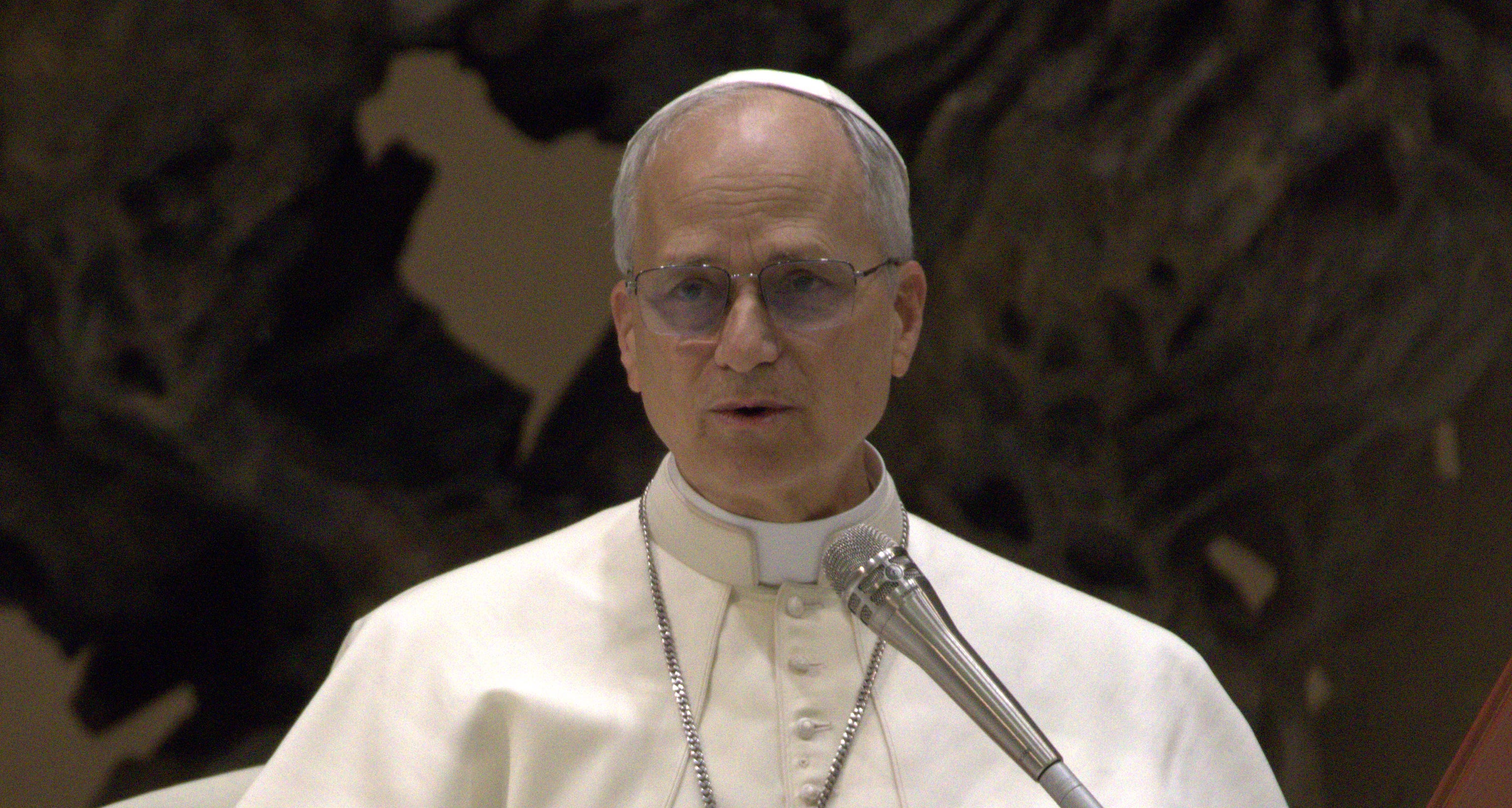
This image is used for illustrative purposes only.
What was said, and how
On June 8, 2026, Pope Leo XIV — born Robert Francis Prevost in Chicago, the first American to lead the Catholic Church — became the first pontiff to address Spain’s Congress of Deputies directly. Welcomed by Francina Armengol, president of the lower chamber, and Pedro Rollán Ojeda, president of the Senate (both holding office at the time of the visit), Leo delivered a speech notable as much for what it emphasized as for what it set aside.
On migration, the pope called for legal pathways to entry, dignified reception and structural action against the root causes of displacement — explicitly naming economic inequality and climate change. On democracy, he warned that political pluralism must not “degenerate into the permanent disqualification of one’s adversary.” And on the Church’s own record, he acknowledged that neither Spanish society nor the Church had always lived up to the principles of their own Christian tradition.
The speech also touched on the dignity of all human beings — including the unborn and the most vulnerable — and on the family, consistent with standing Catholic social teaching. Yet the dominant register was political and humanitarian rather than doctrinal. That last formulation — a pontiff publicly criticizing his institution before a secular parliament — is rare in contemporary papal rhetoric. It also framed a private meeting with survivors of sexual abuse committed within the Spanish Church, scheduled later that day away from cameras.
Spain as extreme case
To grasp what this visit represents, one must understand the singularity of Spain in the European religious landscape.
The Franco regime — a far-right dictatorship founded in 1939 and in power until Franco’s death in 1975 — made Catholicism a constitutional pillar of national identity: compulsory religious education, illegal divorce, bishops participating de facto in governance. For nearly four decades, the Church was not merely present in Spanish public life; it was the ideological architecture of the state.
The rupture that followed the democratic transition of 1978 was unlike anything else in Western Europe. In fewer than four decades, Spain went from one of the continent’s most observant Catholic countries to one of its most secular. The picture is layered: studies including data from the Pew Research Center suggest that roughly half of Spaniards still identify as Catholic by heritage or culture, but that regular practitioners — those attending Mass weekly — may now represent only 15 to 20 percent of the adult population, down from over 70 percent in the 1970s. The collapse in active practice was accompanied by a steep drop in priestly vocations and a near-total disengagement of younger generations.
This trajectory is not merely sociological — it is political. Spanish governments since 2004 have consistently legislated against the Church’s traditional doctrinal positions. Spain was among the first European countries to legalize same-sex marriage (2005), followed by euthanasia (2021) and, under the current Sánchez government, an expansion of abortion rights.
It is in this context that Sánchez welcomed Leo XIV — not despite these divergences, but partly because of the formula the pope is offering: talk of migrants and peace rather than abortion and gender.
What the migration data reveals
Leo XIV’s references to migrants are not abstract. They point directly to one of the most visible realities of contemporary Spain: the Atlantic route to the Canary Islands.
For several years, the Canaries have served as the main point of irregular entry into Europe from West Africa. Data from the United Nations High Commissioner for Refugees (UNHCR) show that this route — the world’s deadliest migration corridor — has seen a steady increase in arrivals since 2020. Leo dedicated the final leg of his Spanish trip to this reality: a visit to the Arguineguín dock in Gran Canaria and to the Las Raíces migrant reception center in Tenerife.
This symbolic displacement matters. It positions Leo not as a spiritual tourist of suffering, but as an actor choosing to make visible what European governments would prefer to keep geographically and politically peripheral.
The question this positioning raises, however, is one of credibility. A 2023 report by an independent commission mandated by Spain’s Conference of Bishops produced an extrapolated estimate — based on survey methodology rather than an exhaustive case-by-case count — suggesting the number of potential abuse victims within the Spanish Church over several decades could run into the tens of thousands. That figure, disputed in its methodology but not in its order of magnitude, continues to shadow any institutional claim to moral authority on questions of human dignity.
The Leo XIV strategy: church as social actor, not moral arbiter
Leo XIV’s pontificate, which began in May 2025 following the death of Francis, continues his predecessor’s broad approach but adds a specific political and geographic dimension: he is American, fluent in Spanish (he served as a bishop in Peru), and has chosen Spain as the first major apostolic trip in Europe.
This choice is unlikely to be coincidental. Spain concentrates the very challenges the Catholic Church faces in every liberal democracy: rapid secularization, abuse scandals, progressive governments, and mass migration. It functions, one might argue, as a full-scale stress test for the Vatican’s strategy.
That strategy might be summarized as follows: shift the terrain of Catholic legitimacy from private life issues (sexuality, family, abortion) toward social justice issues (migration, poverty, peace). This is not a doctrinal abandonment — the Church’s official positions on these matters remain unchanged, as the Madrid speech itself made clear. It is a choice of public prioritization.
The approach offers a clear advantage: it allows the Church to build coalitions with governments and public opinions that are structurally hostile to it on culture-war terrain. It also carries a real risk: being seen as instrumentalizing genuine suffering — migrants, abuse survivors — to rehabilitate a damaged institutional brand.
Analysis
Historical precedent. The closest comparison is John Paul II’s 1982 visit to Spain — the first major papal visit after the democratic transition. At the time, Spain had just legalized divorce and a Socialist government had just won elections. John Paul adopted a more combative tone on family and morality. The reception was mixed. Forty years on, Leo XIV appears to have drawn the lesson.
Power dynamics. Three actors benefit from this visit. Pedro Sánchez, whose coalition government has faced significant domestic turbulence, consolidates an image as a leader of dialogue — national and European. The Spanish Church, weakened by abuse scandals and declining membership, gains renewed visibility and legitimacy that neither its bishops nor its own resources could generate. And the Vatican itself builds diplomatic presence in a strategically important European democracy at a moment when the relationship between religious institutions and secular states across Europe is being renegotiated.
The real question. Leo XIV’s gamble is legible, but its long-term viability remains open. Can an institution rebuild credibility by selectively choosing the terrain on which it takes a public stand? The closed-door meeting with abuse survivors suggests Leo XIV understands that the credibility of the social turn requires first confronting institutional failures. But the middle ground is uncomfortable: a Church that speaks of migrants and peace while managing an unresolved legacy of abuse risks being perceived as changing the subject rather than changing its practice.
The international picture. This shift echoes, in inverse, the trajectory of evangelical churches in the United States, which have tied their institutional fate to conservative culture wars — with mixed results in terms of recruitment and legitimacy among younger generations. The Catholic Church appears to be charting a different path in Europe: that of a social left institutional presence, compatible with progressive governments. If the model works in Spain, it could be replicated in Germany, France or Italy, where the institution faces identical challenges.
The Bottom Line
Leo XIV’s address to the Spanish Congress will be remembered as a symbolic moment. But the real question is not rhetorical — it is structural: can an institution whose moral legitimacy has been durably damaged by internal scandals restore its public authority by pivoting to social causes? Spain will provide a first answer in the years ahead. And if that answer is yes, Europe’s churches may all look to Madrid to understand how to survive in societies that no longer need them — but might still need what they claim to defend.
A Church that speaks of migrants and peace while managing an unresolved legacy of abuse risks being perceived as changing the subject rather than changing its practice.
Sources: Holy See Press Office · Euronews · UNHCR · Pew Research Center · Spain’s Conference of Bishops (2023 independent commission report)