
Pope Leo XIV: first papal state visit to France in 18 years
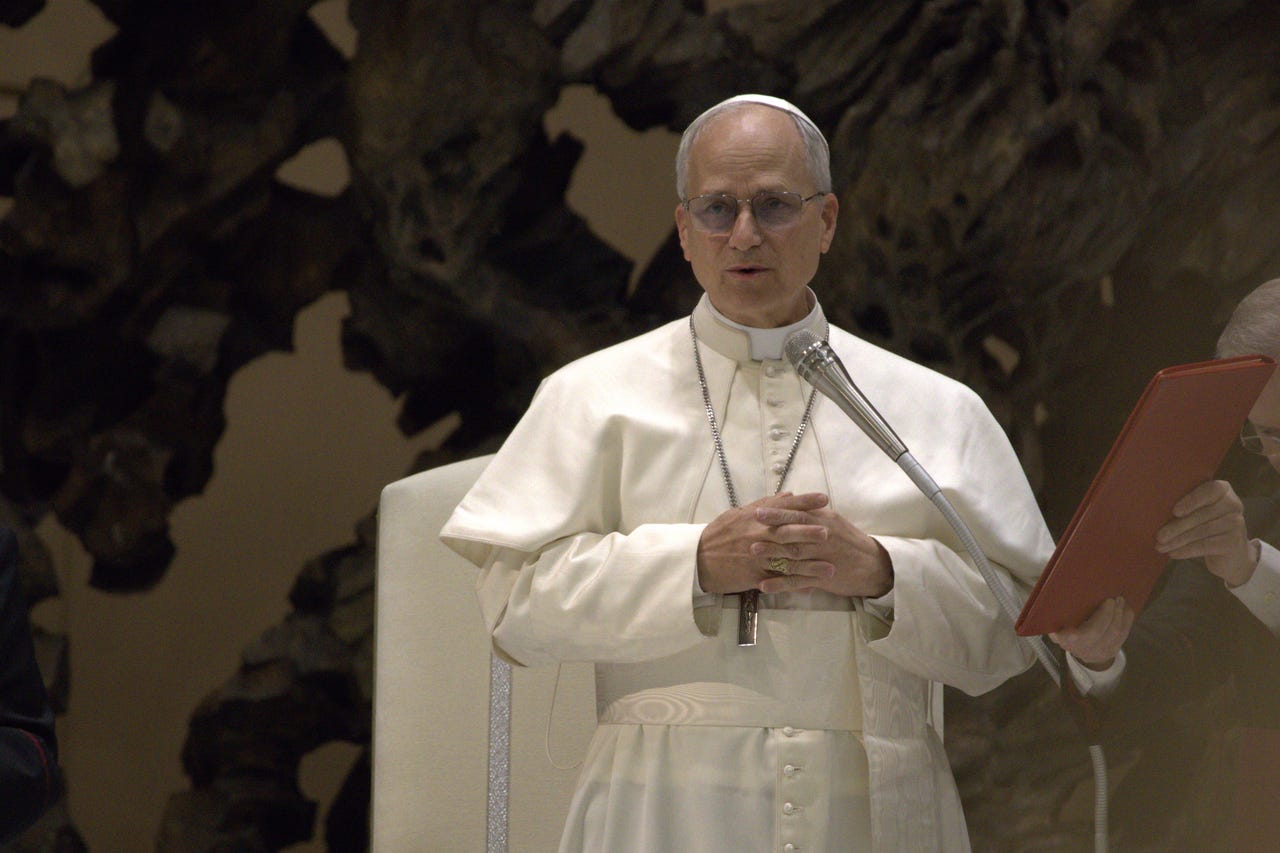
Pope Leo XIV will visit France Sept. 25–28 in the first papal state visit in 18 years. Paris, Lourdes, and a loaded symbolic itinerary.

At a Glance
The first papal state visit to France since Benedict XVI in September 2008, confirmed by the Holy See on May 16 — ending an 18-year gap that included three Francis trips to France, none of which carried full state-visit status
The itinerary, still being finalized, is expected to include Paris (UNESCO headquarters, Notre-Dame Cathedral), Lourdes, and possibly Scy-Chazelles — the burial site of Robert Schuman, a founding father of the European Union whose canonization cause is underway in Rome
This fifth apostolic journey of Leo XIV’s pontificate follows visits to Spain in June and fits a pattern that could signal a deliberate strategy of symbolic re-engagement with historically Catholic Europe
A pope responding to three simultaneous invitations
The Holy See’s press office made the announcement on May 16: Pope Leo XIV will travel to France from September 25–28, 2026. Three distinct invitations converged to make it happen — from French President Emmanuel Macron, who had met the pontiff at the Vatican on April 10; from Cardinal Jean-Marc Aveline, Archbishop of Marseille and president of the French Bishops’ Conference (CEF); and from the Director-General of UNESCO.
That triple architecture is worth noting. In a single trip, the Holy See is simultaneously addressing heads of state, the domestic Church, and multilateral institutions — a diplomatic calibration that, if deliberate, would suggest an unusually strategic approach to the early months of this pontificate.
The full itinerary has not been officially released. Stops expected to include Paris, Lourdes, and Scy-Chazelles — a small town in the Moselle region of northeastern France — have been reported by KTO, France’s Catholic television channel, and relayed by public broadcaster France 3. None of these have been confirmed by the Vatican beyond Paris. If Scy-Chazelles makes the final program, it would mark the first ever papal visit to that town — which is home to the residence and tomb of Robert Schuman, the French statesman widely regarded as one of the European Union’s founding fathers, whose cause for canonization is currently open in Rome.
Eighteen years without a state visit — why that gap matters
The last papal state visit to France was Benedict XVI’s in September 2008. Pope Francis made three trips to the country — to Strasbourg in 2014, Marseille in 2023, and Corsica in 2024 — but never accepted the protocol of a full national state visit. That consistent refusal was not incidental: it reflected, at minimum, the underlying friction between the Holy See and the French state over the country’s strict secularism, as well as Francis’s well-documented aversion to ceremonial pomp.
Leo XIV marks a departure on this front. American-born and openly francophile, he is capable of delivering speeches in French — though less comfortable speaking the language extemporaneously. Cardinal Aveline has confirmed that in private exchanges with the pope since his election, he quickly sensed Leo XIV’s genuine interest in making this trip happen. The pontiff has, by multiple accounts, expressed deep regard for France’s spiritual history.
The visit will also, if confirmed, bring Leo XIV to Notre-Dame de Paris — the Gothic cathedral that reopened in December 2024 after the 2019 fire that shocked the world. The symbolism is self-evident.
Analysis — What this trip reveals about Leo XIV’s strategy
① Europe as symbolic territory to reclaim
After Turkey and Lebanon in late 2025, Monaco in March, four African nations in April, and Spain in June, France becomes Leo XIV’s fifth apostolic journey. The back-to-back European sequence — Spain, then France — is unlikely to be coincidental. It could signal a deliberate effort to reaffirm the Church’s presence in historically Catholic countries now experiencing rapid de-Christianization. The implicit bet: that a pope’s physical presence retains a resonance that no digital communication strategy can replicate.
② Schuman, or the wager on a Catholic European identity
The possible stop at Scy-Chazelles deserves careful attention. Robert Schuman embodied a vision of European integration rooted in Christian democracy — national sovereignty, economic solidarity, ethical grounding. Paying homage to him now, as the EU navigates a contested redefinition of its political identity, would be a gesture carrying both doctrinal and political weight. Without being able to establish this formally, the sequence could indicate that Leo XIV intends to position the Church as a moral reference point in the debate over what European integration actually stands for. That would mark a posture quite distinct from Francis’s characteristic reticence on institutional European politics.
③ UNESCO, or the multilateral signal
The Vatican’s communiqué explicitly named the UNESCO visit as part of the trip’s rationale. The message is addressed as much to international institutions as to French Catholics: the Church remains an active player in global governance on education, culture, and heritage. It is plausible that Leo XIV is looking to consolidate Vatican engagement in multilateral forums at a moment when several major powers are questioning their commitments to UN institutions — a space where soft power, if credibly deployed, carries real weight.
An American pope, speaking to secular France, from a rebuilt Notre-Dame, at UNESCO headquarters, and possibly above the grave of the man who first imagined a united Europe.
The Bottom Line
A papal visit to France is never simply a religious event — it is a political act in the broadest sense, engaging the state, the Church, and civil society simultaneously. But the real test of this September trip will not be the itinerary itself. It will be what Leo XIV chooses to say — about Europe, about French secularism, about the place of believers in a democracy under strain. An American pope, speaking to secular France, from a rebuilt Notre-Dame, at UNESCO headquarters, and possibly above the grave of the man who first imagined a united Europe: rarely has a papal itinerary been so deliberately freighted with meaning before a single speech has been written.
Sources: Vatican News · ICI.fr · France 3 Régions · French Bishops’ Conference (CEF)
re: "the Church remains an active player in global governance on education, culture, and heritage"
and
"A papal visit to France is never simply a religious event — it is a political act in the broadest sense, engaging the state, the Church, and civil society simultaneously"
Spot on. It just so happens that UNESCO hq in Paris is the home for the UN's global governance of AI team.
Just yesterday the Pope announced his global governance of AI team as well, and is putting his AI thoughts in his soon to be made public first Encyclical.
Closer and closer, step by step, the dark side led by Tyrannus Maximus is waiting ‘till all humans are required to have a digital ID before he makes his final move against……. God and his saints.