
Pope Leo XIV appoints a laywoman to lead a Vatican "ministry"
For the first time in Church history, a pope has named a non-religious woman as prefect of a Roman Curia dicastery — the Vatican's equivalent of a cabinet ministry.

At a Glance
A historic first: María Montserrat Alvarado becomes the first laywoman ever appointed prefect of a dicastery of the Holy See, in the two-thousand-year history of the Catholic Church.
A strategic portfolio: the Dicastery for Communication oversees the Vatican’s vast array of official media — print, radio, and television — reaching a global Catholic audience.
Reformist continuity: the appointment builds on the institutional changes begun under Pope Francis, who in early 2025 had himself named the first woman — a nun — to head a dicastery.
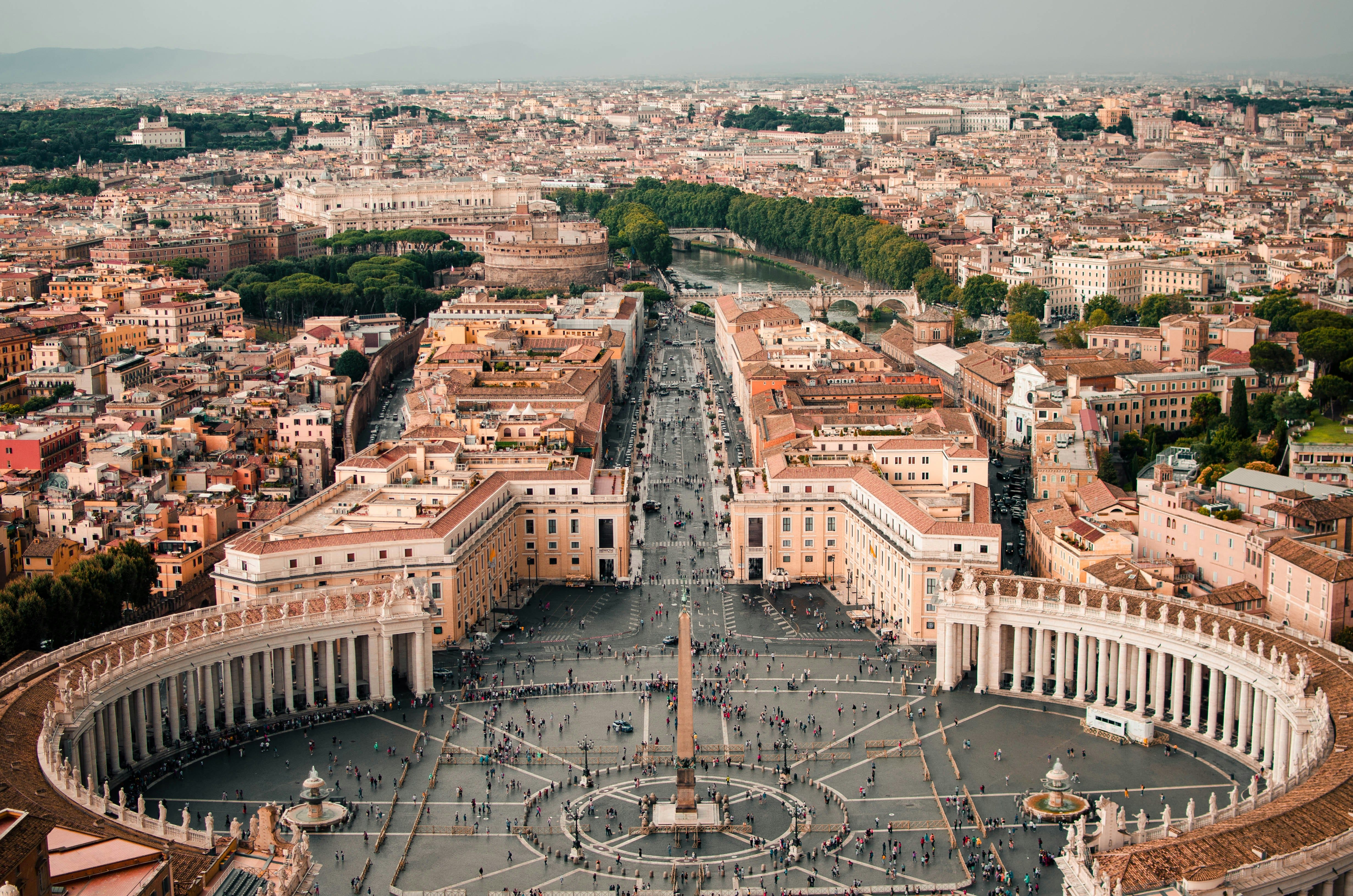
This image is used for illustrative purposes only.
A precedent with no equivalent in Church history
On Tuesday, June 2, 2026, Pope Leo XIV — born Robert Francis Prevost, the Chicago-born cardinal elected as the 267th pope in May 2025 — announced the appointment of María Montserrat Alvarado as prefect of the Dicastery for Communication, the body within the Roman Curia that oversees the Vatican’s media operations. She will take up her post on November 1, 2026.
The Vatican’s official statement was precise: Alvarado “is the first non-religious woman to be named prefect of a dicastery of the Holy See.” That distinction matters. It sets her nomination apart from that of Sister Simona Brambilla, whom Pope Francis placed at the head of the Dicastery for Institutes of Consecrated Life in early 2025 — itself a historic first, but involving a woman bound by religious vows. Alvarado is a layperson: no vows, no religious order, no clerical status.
For readers unfamiliar with the Vatican’s internal structure: the Roman Curia functions as the central government of the Catholic Church and the Vatican City State. Its dicasteries are its ministries. Heading one is the equivalent of serving as a cabinet secretary. Until now, those posts had been held exclusively by prelates — bishops and cardinals — all of them male, all of them clergy.
Reforming the Curia: an unfinished project
Alvarado’s appointment does not emerge from nowhere. It is the latest step in an ongoing institutional transformation that the Vatican itself describes as continuous.
Pope Francis, who died in April 2025, had pushed on two parallel tracks. Doctrinally, he repeatedly criticized what he called the machista mentality inside the Church, arguing that the institution was failing to entrust women with sufficient positions of responsibility. Institutionally, he backed that rhetoric with action: Sister Simona Brambilla’s nomination in early 2025, followed by Sister Raffaella Petrini’s appointment in March 2025 to lead the Governorate of Vatican City State — the body that exercises the Holy See’s executive power, distinct from the Curia’s dicasteries proper.
Leo XIV is continuing that trajectory. But Alvarado’s nomination takes it a step further: a layperson, with a professional background in commercial media, will now head the institution’s global communications arm. That shift — from clergy to laity, from the religious world to the professional one — could suggest a more functional, less clerical vision of power within the Curia. This reading, not yet confirmed by any explicit doctrinal statement from the pope, remains a hypothesis worth examining.
A strategic post at a critical moment
The Dicastery for Communication is not a peripheral portfolio. It supervises the Vatican’s print, radio, and television services, reaching a vast global Catholic audience.
The choice of a woman from EWTN News — a Catholic media network founded in the United States, and one that some observers of the global Catholic landscape situate in a more traditional current of the faith — to oversee the Vatican’s institutional communications is worth noting. It could signal Leo XIV’s desire to build bridges across divergent sensibilities within a fractured global Catholicism. Or it may simply reflect a preference for a media executive with demonstrated operational experience, independent of doctrinal positioning. The Vatican has not elaborated on the reasoning behind the choice.
Analysis: beyond the symbolism, a structural question
It would be a mistake to read this appointment as purely symbolic. The institutional stakes are real: a laywoman will now hold direct authority over the communications apparatus of a sovereign state recognized under international law, with a cultural and moral reach that vastly exceeds its geographic footprint.
For an American reader, one analogy may help: imagine a U.S. president appointing, for the first time, a civilian woman with no military background to lead the Pentagon. The break in institutional code is of that order.
The deeper question this appointment raises is not symbolic: it is about the real levers of institutional change inside an organization built on two millennia of male hierarchy. One appointment, however historic, does not shift a culture. What matters is what Alvarado will be able to do with the post — and whether nominations of this kind will follow in dicasteries with higher doctrinal stakes.
An institution that has not changed its doctrine on the ordination of women has nonetheless just placed its global communications apparatus in the hands of a laywoman. That paradox is precisely what makes this appointment interesting beyond the headline.
The Bottom Line
The Catholic Church is reforming its governance without touching its theology. How far can that dissociation hold — and for how long?
Sources: RTBF · AFP · Vatican (official communiqué)