
Poland's gold bet is paying off — and it's just getting started
Poland's central bank now holds more gold than the ECB. Warsaw is pushing for 700 tonnes. Behind the numbers, a deliberate doctrine of monetary sovereignty.

At a Glance
The National Bank of Poland (NBP) holds 550 tonnes of gold — more than the European Central Bank’s 506.5 tonnes — valued at over €63 billion (approximately $68 billion)
Gold’s share of Poland’s foreign reserves surged from 16.86% to 28.22% in under a year, one of the fastest shifts ever recorded among the world’s central banks
NBP Governor Adam Glapiński has set a new target: 700 tonnes, which would value the country’s gold reserves at roughly €94 billion
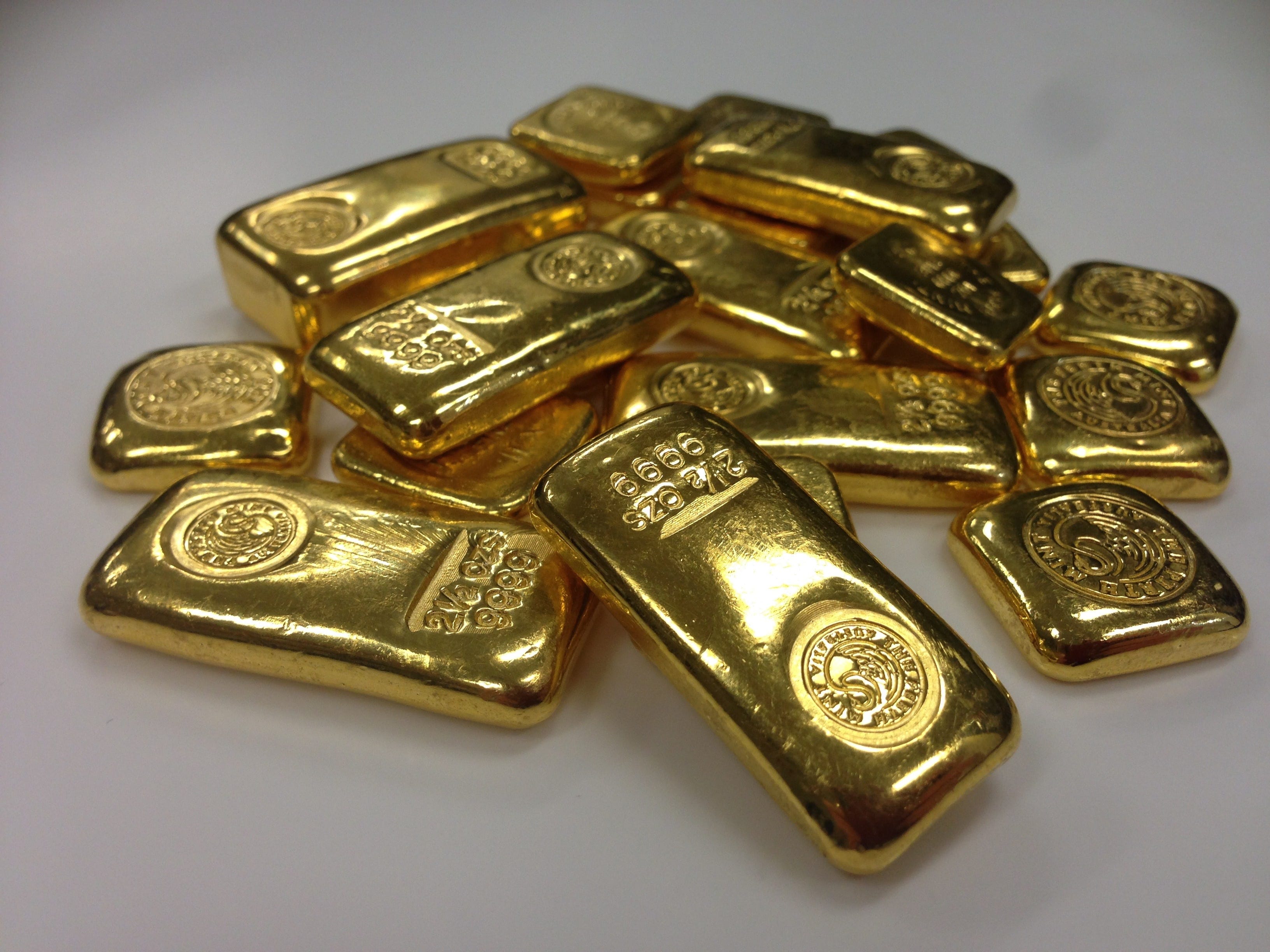
This image is used for illustrative purposes only.
A symbolic threshold with real consequences
A country that doesn’t use the euro just outpaced the institution that manages it. The National Bank of Poland (NBP) now holds approximately 550 tonnes of gold — surpassing the European Central Bank (ECB), the eurozone’s monetary authority, whose own gold reserves stand at around 506.5 tonnes. The ECB oversees monetary policy for 21 member states. Poland keeps its own currency, the zloty.
This didn’t happen overnight. In 1996, the NBP held just 14 tonnes of gold. Three decades of deliberate accumulation transformed that marginal reserve into a first-tier sovereign asset. The driving force behind that shift is NBP Governor Adam Glapiński, who has consistently cast gold as a pillar of national sovereignty. Glapiński has called gold “free of credit risk” — an asset that, in his view, no government can devalue through its own monetary decisions.
Speed, not just scale
What sets Poland’s strategy apart isn’t only the volume — it’s the pace. Gold accounted for 16.86% of Poland’s foreign reserves at the end of 2024. By December 2025, that figure had climbed to 28.22%, one of the fastest structural shifts ever recorded among the world’s central banks. To put it in terms a reader in Chicago or Toronto might recognize: it would be as if the Federal Reserve doubled gold’s share of its portfolio in a single year — a fundamental reorientation, not a portfolio tweak.
The largest purchases were concentrated in the final months of 2025, precisely when global markets were at their most volatile and geopolitical tensions were running high. That timing could suggest a deliberate strategic choice rather than a coincidence of circumstance.
The 700-tonne ambition
NBP Governor Glapiński announced in January that he would ask the bank’s board to adopt a resolution targeting 700 tonnes of gold, a holding that would be valued at roughly 400 billion Polish zloty — approximately €94 billion. That level would place Warsaw among the most significant sovereign gold holders in Europe, behind Germany, France and Italy, but ahead of most comparable economies.
This ambition tracks a broader global trend. According to the World Gold Council, nearly 95% of the central banks surveyed anticipate an increase in global gold reserves over the next twelve months. Poland isn’t an outlier — it’s the leading edge of a structural shift.
The case against: a legitimate critique
Poland’s strategy has its critics, and they deserve a fair hearing. The argument against large-scale gold accumulation is straightforward: those funds could instead be invested in sovereign bonds, which generate interest income. Gold, by contrast, produces no current return. Some economists argue that holding such a high proportion of gold could limit the flexibility a modern economy needs when managing its reserves.
It’s a serious point. Gold is a protective asset, not a growth asset. But the critique rests on an implicit assumption of systemic stability — precisely the assumption that Glapiński and his supporters would reject.
Analysis: Europe’s quiet monetary divide
The fact that Poland — a non-eurozone country bordering a country at war — now holds more gold than the ECB points to something deeper than portfolio management.
First, this policy could signal a structural wariness toward dollar-denominated assets. Marta Bassani-Prusik, director of investment products and foreign exchange assets at the Polish Mint, frames the strategy around three axes: independence from foreign monetary policies, reduced exposure to the dollar and other major currencies, and asset diversification. That’s not an anti-Western posture — it’s a sober reading of dependency risk.
Second, Poland’s economic base gives the strategy credibility. Estimates credit the country with growth of around 3.2% in 2025, compared with roughly 1.3% for the eurozone. According to several economic analyses, Poland’s GDP per capita has roughly doubled over the past twenty years — approaching Japan’s in purchasing power parity terms (a level historically associated with advanced Western economies). This is not a country buying gold to compensate for structural weakness. It’s a country capitalizing on its own strength.
Third, the sequence — accelerated accumulation, an explicit 700-tonne target, deliberate political communication — has the hallmarks of a sovereign positioning strategy. Whether it will meaningfully alter Poland’s weight in European financial architecture remains to be seen, but the intent appears clear.
Warsaw now holds more gold than the institution responsible for managing the common currency of 21 of its neighbors.
The bottom line
That paradox puts a question on the table that the European Union has yet to address head-on: when member states pursue accelerated, independent reserve diversification outside any common monetary framework, is that a source of collective resilience — or an early signal of financial fragmentation to come?
Sources: Euronews · World Gold Council · National Bank of Poland