
Poland wins U.S. support for a permanent military base — but key terms remain open

Washington has approved in principle Poland’s proposal to host a permanent American military base — yet the location, timeline, and financing remain unresolved, even as the U.S. simultaneously scales back its troop presence elsewhere in Europe.
At a Glance
The U.S. has approved in principle a permanent American military base in Poland, announced by Polish Defense Minister Władysław Kosiniak-Kamysz on June 18, 2026 — but no formal agreement has been signed.
Poland spends close to 5% of its GDP on defense, one of the highest rates among NATO allies, and is seeking to permanently anchor American forces along its eastern flank.
Washington’s green light comes just weeks after it announced the withdrawal of 5,000 troops from Germany and the cancellation of a 4,000-troop rotation to Poland — a strategic contradiction that has yet to be resolved.
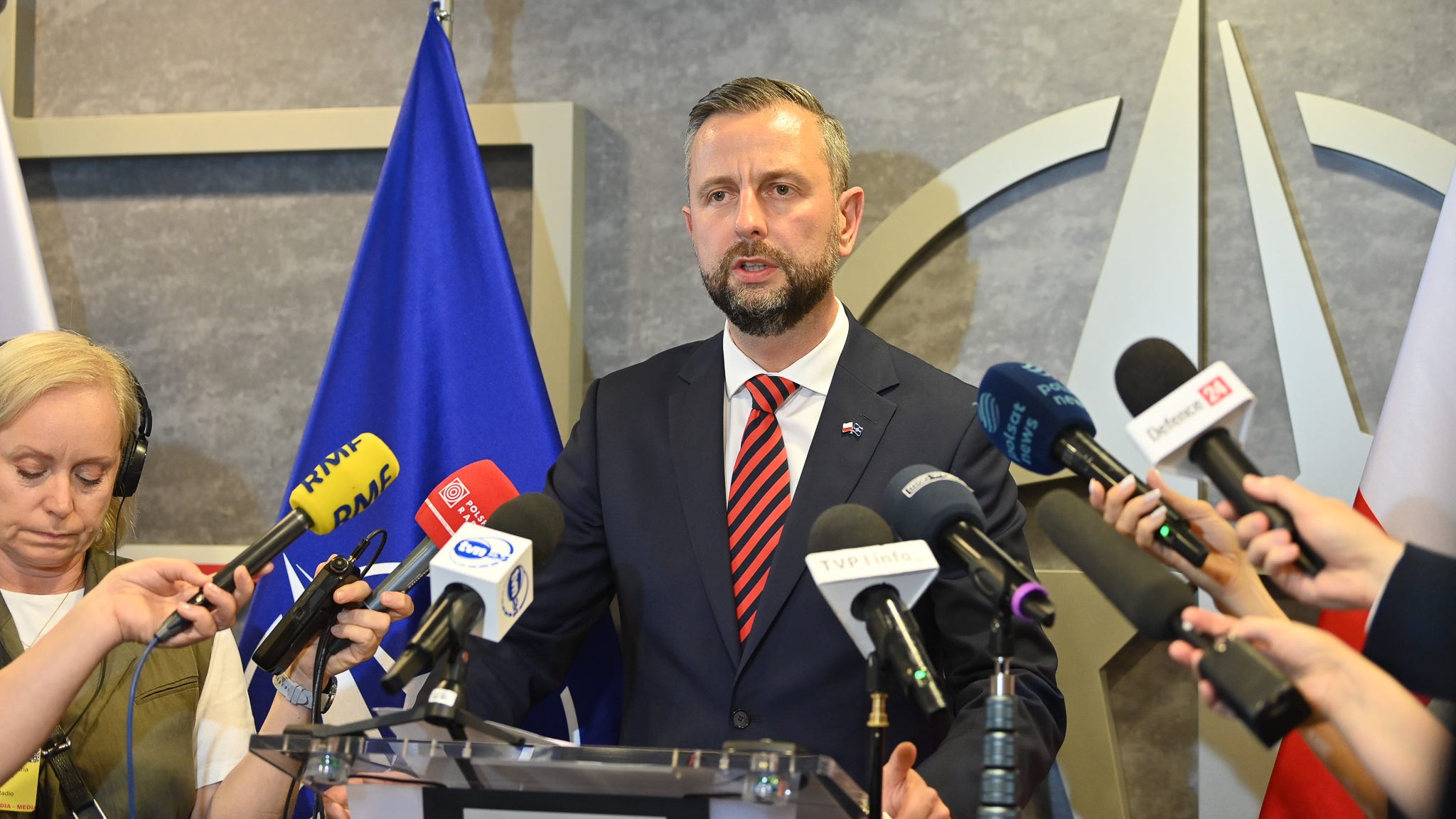
This image is used for illustrative purposes only.
A statement of intent, not a treaty
On June 18, 2026, Polish Defense Minister Władysław Kosiniak-Kamysz posted on X that U.S. Secretary of Defense Pete Hegseth had expressed support for Poland’s proposal to establish a permanent American military base on Polish soil.
The announcement reflects a broader pattern of close bilateral ties between Washington and Warsaw. President Donald Trump has publicly cited his “very good relations” with Poland’s head of state, Karol Nawrocki, and the two governments have cultivated a working relationship built in part on Poland’s willingness to spend heavily on defense and purchase American military hardware.
But behind the announcement, significant questions remain unanswered. The location of the future base has not been identified. No timeline has been set. Financing arrangements — including whether Warsaw would contribute, as it offered to do in 2018 with its proposal to fund an installation dubbed “Fort Trump” — have not been disclosed. This statement of approval may point to genuine diplomatic momentum, but it does not constitute a binding commitment at this stage.
Why Poland treats a permanent U.S. presence as an existential priority
Poland’s request reflects a geopolitical logic that has hardened since 2022. Russia’s invasion of Ukraine served as a stark reminder to Central and Eastern European countries of their structural vulnerability. Warsaw’s response has been twofold: sharply increase its own defense spending — close to 5% of GDP, among the highest in NATO — and seek to physically anchor American forces on its territory.
Geography explains Poland’s strategic preoccupation. The country borders the Russian exclave of Kaliningrad to the west, Belarus to the northeast — a state whose ties with Moscow have grown significantly closer since 2020 — and the Suwalki Corridor, a roughly 65-mile stretch of land separating Kaliningrad from Belarus that many military analysts consider one of the potentially most sensitive flashpoints in the entire Alliance. A permanent U.S. presence would transform this geographic vulnerability into a credible deterrence line.
The United States has maintained a rotating military presence in Poland since 2017. In 2023, a permanent garrison was established in Poznań. As of May 2026, some 10,000 U.S. troops are deployed across Poland on a rotational basis.
The American contradiction: enhanced presence or managed retreat?
Hegseth’s statement of support arrives against a decidedly ambiguous strategic backdrop. In mid-May 2026, Washington announced the withdrawal of 5,000 troops from Germany and the cancellation of a 4,000-troop rotation that had been planned for Poland — the very country now receiving a pledge of enhanced commitment. That decision drew criticism from both Republican and Democratic lawmakers in Congress, who objected to what they described as a sudden reversal at a moment when personnel and equipment were already positioned for deployment.
It remains unclear whether the June 18 announcement compensates for the mid-May withdrawals or represents something additional. It would be premature to conclude that this signals a durable reinforcement of U.S. engagement in Europe. What can be observed is that American policy in the region is sending contradictory signals simultaneously: partial withdrawal on one hand, approval of a permanent anchor on the other.
A test of NATO’s collective credibility
What is at stake in the Polish base discussion extends well beyond the bilateral U.S.–Poland relationship. The credibility of NATO’s collective deterrence posture — and specifically, the Alliance’s ability to maintain a coherent stance toward Russia as its primary military contributor reconfigures its geographic priorities — is what hangs in the balance.
The apparent logic driving U.S. policy under the second Trump administration seems to oscillate between two difficult-to-reconcile impulses: reducing what Washington views as a disproportionate burden in Europe, while selectively reassuring key allies to preserve their loyalty. Poland — which spends generously on defense and publicly professes its attachment to Washington — appears in this reading to be an ally that earns its reward, while Germany, whose relationship with the Trump administration is considerably more strained, absorbs the brunt of the drawdown.
If this apparent logic of bilateral dealmaking within a formally multilateral Alliance is indeed taking hold, it could, over time, undermine the coherence of collective NATO security. It places each member state in the position of negotiating its own protection individually — which structurally advantages those with the resources to pay and the political standing to attract American attention, at the expense of a rules-based security architecture.
The bottom line
Is “American support” within NATO still a collective security guarantee — or a bilateral favor extended to the allies best positioned to deserve it?
Sources: Reuters · AP News · Politico Europe