
Poland-Ukraine: a history war fractures a vital alliance
Poland's Zelensky stripped of top honor over WWII unit name — a crisis testing the solidarity Europe cannot afford to lose.

A single presidential decree, signed in Kyiv on May 26, 2026, was enough to reopen an 80-year wound between two countries that had spent years painstakingly rebuilding their relationship. By naming a Ukrainian special forces unit “Heroes of the UPA” — a reference to the Ukrainian Insurgent Army, held responsible in Poland for the mass killing of civilians in the Volhynia region during World War II — Volodymyr Zelensky triggered a diplomatic chain reaction in Warsaw. On June 19, Polish President Karol Nawrocki formally revoked Zelensky’s Order of the White Eagle, Poland’s highest state honor. The fallout risks something far larger than a bilateral dispute: the cohesion of the Western coalition sustaining Ukraine against Russia.
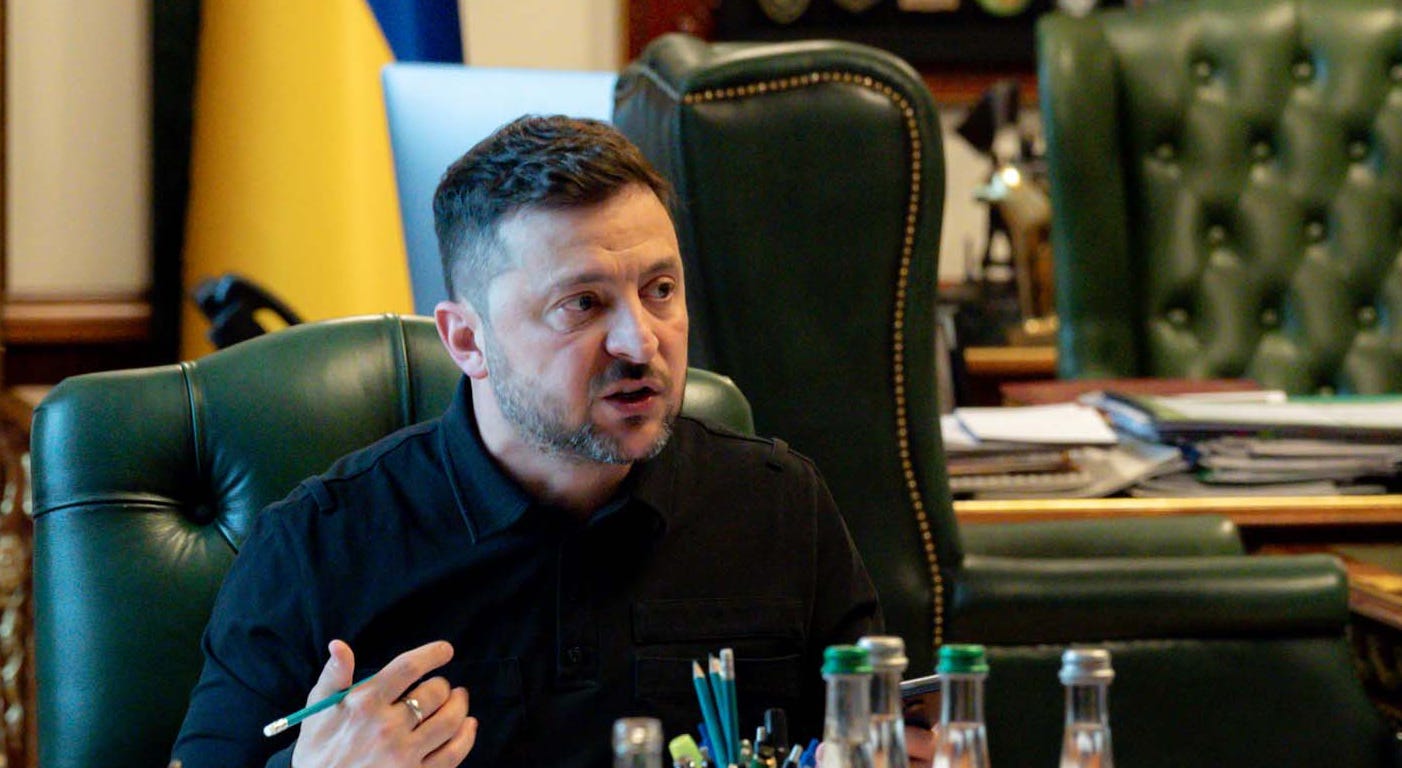
This image is used for illustrative purposes only.
At a Glance
On May 26, 2026, Zelensky signed decree No. 440/2026 naming a Ukrainian special forces unit “Heroes of the UPA” — the Ukrainian Insurgent Army, blamed in Poland for the killing of between 100,000 and 120,000 Polish civilians in Volhynia between 1943 and 1945.
Polish President Karol Nawrocki formally revoked Zelensky’s Order of the White Eagle on June 19 — the decoration awarded in 2023 to mark “the deepening of Polish-Ukrainian relations.”
The crisis threatens one of Ukraine’s most strategically critical partnerships: Poland serves as a key transit corridor for Western military aid to Ukraine and has been among its most steadfast backers since Russia’s February 2022 invasion.
A decree, eighty years of pain
On May 26, 2026, Zelensky signed decree No. 440/2026, granting the name “Heroes of the UPA” to the Independent Special Operations Center “North” (also referred to as the Separate Special Operations Center “North”) of Ukraine’s Special Operations Forces. The official justification: to “restore the historical traditions of the national army” in recognition of the unit’s “exemplary execution of missions” in defense of Ukraine’s territorial integrity.
The UPA — Ukrainska Povstanska Armia, or Ukrainian Insurgent Army — was a guerrilla force created in October 1942 in the Volhynia region of present-day western Ukraine, the armed wing of the Organization of Ukrainian Nationalists (OUN-B), led by Stepan Bandera, with the goal of establishing an independent Ukrainian state. It fought simultaneously against German and Soviet forces. In Poland, its legacy is inseparable from the Volhynia massacres of 1943 to 1945: according to Poland’s Institute of National Remembrance (IPN), between 100,000 and 120,000 Polish civilians were killed in organized operations, including the “Bloody Sunday” of July 11, 1943, when roughly one hundred villages were attacked simultaneously. Poland’s parliament officially designated the massacres as genocide in 2016. Kyiv acknowledges the killings and has issued formal apologies to Warsaw, but rejects the genocide designation.
In Ukraine, the UPA is widely seen as a symbol of national resistance against foreign occupiers. These irreconcilable readings of history have periodically poisoned bilateral relations for decades.
Warsaw’s response: from decree to dishonor
The shock in Poland was immediate and cross-partisan. Nawrocki — a conservative elected in 2025, known for his conservative positions on Ukraine’s path to NATO and EU membership, while affirming continued military support for Kyiv — declared he had received Zelensky’s decision “with deep sadness” and “indignation,” adding that glorifying the UPA gave Russian propaganda “a great deal of oxygen for disinformation.”
On June 19, after the Chapter of the Order of the White Eagle — the advisory council that oversees the decoration — convened and voted, Nawrocki formally revoked the honor. Zelensky had received the Order on April 5, 2023, from then-President Andrzej Duda, for “his merits in deepening relations between Poland and Ukraine, his efforts for security, and his unwavering commitment to the defense of human rights.” Three years later, the same symbol was being deployed as a diplomatic pressure lever.
Prime Minister Donald Tusk — a pro-European stalwart and one of Ukraine’s most vocal international advocates — struck a more careful but no less pointed note. He called Zelensky’s decision contrary to “our historical sensibilities” and urged both presidents to find “a better way than trading blows to defuse these emotions.” Foreign Minister Radosław Sikorski said he was “disappointed” and summoned the Ukrainian ambassador to Warsaw. A formal diplomatic protest was filed with Kyiv.
Ukraine’s response came swiftly. Foreign Minister Andrii Sybiha called Poland’s decision a “strategic mistake” and “contemptuous” — and announced he would return a Polish decoration he himself had received, in a pointed act of protest. Foreign Ministry spokesperson Heorhii Tykhyi lamented that the crisis was unfolding against the trend of recent reconciliation efforts, pointing to resumed excavations of Volhynia victims and the work of a joint historians’ congress. Lviv’s mayor, Andriy Sadovy, appealed for perspective, noting that “every country has its heroes” and that historical records from that era were often distorted by Soviet manipulation.
A strategic error on three fronts
Zelensky faces a structural contradiction at the heart of Ukraine’s wartime strategy. Mobilizing national identity to sustain public support for the war effort sometimes means invoking figures and organizations from Ukraine’s history of armed resistance. At the same time, maintaining the international coalition on which Ukraine’s military survival depends requires careful management of allies’ own historical sensitivities.
These two imperatives can collide head-on — as they did here. Poland is not simply another ally. It serves as one of the key transit corridors through which Western military aid reaches Ukraine, maintains unusually strong domestic public support for Ukrainian defense, and is a pivotal voice in NATO’s eastern expansion debate. Sustained friction with Warsaw does not merely strain a bilateral relationship: it erodes the very cohesion that Moscow is actively trying to fracture.
Political analyst Marcin Zaborowski of the Globsec think tank put it plainly: Zelensky had committed “a very serious mistake,” while being “fully aware” of its repercussions in Poland. That awareness deepens the political stakes — though it would be premature to conclude that Kyiv deliberately sought to provoke Warsaw.
Nawrocki’s decision also reflects Poland’s own internal political dynamics. The president — whose powers are more limited than those of a chief executive in a presidential system — acted partly in response to a formal request from a member of parliament from the Confederation of New Hope, a nationalist grouping. This sequence may suggest that domestic pressure played a role in accelerating a decision that might otherwise have been deferred.
The bottom line
Warsaw and Kyiv spent five years carefully rebuilding a relationship that previous decades had kept in a state of latent tension. Resumed excavations in Volhynia in 2025, dialogue between historians, joint commemorations: fragile progress that required constant effort from both capitals.
A single decree has put that work at risk.
The real question may not be the revoked decoration — a symbol among symbols — but this: in a prolonged war, under intense domestic pressure, can Zelensky still afford the diplomatic discipline that a coalition as diverse as Ukraine’s requires? And by responding on the terrain of symbolism, is Warsaw actually serving the interests it claims to defend?
Sources: Euronews · France 24 · France Info · AFP