
Poland is NATO's new American stronghold
Trump sends 5,000 additional troops to Poland while pulling forces from Germany — rewriting the unspoken rules of America's European commitments.

At a Glance:
Donald Trump announced on May 21 the deployment of 5,000 “additional” U.S. troops to Poland, citing his personal relationship with Polish President Karol Nawrocki, the country’s right-wing nationalist leader elected in June 2025.
The move comes three weeks after the Pentagon withdrew 5,000 soldiers from Germany, following public criticism of U.S. Middle East strategy by German Chancellor Friedrich Merz.
NATO Secretary General Mark Rutte welcomed the announcement while simultaneously signaling that the alliance is charting a course toward less dependence on Washington — an autonomy drive the Trump administration itself is actively encouraging.
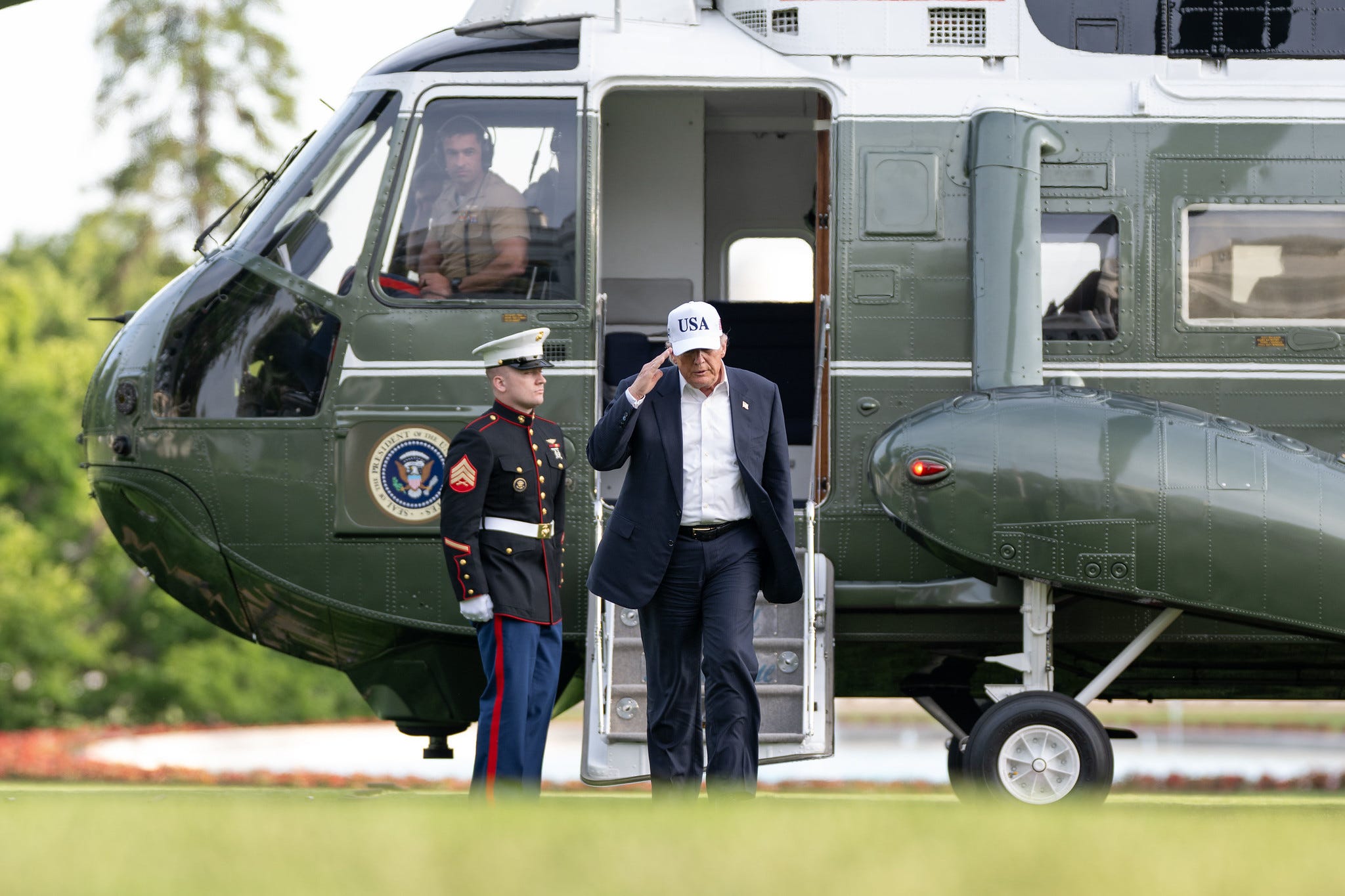
This image is used for illustrative purposes only.
A personal announcement with systemic logic
On May 21, Donald Trump took to Truth Social — his personal social media platform — to announce the deployment of 5,000 U.S. troops to Poland, citing his “good relationship” with Karol Nawrocki, Poland’s right-wing nationalist president who took office in August 2025 after winning the presidential election in June 2025. The choice of channel was telling: a personal social media post rather than a Pentagon communiqué, framing a security commitment as a bilateral favor rather than a treaty obligation.
The factual ambiguity is worth noting. Trump referred to “additional” troops without specifying whether he meant an entirely new contingent or the 4,000-soldier deployment that had already been planned — and officially described just days earlier by Vice President J.D. Vance as “delayed” rather than canceled. This deliberate vagueness could suggest a desire to maximize political impact without locking in a precise commitment, though that interpretation remains unconfirmed.
Germany punished, Poland rewarded
What can be established with certainty is the sequence. In early May, the Pentagon announced the withdrawal of 5,000 troops from Germany, in the wake of Chancellor Friedrich Merz’s criticism of U.S. strategy in the Middle East. Three weeks later, Poland receives the same number — and the announcement is framed as an expression of personal affinity.
Under Trump, American security guarantees no longer function as automatic treaty commitments — they function as instruments of reward and pressure.
The pattern is clear. For an American reader, the closest analogy might be a federal marshal deciding which counties get deputies — not based on institutional protocol, but on his relationship with the local sheriff.
With 4.48% of its GDP devoted to defense in 2025 — the highest share of any NATO member, outpacing even the United States — Warsaw has made rearmament a legally binding national policy, with a statutory spending floor of 4% of GDP enshrined in national law. The country already hosts the permanent headquarters of the U.S. Army’s V Corps at Camp Kościuszko in Poznań, an Aegis Ashore ballistic missile defense base in Redzikowo, and has set an ambition of reaching 5% of GDP in defense spending in 2026.
Rutte applauds, but sets the course toward autonomy
Mark Rutte, NATO’s secretary general, welcomed the announcement on Friday as he arrived at an alliance meeting in Sweden. “Of course, I welcome this announcement,” he said. That public endorsement, however, masks a deeper tension: Rutte immediately stressed that the alliance’s long-term “trajectory” was toward reducing dependence on Washington — nearly echoing Vance’s own language from Tuesday, when the vice president called for Europe to “stand on its own two feet.”
That is the central paradox of this sequence: Washington reinforces its military presence in Poland at the very moment it signals to Europe that it must learn to do without American support. The two messages do not contradict each other — together, they define the new terms of the alliance: U.S. military presence in exchange for maximum financial contribution, with no guarantee of permanence.
The bottom line
The real question this sequence raises is not how many soldiers are deployed in Poland. It is what model of alliance is being built. A collective security system grounded in treaties and mutual obligations — closer in spirit to what Americans might call a binding defense pact, like the commitments underpinning NORAD — or a marketplace of bilateral protections, renegotiable with each administration? If the second model takes hold, NATO members that cannot match Poland’s spending levels could find themselves in a strategic gray zone: not formally abandoned, but not reliably protected either.
Sources: France Info · AFP · i24NEWS · L’essentiel · Atlantic Council · Notes from Poland