
Moldova's EU path reopens — the hard part starts now
Brussels unblocks Moldova's EU accession talks after a two-year Hungarian veto. A new cluster opens in Luxembourg — Russia's shadow remains close.

On Monday, June 15, Moldova formally opens the first cluster of European Union accession negotiations. The country has been waiting for this moment since talks formally opened in June 2024, just over two years after it applied for membership in March 2022. Yet it wasn’t any delay on Chisinau’s part that froze the file for two years — it was a Hungarian veto aimed at Kyiv, to which Moldova’s process had been tied by design. On June 12, the EU’s 27 member states agreed to open the first of six negotiating clusters, known as “Fundamentals,” with both candidate countries. Ursula von der Leyen, president of the European Commission, the EU’s executive arm, called it part of a moment in which “the European Union took a major step forward.”
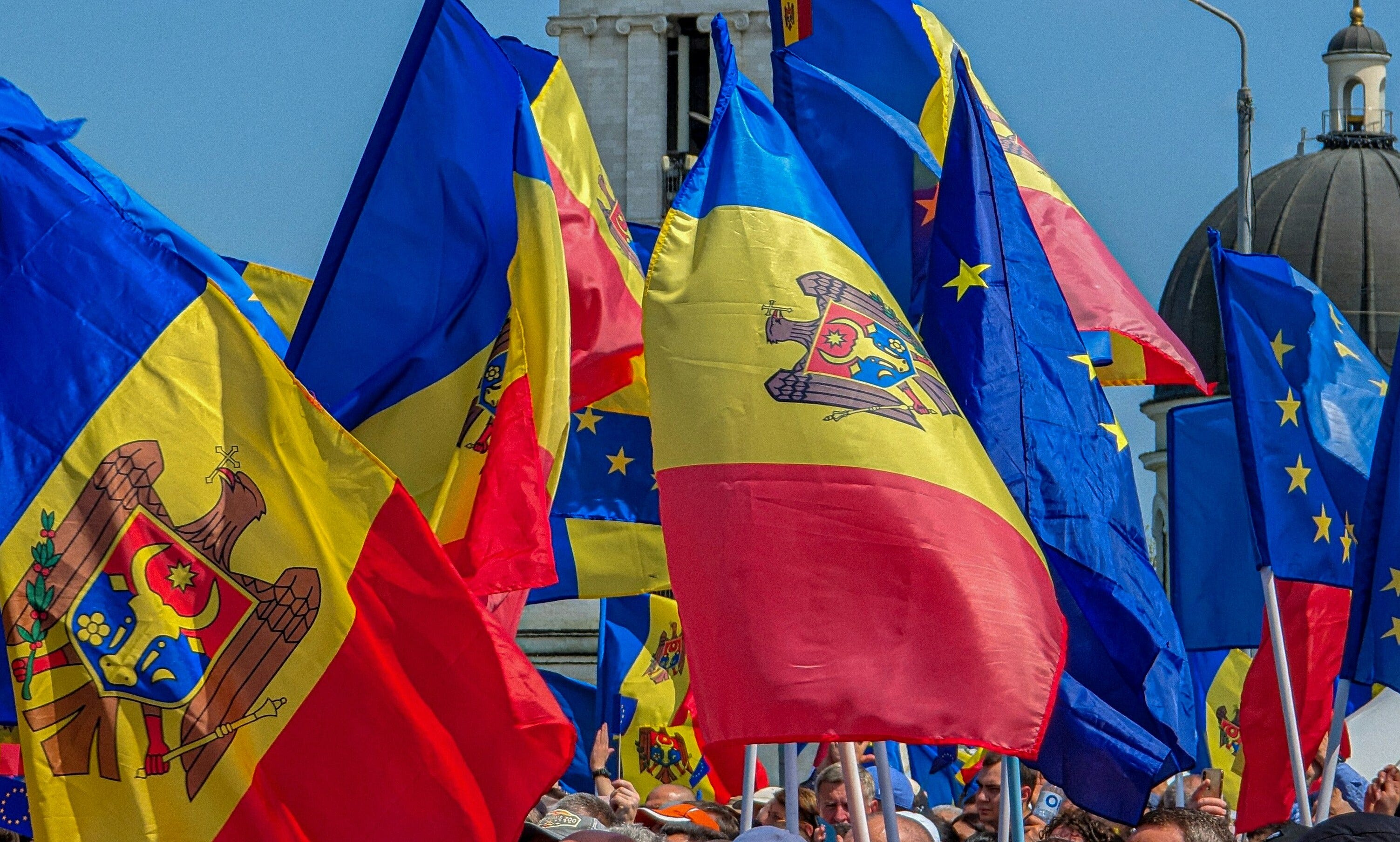
This image is used for illustrative purposes only.
At a glance
The EU’s 27 member states agreed on June 12 to open the first accession negotiation cluster — “Fundamentals” — with Moldova and Ukraine, formalized at an Intergovernmental Conference in Luxembourg on June 15
The breakthrough follows the lifting of a two-year Hungarian veto, which came after Péter Magyar’s election victory over Viktor Orban’s party in April 2026, followed by his swearing-in as prime minister in May
A candidate since 2022 and not itself the target of the veto, Moldova had been stuck because its talks were bundled with Ukraine’s — while Transnistria, a Russian-backed breakaway region in eastern Moldova, continues to weigh on its European path
How a Hungarian veto froze Moldova’s file
Since accession talks formally began in June 2024, Moldova and Ukraine have moved through the EU’s enlargement process as a pair. That pairing, justified at the time by the need for regional coherence amid Russia’s war against Ukraine, had one direct consequence: any block on one country’s file froze the other’s too. Hungary’s government, led by Viktor Orban and opposed to Ukrainian membership, kept its veto in place for two years — even though Moldova, for its part, had stayed on track with its own reform timeline.
The deadlock broke after Péter Magyar, Orban’s main challenger, won Hungary’s election in April 2026 and was sworn in as prime minister the following month. In early June, Budapest announced it had reached a deal with Kyiv on the rights of the ethnic Hungarian minority living in Ukraine — the friction point that had underpinned Hungary’s veto.
What actually changes on June 15
The “Fundamentals” cluster is the foundation of the entire EU accession process. It covers the rule of law, judicial independence, anti-corruption efforts and the functioning of democratic institutions — the chapters widely considered the toughest and slowest to close. Opening this cluster doesn’t mean closing it: in past enlargement rounds, Fundamentals has stayed open until the very final stages of negotiations, acting as a constant gauge of a candidate country’s democratic health.
For Moldova, five further thematic clusters still need to be opened, covering areas such as the single market, competitiveness and broader economic cohesion. At every stage, the process requires the agreement of all 27 EU member states — a mechanism that, as the Hungarian episode just demonstrated, can turn any single member state into a chokepoint for the entire process, even for a country that wasn’t party to the original dispute.
An accession that no longer depends on Chisinau alone
Past EU enlargement rounds in the Western Balkans suggest that opening a first negotiating cluster does not necessarily guarantee speed — or even an eventual outcome. For Moldova, the bigger risk may lie less in its own reforms, which the European Commission, the EU’s executive arm, has repeatedly praised, than in remaining structurally dependent on Ukraine’s timeline and on the shifting political balance inside each EU capital.
Beyond the diplomatic symbolism of June 15, European integration is already producing tangible effects for Moldovans. Since January 1, 2026, the country has been part of the EU’s “roam like at home” zone, letting its residents use their phones across the bloc without extra charges. It has also benefited since 2014 from a visa-free regime that eases travel into the EU’s Schengen area. These incremental gains, more than the announcements out of Luxembourg, are what shape the relationship between Moldova and the EU in most people’s daily lives.
But in the country’s east, nothing changed on June 12. Transnistria, a breakaway region where Russian forces have been stationed since the early 1990s despite repeated EU calls for their withdrawal, remains outside Chisinau’s effective control. The European Parliament has separately documented a hybrid destabilization campaign by Russia around Moldova’s 2024 presidential election and constitutional referendum, combining disinformation, illicit financing and cyberattacks — a campaign that did not stop the pro-European side from winning, but that illustrates the kind of pressure the country continues to face.
That contrast may be the real story of Moldova’s accession bid. The EU can open as many negotiating clusters as it likes; doing so doesn’t resolve the question of a territory Chisinau doesn’t control. However fast the process launched in Luxembourg moves, Moldova will keep negotiating its European future with, inside its own borders, a frontier that no one recognizes and no one can erase.
The Bottom Line
Moldova got, on June 15, what it had been waiting two years for. That wasn’t because of any new achievement — its reform record was already considered solid. It was because an election held hundreds of miles from Chisinau changed the political math in Budapest.
What does “joining the free world” mean for a country that doesn’t control part of its own territory, and whose European timetable still depends more on Hungarian ballots than on its own?
Sources: France Info · France 24 · Euronews · European Commission · Council of the European Union · European Parliament