
Malta's historic fourth: Labour wins again
Robert Abela's Labour Party wins an unprecedented fourth consecutive term in Malta, the EU's smallest state, on a platform of economic stability.

Voting on May 30 and results declared on May 31, 2026, Malta delivered a political verdict that no government in its history had ever managed: a fourth consecutive term. By calling elections a full year early, Prime Minister Robert Abela turned geopolitical anxiety into an electoral asset. The gamble paid off.
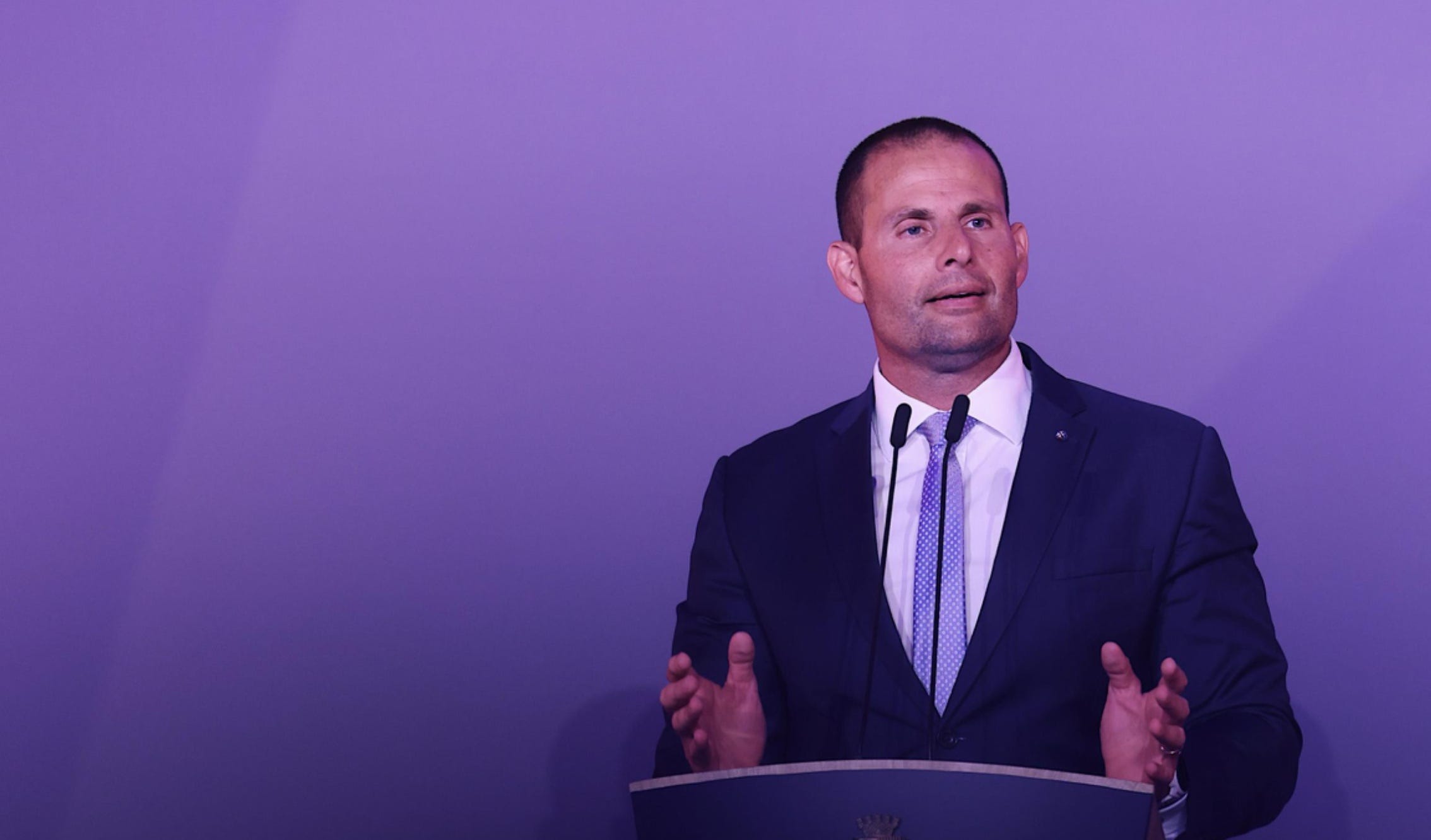
This image is used for illustrative purposes only.
At a Glance
Malta’s Labour Party won a fourth consecutive term in the snap elections of May 30–31, 2026 — the first time any party has achieved this since Malta’s first post-independence parliamentary elections in 1964.
Robert Abela, prime minister since 2020, ran on economic performance: 4% GDP growth in 2025 and sustained energy subsidies shielding households from the fallout of the ongoing Middle East conflict.
The Nationalist Party, rebuilt around Alex Borg — a 30-year-old lawyer and former Mr World Malta winner who took over after his predecessor resigned in June 2025 — failed to convert its generational renewal into a credible majority.
A calculated bet on timing
Abela had no legal obligation to call elections in May 2026. The normal mandate ran until 2027. But the strategic calculus was straightforward: act before the favorable conditions could unravel.
Malta’s economy grew 4% in 2025, one of the strongest rates in the European Union. Unemployment remains among the lowest in the 27-member bloc. Energy subsidies — a package totaling 150 million euros, topped up by an additional 250 million euros to absorb rising jet fuel costs and inflationary pressure linked to the Middle East conflict — have protected household purchasing power. In that context, every additional month before a vote represented a risk, not an advantage.
The timing also reflected the internal dynamics of the opposition. Malta’s Nationalist Party (PN), the country’s center-right party, was still rebuilding after its leader resigned in June 2025. His replacement, Alex Borg, brought youth and media appeal — but limited institutional standing against a sitting prime minister seeking a historic fourth term.
A small island under mounting pressure
Malta faces structural pressures that extend well beyond any single election cycle. With roughly 560,000 inhabitants packed into 316 square kilometers, it is the EU’s smallest and most densely populated member state — comparable in size to a mid-sized American city, but carrying the full weight of a sovereign government, a national economy, and EU membership obligations.
The island’s population has grown by nearly 30% over the past decade, driven overwhelmingly by foreign immigration to meet the demands of a booming economy — tourism, online gaming, and financial services. That growth has left visible marks: a construction boom that has transformed the skyline, traffic congestion, strained public services, and mounting concern over the degradation of UNESCO World Heritage sites.
Heritage preservation groups have raised the alarm for years over a growth model that, they argue, is consuming the island faster than it is sustaining it. Yet neither of the two dominant parties made environmental policy a campaign priority.
Malta’s political system is one of Europe’s most rigidly binary. No third party has won a parliamentary seat since 1962 — not even after independence in 1964. The Green party, ADPD, exists but has never broken through. That structural closure channels voter frustration, but leaves no institutional outlet for issues that fall outside the Labour–Nationalist duopoly.
The shadow of Daphne Caruana Galizia
Abela came to power in 2020 under difficult circumstances. His predecessor resigned amid a political crisis triggered directly by the 2017 assassination of investigative journalist Daphne Caruana Galizia, who had exposed corruption networks reaching the highest levels of the Maltese state. She was killed by a car bomb.
A 2025 report by the Council of Europe — a 46-nation human rights body separate from the EU — found that Malta has experienced one of the steepest declines in anti-corruption performance among its members since 2012, a trend that accelerated in the years following the Caruana Galizia murder. This assessment circulated among international observers during the campaign, but it did not shape the domestic debate.
That disconnect — between documented international concerns over Malta’s institutional trajectory and the domestic reality of a vote overwhelmingly centered on economic management — is perhaps the sharpest question this election leaves unanswered.
Analysis: growth, accountability, and what the ballot didn’t decide
The May 30–31 result illustrates a tension familiar across European democracies, though rarely named directly: when economic growth is sufficiently tangible, it tends to displace other considerations from the electoral agenda — at least for one cycle.
Malta’s elections are free, its pluralism genuine, and its democratic institutions functional. But a 2025 Council of Europe assessment documented persistent institutional concerns — on anti-corruption frameworks, rule of law, and press freedom — that neither major party addressed substantively during the campaign. These are not abstract rankings: they reflect documented gaps identified by the same European bodies that Malta sits alongside as a member state.
Abela won with a preliminary margin of roughly 18,000 votes — significant in a country of 560,000 people, but narrower than his 2022 performance, when he captured 55.11% of the vote and a margin of roughly 39,000 votes, one of the largest in Maltese electoral history. That compression could suggest a mild softening of his coalition rather than a confident renewal.
At what point does prosperity stop compensating for documented institutional shortfalls?
The real question for Malta is not whether Labour can win again. It is whether four more years of strong economic performance will also create the political space to address the governance concerns that European monitoring bodies have flagged — or whether continued prosperity will again defer them to the next cycle.
The Bottom Line
The real test for Malta’s next four years may not be economic — the island’s growth model has proven resilient. It may be institutional: whether a democracy that European bodies have flagged for persistent rule-of-law gaps can address them while the good times last.
Sources: Euronews · France 24 · AFP · Le Grand Continent