
Magyar hunts Orbán's loyalists
Hungary's new PM has declared war on Orbán's patronage network — an anti-corruption offensive as ambitious as it is legally treacherous.

At a Glance
Péter Magyar, 45, was sworn in on May 9 — Europe Day — after his center-right Tisza party won a landslide victory over Viktor Orbán’s Fidesz in April’s general election.
His government has given President Tamás Sulyok and several Orbán-appointed officials until May 31 to resign or face a constitutional showdown.
Associates of the former regime have begun moving assets to the Gulf, Australia, and Singapore — with some reportedly exploring pathways to the United States.
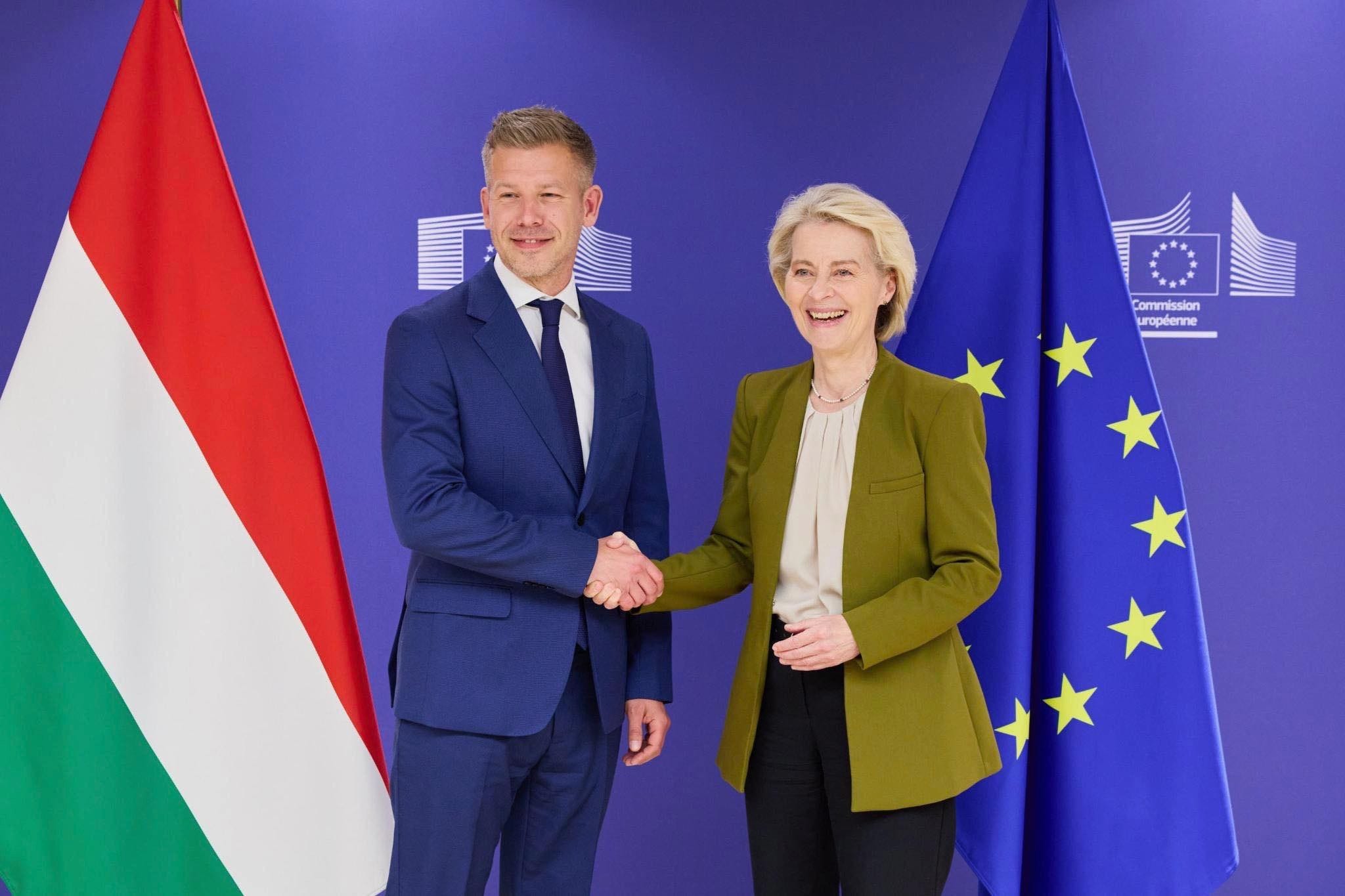
An offensive opening move
The message was sent on day one. Sworn in as prime minister on May 9 in Budapest, Péter Magyar used his first address not to set a governing agenda but to draw a line: resign or be removed. The demand targeted Tamás Sulyok, Hungary’s head of state, along with a string of officials installed by Viktor Orbán — Hungary’s prime minister from 2010 to 2025 — in key positions across the judiciary, the prosecutor’s office, and state oversight bodies. Deadline: May 31. Beyond that, a legal battle — almost certainly constitutional — awaits.
The urgency of that calendar reflects a constraint Magyar had identified before taking office. Loyalist networks, left intact, have time and resources to regroup. Constitutional lawyer Csaba Tordai put it bluntly in the Hungarian investigative outlet Valász Online: cutting off the economic resources of the Fidesz elite is a precondition, not an option.
The architecture of a state to dismantle
Over fifteen years in power, Viktor Orbán did not merely govern — he built. Long-term institutional appointments, repeated constitutional amendments, media consolidation, and the transfer of public assets into dedicated funds and foundations controlled by political allies. Valász Online estimates that more than €10 billion (approximately $11 billion at current exchange rates) in state assets could be immediately recovered.
Three names are at the top of the new Asset Recovery Authority‘s list — a body the Magyar government intends to place under the direct authority of the prime minister’s cabinet: István Tiborcz, Orbán’s son-in-law; Ádám Matolcsy, son of the former central bank governor; and Lőrinc Mészáros, a childhood friend who rose from small-time plumber to Hungary’s wealthiest individual in a matter of years, by a trajectory his critics condense into three words — luck, loyalty, and public contracts.
In what observers read as a sign of the pressure now being felt, Gyula Balásy, known as the “propaganda pope,” whose €300 million fortune was built largely through state contracts, announced the day after Tisza’s election victory that he was donating his companies to the state.
The asset flight — and the American signal
The most revealing reaction has not come from institutions — it has come from balance sheets. Asset transfers have been reported to Saudi Arabia, Oman, the United Arab Emirates, Australia, and Singapore. Some figures in the former regime’s orbit have also reportedly inquired about U.S. visas, hoping to find employment within structures linked to the MAGA movement — which could suggest that the international reach of Orbán’s networks may extend well beyond Hungary’s borders, though these connections remain to be formally documented.
Magyar’s first diplomatic signal was equally pointed: Hungary will no longer serve as a political sanctuary for foreign officials facing justice in their own countries. Zbigniew Ziobro, Poland’s former justice minister, who had been granted asylum under Orbán, read the shift quickly. His former deputy, Marcin Romanowski, also a beneficiary of political asylum under the previous government, finds himself in the same precarious position. The message also signals a deliberate effort to repair ties with Polish Prime Minister Donald Tusk and to restabilize the Visegrád Group — the Central European alliance of Hungary, Poland, the Czech Republic, and Slovakia. Its internal dynamics had deteriorated sharply under Orbán’s pro-Russian alignment.
Analysis: what the Hungarian case tells us about Europe
① The constitutional paradox of democratic repair. Magyar faces an uncomfortable bind that political transitions scholars know well — and that American readers might recognize from debates over post-authoritarian accountability: no legal obligation binds officials in place to resign on the prime minister’s say-so. If they refuse, Magyar will need to pursue constitutional amendments — which requires qualified parliamentary majorities and opens his government to the charge, already leveled by Orbán’s supporters, of using the very methods it claims to oppose.
To dismantle a system built by bending the rules, you must use the same constitutional tools that were bent to build it.
② The EU dimension — money, not just principle. Brussels had frozen a substantial portion of EU cohesion funds — structural subsidies designed to reduce economic disparities between member states — destined for Hungary, citing repeated rule-of-law violations. Unlocking that financing requires credible anti-corruption guarantees — which means visible, documented prosecutions. For Magyar, the hunt for loyalists is not only an electoral promise: it is a condition of economic governance.
③ The sociology of fear. A survey by the Medián institute finds that two-thirds of Hungarians want to see Orbán himself brought to trial. That figure exceeds partisan logic: it signals a social demand for symbolic rupture, not merely institutional reform. What Magyar must manage is the gap between that expectation and what legal procedures can realistically deliver — and within what timeframe.
④ Orbán’s defense on the record. The former prime minister has publicly stated that he “never tolerated any corruption” [translated from Hungarian] and rejected all allegations of personal enrichment. He has announced he will give up his parliamentary seat to focus on the internal reorganization of Fidesz. These statements constitute the official defense posture and do not yet respond to the specific proceedings Magyar’s government intends to open — but they frame an organized political contestation that is unlikely to remain quiet.
The bottom line
Péter Magyar won an election. What remains is something harder: proving that a democracy can repair itself from within, using the tools left behind by the man who bent them. The real question is not whether Orbán’s loyalists are afraid — several signals suggest they are. It is whether fear alone is enough to drive a transition, or whether Magyar will eventually face a choice between legal purity and effective dismantling. In Central Europe, that choice has never been a minor one.
Sources: France 24 · La Libre · German Marshall Fund