
Lithuania hacked: state registries breached by foreign state
Lithuania says a foreign state stole over 600,000 registry records — exposing military and intelligence personnel. A breach that reveals Europe's hybrid war vulnerability.

More than 600,000 entries from Lithuania’s national registries have been exfiltrated in what the government says was the work of a foreign state. Beyond the technical failure, the incident exposes a structural vulnerability that no diplomatic visit can fully resolve.
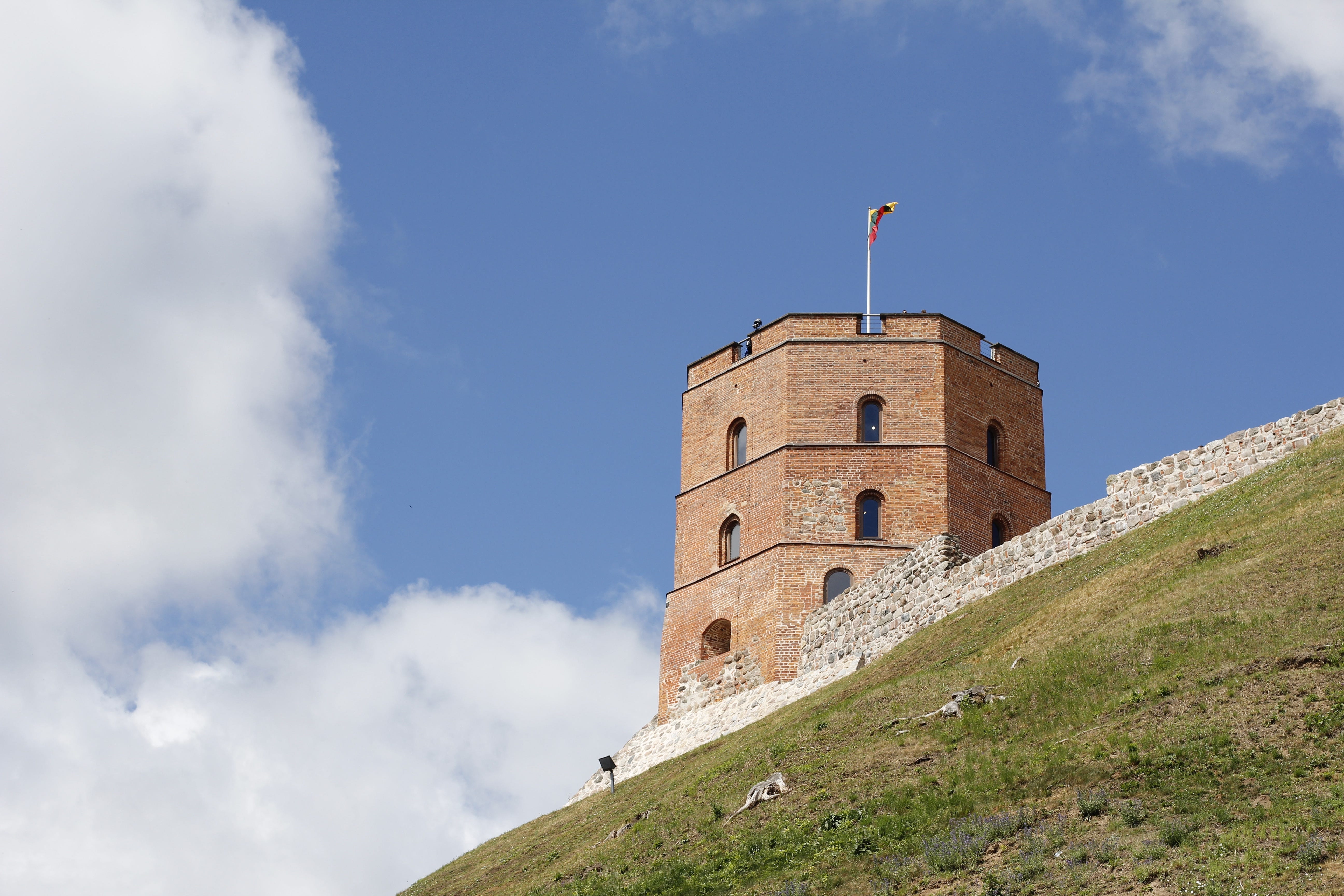
This image is used for illustrative purposes only.
At a Glance
More than 600,000 records from Lithuania’s real estate and legal entity registries were compromised using login credentials belonging to authorized institutions, according to the country’s prosecutor general’s office.
A foreign state is officially suspected; Lithuanian politicians are pointing to Russian intelligence services, though no formal evidence has been presented to support that claim.
The breach comes amid an acute security environment: drone incursions over Vilnius, reported sabotage operations, and a visit by European Commission President Ursula von der Leyen to coordinate the Baltic response on aerial threats and cyberattacks.
Stolen credentials, not brute force
Lithuania’s prosecutor general’s office confirmed that the breach did not result from a direct attack on government systems — it was carried out using the login credentials of institutions legally authorized to access the registries. That distinction matters: it suggests either a prior compromise of those institutions or a large-scale social engineering operation, and in either case, a premeditated intrusion rather than an opportunistic one.
The affected data covers primarily real estate and legal entity registries. Adrijus Jusas, director of the state-owned Center of Registers, resigned Monday, May 25, following the breach. Emergency cybersecurity measures were deployed immediately: suspected user accounts were blocked and access restrictions were tightened, requiring credential updates before reinstatement.
These registries are far from routine bureaucratic records. They contain home addresses and contact details for private individuals — including, according to Laurynas Kasčiūnas, a conservative opposition politician and former defense minister, intelligence officers, military personnel, diplomats, and elected officials. Kasčiūnas posted on social media Sunday attributing the operation to Russian intelligence services. He offered no evidence to support the claim, which should be treated as a political allegation rather than an established fact.
The prosecutor general’s office limited its public statement to confirming the probable involvement of a foreign state, without naming one.
Lithuania’s exposed position
Understanding why this incident resonates far beyond a technical failure requires placing Lithuania in its geopolitical context. The country of roughly 2.8 million, a NATO and EU member since 2004, shares borders with Belarus — a close Russian ally — and with the Russian exclave of Kaliningrad. That geography has made it one of the primary targets of what European security officials call hybrid warfare: a broad category of operations designed to destabilize a target state without triggering a conventional military response.
Hybrid warfare encompasses cyberattacks on critical infrastructure, disinformation campaigns, arson and vandalism targeting strategic sites, pressure on energy networks. The term is deliberately vague — it covers actions of widely different types, united by their deniability and their aim to fragment social and institutional cohesion. For American readers, it functions somewhat like what U.S. officials have described in the context of Chinese or Russian interference operations: actions that fall below the threshold of war but are designed to weaken democratic societies from within.
In that framework, the theft of registry data could serve as an intelligence asset of considerable value: home addresses of military officers or intelligence personnel can enable surveillance, coercion, or physical targeting in subsequent operations.
Drones, alerts, and Brussels
The data breach did not emerge in isolation. The week prior, a drone alert prompted Vilnius residents to take shelter following suspicious activity near the Belarusian border. Robertas Kaunas, Lithuania’s defense minister, framed the moment bluntly: this is “the new reality the Baltic states are facing,” he said, adding that the probability of similar incidents repeating is very high.
Ursula von der Leyen, president of the European Commission — the EU’s executive arm, which sets and coordinates common European policy — was scheduled to travel to Vilnius the following day. The visit centered primarily on the surge in drone incursions near the Belarusian border, with the cyber dimension forming a parallel and increasingly inseparable strand of the same security emergency.
The political optics matter as much as the logistics: a visit from Brussels’ top official signals that Lithuania’s exposure is no longer treated as a bilateral or regional concern, but as a question for the European alliance as a whole.
Analysis: when data becomes a weapon
What makes this episode analytically significant is not the breach itself — incidents of this type have multiplied across Europe over the past five years — but the method. Exploiting the credentials of legitimate institutions rather than attacking systems directly shifts the vulnerability from the technical to the human and organizational.
This sequence — access through authorized credentials, targeting of sensitive registries, potential exposure of security-sensitive personnel — resembles a preparatory intelligence operation, even though its precise purpose and the identity of its orchestrator remain formally unestablished. It could suggest that the real target is not the data itself, but the human map it makes possible.
The deeper question the breach raises is one of governance: how far can democratic states digitize their public records without creating arsenals of exploitable data for adversarial powers? Lithuania is not alone — Estonia and Latvia face comparable exposure. But it illustrates a structural paradox of administrative digitization:
The more efficiently a government moves its records online, the wider its potential attack surface becomes.
The Bottom Line
The Lithuanian breach poses a question that Brussels and Western capitals have yet to answer: at what point does the digitization of state registries become a liability that outweighs its benefits? The answer won’t come from a single diplomatic visit to Vilnius. It may require rethinking what a democratic state has the right to store — and in what form.
Sources: Euronews · AP