
Lebanon: France demands UN session as Israel crosses the Litani
Paris demanded an urgent United Nations Security Council meeting after Israel expanded its ground offensive beyond the Litani River — openly defying the ceasefire brokered by Washington in April.

At a Glance
On Sunday, May 31, Israeli forces raised their flag over the Beaufort fortress — a medieval hilltop stronghold in southern Lebanon and the deepest Israeli push into Lebanese territory since the 2000 withdrawal — crossing a strategic boundary whose demilitarization has been central to decades of UN diplomacy.
Jean-Noël Barrot, France’s foreign minister, called the escalation a “major blunder” that runs counter to Israel’s own interests and security, and formally requested an emergency session of the UN Security Council.
The offensive came while a US-brokered ceasefire has nominally been in effect since April 16, and while direct Israeli-Lebanese peace talks continue in Washington — raising urgent questions about whether diplomatic architecture can survive Israeli unilateral action.
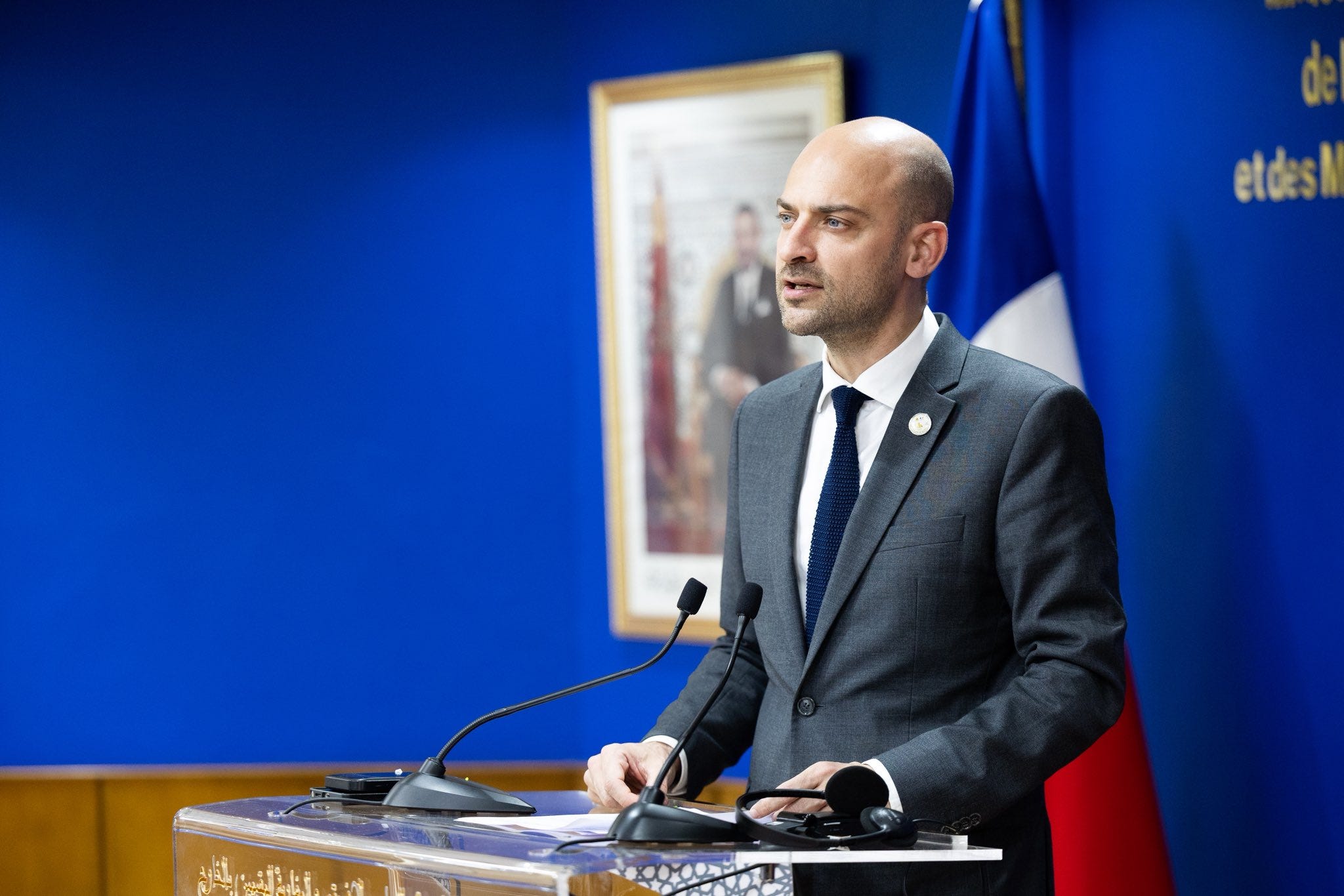
This image is used for illustrative purposes only.
The strategic logic behind the Litani crossing
Israeli Prime Minister Benjamin Netanyahu announced Friday, May 29, that his forces had crossed the Litani River — a strategic boundary roughly 19 miles north of the Israeli border. The river holds particular symbolic weight: Resolution 1701, adopted by the UN Security Council in 2006 after the last major Israel-Lebanon war, requires the area south of the Litani to remain free of any armed presence other than the Lebanese army and UNIFIL, the United Nations Interim Force in Lebanon, established in 1978 to monitor the Israeli-Lebanese border.
On Sunday, the Israeli military confirmed that operations were expanding to “other areas” north of the river. The most visible marker of this advance was the capture of the Beaufort fortress on May 31 — a medieval hilltop stronghold dominating southern Lebanon and, according to analysts, the deepest Israeli penetration into Lebanese territory since its two-decade occupation ended in 2000. Israel’s defense minister described the moment as a return, 44 years after Israeli forces previously held the site. Beaufort had received enhanced UNESCO heritage protection in November 2024.
A ceasefire in name only
The diplomatic backdrop makes the escalation harder to dismiss as routine. A US-mediated ceasefire took effect on April 16, initially set for ten days, then extended by three additional weeks on April 23 following talks with Israeli and Lebanese envoys. A further round of direct negotiations was scheduled in Washington for June 2 and 3.
The fighting, however, has never fully stopped. According to Lebanon’s Ministry of Public Health, the conflict has killed more than 3,300 people and displaced over one million since fighting erupted on March 2, 2026 — when Hezbollah, the Iran-backed Lebanese militant group, opened fire on Israel in retaliation for Israeli and U.S. strikes that killed Iranian Supreme Leader Ali Khamenei two days earlier. Lebanon’s Prime Minister Nawaf Salam, a reform-oriented figure who came to power on a platform of institutional reform and Hezbollah disarmament, condemned Israel’s actions as “scorched earth” tactics while defending continued direct negotiations.
France’s stake — and the limits of condemnation
France’s response reflects a direct military interest that goes beyond diplomatic posture. Paris is one of the largest contributors to UNIFIL, the UN peacekeeping force stationed in southern Lebanon. A French peacekeeper was killed in April during a UNIFIL patrol in the south of the country, making France’s stake in the stabilization of the conflict acutely personal.
Barrot stated that the Israeli military expansion runs counter to Israel’s own interests and security. By the end of the day, President Emmanuel Macron reinforced that message, arguing that regional stability in the Middle East must start in Lebanon, where he called on all armed parties to lay down their weapons.
The harder question facing both Brussels and Washington is whether the machinery of international pressure can still function when one of the UN Security Council’s permanent members — the United States — is simultaneously mediating peace talks and providing military cover for the operations that undermine them. The precedent from the November 2024 ceasefire, which collapsed before the March 2026 resumption of hostilities, suggests that repeated verbal condemnations without tangible consequences could become a structural incentive for Israel to continue.
The bottom line
The question is no longer whether Paris or Brussels will condemn the move — they already have. It is whether the Security Council can still function as a de-escalation tool when the geopolitical math keeps producing the same result: declarations, no consequences, another advance.
Sources: France Info · AFP · Radio-Canada · Euronews · Security Council Report · Lebanese Ministry of Public Health · ACLED