
Kretschmer breaks ranks on Ukraine — and on refugees
Saxony's premier Michael Kretschmer challenges Berlin's Ukraine doctrine on refugees, Russian gas, and military support — and divides his own party.

His dissent reveals fault lines that Berlin’s governing coalition would rather keep quiet.
At a Glance
Michael Kretschmer, premier of the eastern German state of Saxony and deputy leader of the CDU, wants the EU’s temporary protection program for Ukrainian refugees to expire next year — arguing that large parts of Ukraine are now safe.
He has called Germany’s current sanctions against Russia poorly calibrated and has not ruled out a return to Russian gas imports after a ceasefire.
He believes Germany has already gone too far in its military support for Ukraine, and insists the conflict can only be resolved through diplomacy — including China and India.
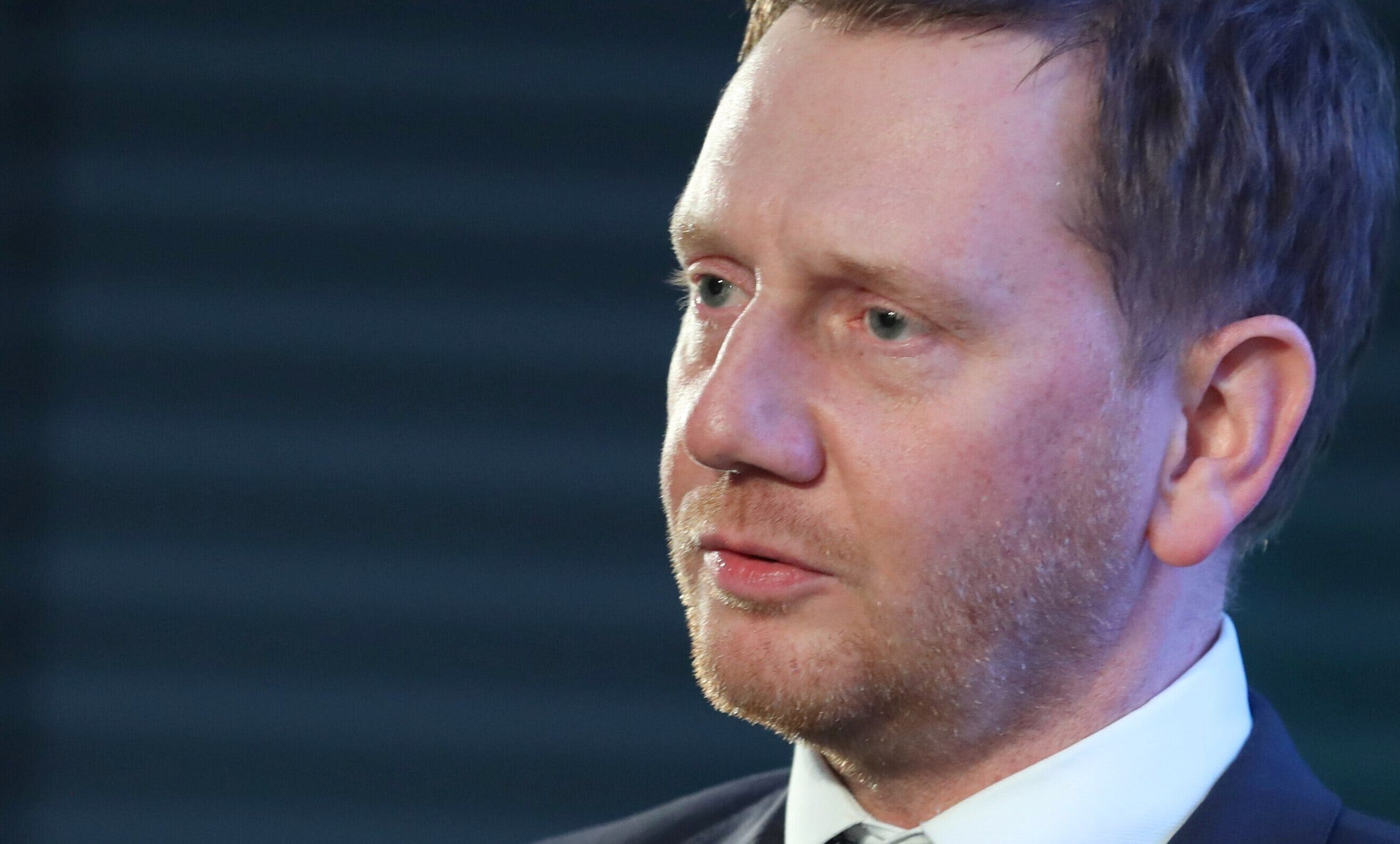
This image is used for illustrative purposes only.
A dissident inside the governing party
Kretschmer — premier of the state of Saxony and deputy leader of the CDU, Germany’s center-right Christian Democratic Union — sat down with Euronews at Saxony’s state representation in Berlin. The conversation covered Russian energy deliveries, economic sanctions against Moscow, and the fate of the roughly one million Ukrainian refugees currently living in Germany.
His positions cut against the official line of his own party. Friedrich Merz, Germany’s federal chancellor and CDU leader, has staked the new CDU/SPD coalition government on continued support for Ukraine. For Kretschmer, the coalition’s approach on everything from refugee policy to arms deliveries is open to challenge — and he says so publicly.
That is not a marginal voice. Kretschmer leads one of Germany’s sixteen federal states, sits at the top of the country’s governing party, and was a key broker of the coalition agreement that brought the current government to power. That he openly questions Berlin’s doctrine suggests the apparent consensus within the CDU may be thinner than it looks — though how deep those divisions run remains difficult to assess from the outside.
The welfare trap: Kretschmer’s case against Bürgergeld
On the refugee question, Kretschmer identifies what he calls a “serious mistake” made by the previous Social Democrat-led coalition government: granting Ukrainian refugees immediate access to Bürgergeld — Germany’s unemployment and social assistance benefit, roughly comparable to welfare programs in the United States or Canada — from the moment of their arrival in 2022.
The result, he argues, is a stark employment gap. In Germany, only 20 to 30 percent of Ukrainian refugees found work, compared to 70 to 80 percent in France, Poland, the Czech Republic, and the Netherlands. “This is not because of the Ukrainians themselves,” he told Euronews, “but because of our welfare system.” [translated from German]
The argument deserves context. Cross-country comparisons on refugee employment are methodologically complex, and structural factors — language barriers, credential recognition, housing costs — all shape the gap. The case made by the previous government, that generous benefits ensured dignity and stability for new arrivals, is a legitimate counterpoint that the available data alone cannot fully resolve.
The EU protection directive: Kretschmer’s real target
For Kretschmer, the more consequential battle is at the European level. The Temporary Protection Directive — a European Union emergency mechanism broadly comparable to the U.S. Temporary Protected Status (TPS) program — is set to expire next year. Activated in March 2022, it allowed Ukrainians to work and access social services across EU member states without going through individual asylum procedures. Kretschmer opposes renewal.
His argument is twofold: large parts of Ukraine are now safe enough for people to return and rebuild, and Europe’s capacity to absorb refugees is not unlimited. He told Euronews that vast regions of Ukraine were already safe enough for people to live normally — and that European host countries, Germany included, were reaching the limits of their absorptive capacity.
The expiration of the directive would have significant legal and practical consequences for millions of Ukrainians across the EU under temporary protection, affecting their residency rights, access to employment, and social entitlements — the precise scale of which remains difficult to project.
Sanctions and gas: the cautious pragmatist
On sanctions, Kretschmer’s position is characteristic: principled in foundation, skeptical in application. He does not reject them outright — “aggression against a sovereign state cannot go without consequences” — but argues they have been calibrated in ways that hurt Germany more than Russia. He points to the fact that the United States maintains forms of cooperation with Moscow that Europe has ruled out for itself, including in civilian nuclear energy, where several Eastern European countries continue to receive Russian fuel assemblies.
On gas, his framing is measured but directionally clear: a resumption of Russian gas deliveries could be considered after a peace agreement. That idea was unthinkable in mainstream European political discourse at the height of the war. That a deputy leader of Germany’s governing party now expresses it openly — however carefully hedged — is a signal worth noting, even if the conditions he sets remain undefined in timeline and substance.
The military question: how far is too far?
Kretschmer has consistently maintained that Germany must not become a party to the conflict, and that it has already pushed too far in some of its military support decisions. His persistent opposition to deliveries of Taurus cruise missiles — long-range German precision weapons whose transfer to Ukraine was debated and ultimately declined by Merz’s government in early 2026 — illustrates where he draws the line.
That position might appear isolated. In eastern Germany, it is less so. The electoral gains of the AfD, Germany’s hard-right party, and the BSW, a left-nationalist party founded by former Left Party leader Sahra Wagenknecht, in eastern German states appear to reflect a genuine divergence in perception between eastern and western Germany on the war. Kretschmer would appear to occupy a specific political space: a CDU figure credible enough in the east to hold voters that his party cannot afford to lose entirely to the far right.
The Bottom Line
Michael Kretschmer is not a protest voice from the margins. He is the premier of a German federal state and the deputy leader of the party that holds the chancellery. His positions on Ukrainian refugees and Russian gas will be watched closely as the war moves — if it moves — toward negotiations.
Will his dissent prove to be the first visible crack in a broader CDU shift away from the full-throttle Atlanticism of the post-2022 consensus? Or will it remain a tolerated regional deviation, contained to Germany’s east? The answer may depend less on what happens in Berlin than on what happens in Kyiv and Moscow in the months ahead — and on whether Europe can finance Ukrainian reconstruction while managing the long-term settlement of a displaced population whose future remains, for now, suspended.
Sources: Euronews