
Kirill is in the EU's crosshairs — just not yet on the list
The EU won't sanction Russia's Patriarch Kirill in its next package — but the door is open. Hungary's veto is gone. The real decision comes in July.

At a Glance:
Kirill will not appear in the next EU mini-sanctions package, which is narrowly focused on actors in Russia’s defense-industrial complex
Hungary’s new government, led by Prime Minister Péter Magyar, has effectively removed the veto that blocked any such measure since 2022 — opening an unprecedented diplomatic window
The actual decision may be deferred to the 21st sanctions package, expected to be adopted in July, which will require significantly more complex negotiations
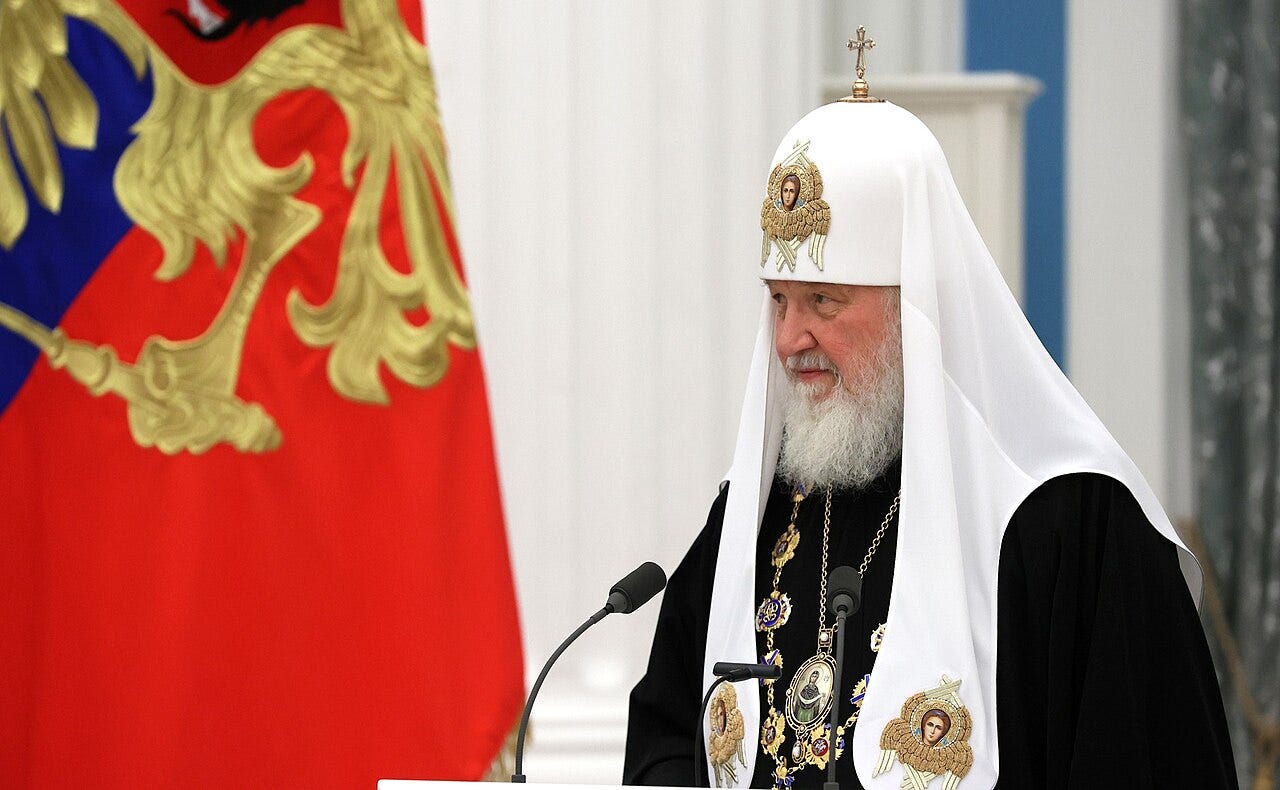
This image is used for illustrative purposes only.
A Hungarian veto lifted, a blacklist still closed
Since 2022, Kirill’s candidacy for the EU’s sanctions list has run into a single obstacle: Budapest. Under former Prime Minister Viktor Orbán — now voted out of office following a decisive defeat in April — Hungary had blocked the measure on grounds of religious freedom. A convenient argument, and a strategic one: shielding Kirill also meant preserving a back channel to Moscow.
April’s election changed the equation. Péter Magyar, Hungary’s new prime minister, came to power promising to reset relations between Budapest and Brussels after years of deliberate friction. His government has signaled clearly that it will not replicate its predecessor’s reflexive vetoes. Márton Hajdu, chairman of the Hungarian parliament’s foreign affairs committee and a close Magyar ally, drew the line precisely: sanctions that would threaten Hungary’s economic stability remain off the table. But those aimed at exerting collective pressure on Moscow — including the blacklisting of a religious figure — will no longer meet automatic resistance from Budapest.
That shift has not, however, translated into immediate action. Brussels is working on a deliberately narrow mini-package targeting individuals connected to Russia’s military-industrial complex. Ambassadors held a first round of discussions on Friday. The goal is clean approval before the June 15 meeting of EU foreign ministers. Adding Kirill to that package would attract the kind of attention and resistance that could derail the timeline.
Kirill: bishop, propagandist, and political actor
Kirill is not a cleric who stumbled into geopolitics. He has built a theological doctrine that serves the war effort. Under his leadership, the Russian Orthodox Church, Russia’s dominant religious institution with historically close ties to the Kremlin, endorsed a document framing Russia’s invasion of Ukraine as a “holy war” [translated from Russian] and calling for the elimination of Ukrainian independence as a sovereign concept. That positioning has led several European capitals to treat him less as a man of faith than as a political operator within Russia’s war machine.
It is precisely this dual status — religious authority and political actor — that makes his potential blacklisting both legally defensible and diplomatically sensitive. Sanctioning a church patriarch, even one whose public statements openly support an armed invasion, would be without precedent in the EU’s sanctions toolkit. Some member states may hesitate, independent of Hungary’s position.
The 21st package: where the real decision lies
The more plausible track now shifts to the 21st sanctions package, whose legislative proposal is due next month ahead of a July adoption. This package will be substantially broader, more complex to negotiate — and potentially the right vehicle for a measure as symbolically loaded as sanctioning a religious leader.
Analysis: sequencing as strategy
The sequencing at play here — a deliberately modest mini-package, followed by a broader one in July — could indicate a strategy aimed at preserving consensus. Rather than spending political capital on a contentious case before securing the essentials, Brussels may be managing bandwidth as much as it is managing politics.
① The power mechanics: Kirill’s potential listing would test whether the EU is willing to treat a religious institution as a belligerent actor. That has implications beyond this case — for how European sanctions law applies to non-state entities with political functions.
② The unanimity question: The removal of Hungary’s veto is a necessary condition, not a sufficient one. Twenty-seven member states must agree. Budapest may have been the most visible obstacle; it may not have been the only one. Other capitals, unencumbered by the need to be seen as blocking, may now surface quieter objections.
③ The symbolic weight: No EU sanctions measure to date has targeted a sitting head of a major religious institution. The decision — whenever it comes — will be read as a statement about where the line between faith and complicity in warfare is drawn under European law.
④ The precedent risk: Precisely because the gesture is unprecedented, it carries legal and diplomatic exposure. That risk is manageable; it is also real. Brussels’ caution may reflect institutional prudence as much as political hesitation.
The bottom line
Europe is tightening the screws on Russia. It is still working out exactly whose hand holds the wrench — especially when that hand grips a bishop’s crozier rather than a defense contract.
The deeper question is not whether Kirill ends up on the list. It is whether the EU is prepared to state, formally and on the record, that a religious leader can be a combatant in all but name.
Sources: Euronews