
Italy's energy crisis is sending Italians home for the summer
With Brent crude above $120/barrel, 56% of Italian vacationers are staying home this summer. The country's tourism sector, meanwhile, keeps growing.

There is something quietly ironic about Italy’s summer 2026. A country absorbing the full force of an energy shock — caused by tensions around the Strait of Hormuz and the cascading effects of the Middle East conflict — is becoming, for its own citizens, the default vacation destination. Not out of patriotism or wanderlust, but out of arithmetic: when diesel prices jump 12% in a single month and crude oil tops $120 a barrel, the Amalfi Coast costs less than Barcelona.
The real question is not whether Italians are staying home — the data confirms they are. It is what this forced retreat reveals about the resilience of a tourism economy, and whether the 2026 shock marks a temporary detour or the beginning of a lasting shift in how Europeans spend their leisure.
At a glance
According to an April 2026 Istituto Piepoli survey, 56% of Italians planning to vacation this summer will stay within the country, followed by Europe (29%) and non-EU destinations (9%).
The transmission mechanism is direct: U.S.-Iran tensions and disruptions near the Strait of Hormuz — through which roughly 20% of global oil supplies transit — pushed Brent crude above $120/barrel, translating into a 12% spike in diesel prices in March 2026 and squeezing household mobility budgets.
The counter-intuitive result: Rome recorded +3.8% in tourist arrivals in the first two months of 2026 compared to the same period in 2025 — the domestic retreat is not triggering a sector collapse.
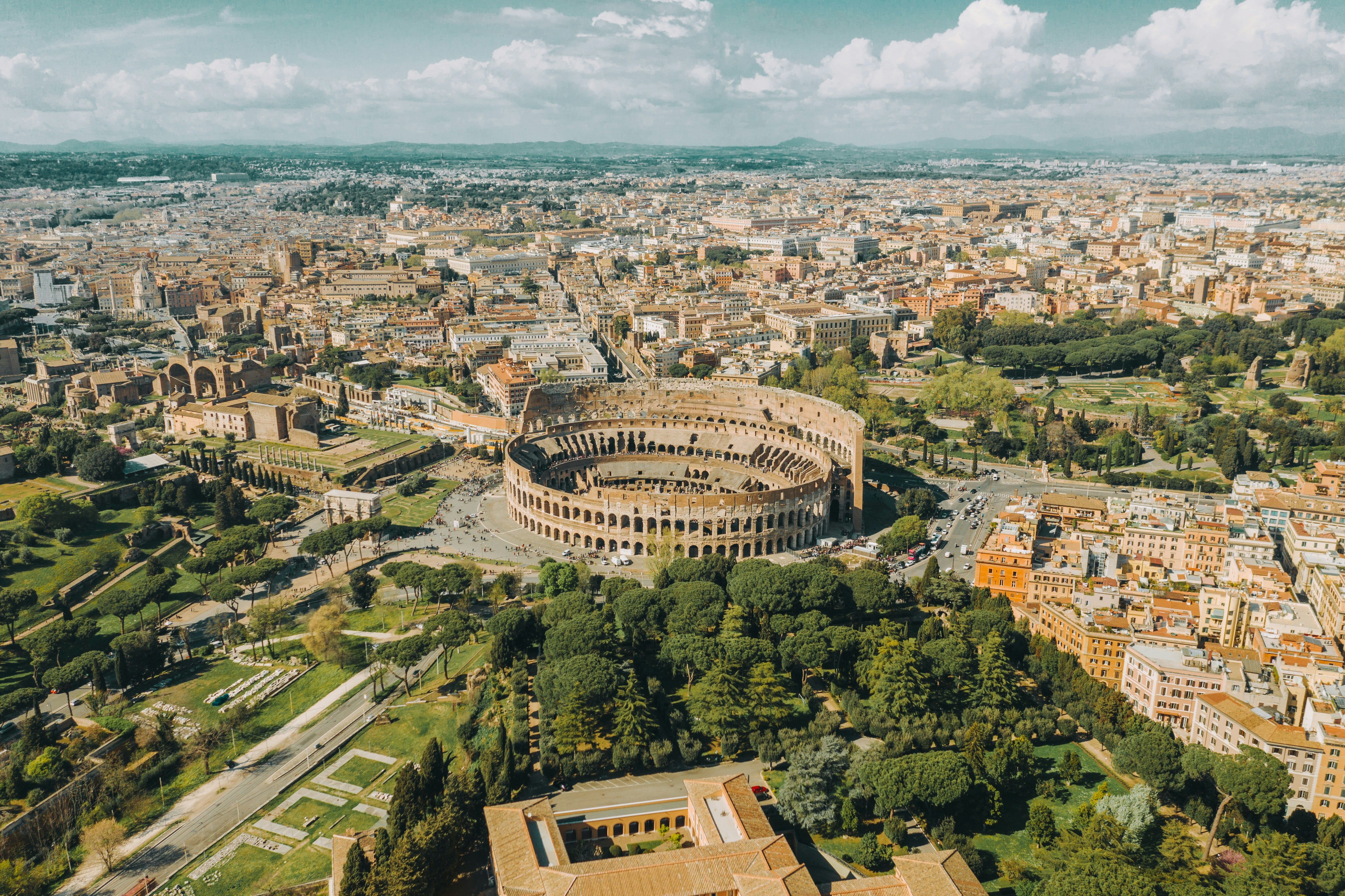
This image is used for illustrative purposes only.
The facts: what the data establishes
The Istituto Piepoli survey — conducted on a representative sample of 500 respondents between April 20 and 22, 2026, and presented at the Rome Chamber of Commerce (Camera di Commercio di Roma) — provides a useful directional snapshot of intended summer behavior. As with any survey of this scale, the figures should be read as indicative of broader trends rather than precise population-level counts. Among the 70% of Italians who told pollsters they plan to take a vacation in the next four months, 56% chose Italy as their destination. More telling: 54% of respondents had already changed their plans or remained undecided about their final choice — a level of uncertainty without precedent in comparable surveys from previous years.
The two leading reasons for this hesitation are rising prices — transportation, energy, inflation — and security concerns linked to ongoing conflicts. This is not coincidental. According to ISTAT’s preliminary data for March 2026, diesel prices rose 12% month-on-month and gasoline prices 4.8%, driven directly by international energy market tensions.
34% of Italians who plan to travel say they will spend less on vacation than in 2025; 48% will maintain the same budget. Only 18% plan to spend more.
The mechanism: from the Strait of Hormuz to a beach in Rimini
The chain of transmission between geopolitical conflict and the decision to vacation in Lecce rather than Lisbon is rarely made explicit — but it is worth spelling out.
Since early 2026, escalating tensions between the United States, Israel, and Iran have significantly disrupted oil transit near the Strait of Hormuz, a chokepoint through which approximately 20% of global oil supplies flow. Italy’s national statistics institute, ISTAT, noted in its May 2026 monthly economic bulletin that Brent crude exceeded $120/barrel in April — a level not seen since the peak of Europe’s 2022 energy crisis. The OECD, in its latest economic forecasts, projects Italian inflation reaching 2.9% in 2026, with energy costs as the primary driver, and has revised GDP growth down to 0.5% for the year.
For a median Italian household, the pressure is cumulative rather than concentrated in any single line item. Higher fuel costs make a road trip more expensive at the pump. Airlines, exposed to jet fuel prices that track crude oil, have passed their own cost increases onto ticket prices. And at the destination, hotels — themselves facing steeper electricity bills — have adjusted their rates accordingly. The result is that the full cost of a foreign vacation has risen at every stage of the journey simultaneously, not just on the motorway. It is this stacking of increases, rather than any one factor in isolation, that tips the calculation toward staying home.
The decision to stay in Italy is less a preference than a constrained choice dressed up as one.
That distinction is absent from the public narrative about a “boom in domestic tourism.”
The OECD notes that higher energy costs risk eroding the purchasing-power gains Italian households achieved in 2024-2025 during the post-Ukraine disinflation period. Italian household consumption is forecast to slow to +0.6% in 2026, down from +1.1% in 2025.
What the numbers show: an uncomfortable asymmetry
According to data from the Lazio Bilateral Tourism Board (Ente Bilaterale del Turismo del Lazio), presented at the Piepoli conference at the Rome Chamber of Commerce, 2025 was a record year for Roman tourism: 22.9 million arrivals and 62.9 million overnight stays (+3.1% on 2024). This momentum did not slow with the onset of the crisis: in the first two months of 2026, according to the same source, arrivals in Rome rose a further +3.8% and overnight stays +2.8% compared to the same period in 2025.
The premium end of the market is also holding. Rome has been widely cited in industry reporting as among the leading European cities for luxury hotel openings in recent years, with 14 new high-end establishments reportedly planned for 2026 — though no independently verified global ranking has been identified for this figure, and it should be read as indicative of a broader trend rather than a certified superlative.
This dual picture — households under budget pressure, upscale destination in expansion — is not contradictory. It reflects a deepening segmentation of the tourism market: on one side, a mass domestic tourism redirecting toward less expensive options (Puglia, Sicily, Sardinia); on the other, a high-spending international flow that continues to arrive, largely insensitive to local fuel prices. The result, if sustained, would be that the net beneficiaries of the 2026 shock are not Italian travelers, but the businesses catering to those who can still afford to come from abroad.
It should also be noted that, according to industry surveys reported in the Italian trade press, nearly half of operators signal an increase in their own operational costs, linked notably to energy prices and Gulf tensions. The shock hits both ends of the chain: the traveler and the hotelier.
The European angle: a case study in constrained resilience
Italy is not alone in this configuration. The retreat toward domestic tourism under energy constraint is likely a pan-European dynamic, even if Italy offers the most documented case for summer 2026.
A comparison with 2022 is instructive. When Russia’s invasion of Ukraine triggered a gas shock across Europe, Italian households had already shifted toward domestic destinations. The structural difference in 2026 is the nature of the shock: this is an oil shock, directly affecting transportation fuels and air fares, whereas the 2022 crisis primarily hit heating and electricity costs. The impact on vacation decisions is therefore more immediate and direct in 2026 than it was four years ago.
For American readers, the dynamic is not unlike the “staycation economy” that emerged in the United States during the 2008 fuel price spike or the 2020-2021 travel restrictions: a constraint imposed from outside can stimulate domestic tourism segments that had previously been underutilized. The analogy has limits — Italy’s distances are far shorter, and the density of its cultural and natural heritage has no direct American equivalent — but the underlying economics of substitution follow the same logic.
At the European Union level, this recomposition of internal tourism flows also carries policy implications. Eurostat had already documented a “tourism relocalization” trend in several member states after 2022. If the 2026 energy shock persists, that trend could deepen — with consequences for the current accounts of traditionally tourism-exporting countries (Germany, the Netherlands) and tourism-receiving ones (Italy, Spain, Greece).
Analysis
① The 2022 precedent and its limits
The 2026 Italian energy crisis is not unprecedented. In 2022, Italian households had already absorbed a major energy shock — though gas-driven and Ukraine-linked. Domestic tourism rebounded then, partly structurally, partly cyclically. That precedent suggests Italy has a tested capacity for adaptation. The open question is whether the repetition of this mechanism within just four years is beginning to reshape vacation habits more durably — or whether it will recede with a normalization of energy markets, a scenario the OECD places at a 2027 horizon.
② The mechanics of a constrained decision
The Piepoli data reveals something routinely underestimated: 54% of Italians have not yet decided. This suggests that final choices are forming late, shaped by how fuel prices evolve in the weeks before departure. For tourism operators, this represents a real risk: if prices stabilize or fall in June-July 2026, a portion of these undecided Italians could shift back toward European destinations. The “domestic rebound” may be less durable than current intentions suggest.
It is also worth noting that Tourism Minister Gianmarco Mazzi, speaking on the sidelines of the Salone del Mobile — Milan’s annual design fair — struck a reassuring tone, calling on the industry to “take inspiration from optimism.” His confidence reflects the political stakes of the summer season for a sector that accounts for a significant share of Italian GDP.
③ What it actually costs
The cost pressure facing Italian vacationers in 2026 is not reducible to a single line item. Fuel prices are the most visible signal — ISTAT data shows diesel up 12% month-on-month in March 2026 — but they are not the only one. Airlines have passed higher jet fuel costs onto fares. Hotels, facing steeper energy bills of their own, have adjusted room rates. Each increase is moderate in isolation; together, they compress the budget available for a foreign vacation in ways that a single-variable analysis would understate. The constraint is diffuse, which is partly why it is so difficult for households to identify and resist.
④ The underlying question
What the 2026 energy shock surfaces, without anyone stating it explicitly, is this: to what extent is the international tourism of ordinary Europeans — not luxury travel — structurally exposed to energy price volatility? If the answer is “significantly,” then every energy shock mechanically produces a domestic retreat. Italy — which simultaneously holds a population of 60 million and a world-class tourism heritage — finds itself in an uncomfortable position: a potential beneficiary of precisely the kind of crisis that most harms its own citizens’ purchasing power.
The bottom line
Summer 2026 may be remembered as the summer Italians rediscovered their own country — not by deliberate choice, but under the pressure of an oil shock they did not cause. The real question remains open: if energy markets normalize in 2027, will Italians pick up their passports again for Barcelona or Crete? Or will something have shifted in their relationship to leisure mobility?
What the data does not yet answer is whether this shift is durable or merely cyclical. Italy’s tourism sector has absorbed shocks before — a pandemic, a gas crisis, now an oil shock — and recovered each time. Whether that resilience reflects structural depth or simply the enduring appeal of the destination is, for now, an open question. One that next summer’s numbers will begin to answer.
Sources: Istituto Piepoli, “Turismo: prospettive e opportunità per l’estate 2026” (Rome Chamber of Commerce, May 2026) · ISTAT, Monthly Economic Bulletin, May 2026 · OECD, Economic Outlook 2026 · Lazio Bilateral Tourism Board (Ente Bilaterale del Turismo del Lazio), 2025–2026 data · IEA, Oil Market Report 2026