
Is the EU becoming Russia's unwitting mediator?
Estonia warns: direct EU-Russia talks would turn the bloc into a neutral broker, handing Moscow a diplomatic lifeline at Ukraine's expense.

The war in Ukraine has entered its fifth year. Washington, consumed by the Middle East, has cut military aid to Kyiv and loosened oil sanctions against Moscow. Into that strategic vacuum, a question is fracturing European capitals with new urgency: should the EU open direct talks with Vladimir Putin? For Estonia, the answer is an unambiguous no — and the reasoning deserves careful attention.
At a Glance
Estonia warns that direct EU-Russia negotiations would position the bloc as a “neutral mediator” — a role Moscow could exploit to demand sanctions relief while offering nothing in return.
The debate splits the 27-member EU: France, Italy, Austria, and Belgium favor appointing a special European envoy; Germany, Poland, and the Baltic states remain opposed, preferring to focus on tightening economic pressure.
EU foreign ministers meet informally in Cyprus on May 27–28, 2026, for what could be the bloc’s most consequential diplomatic conversation since Russia’s full-scale invasion began.
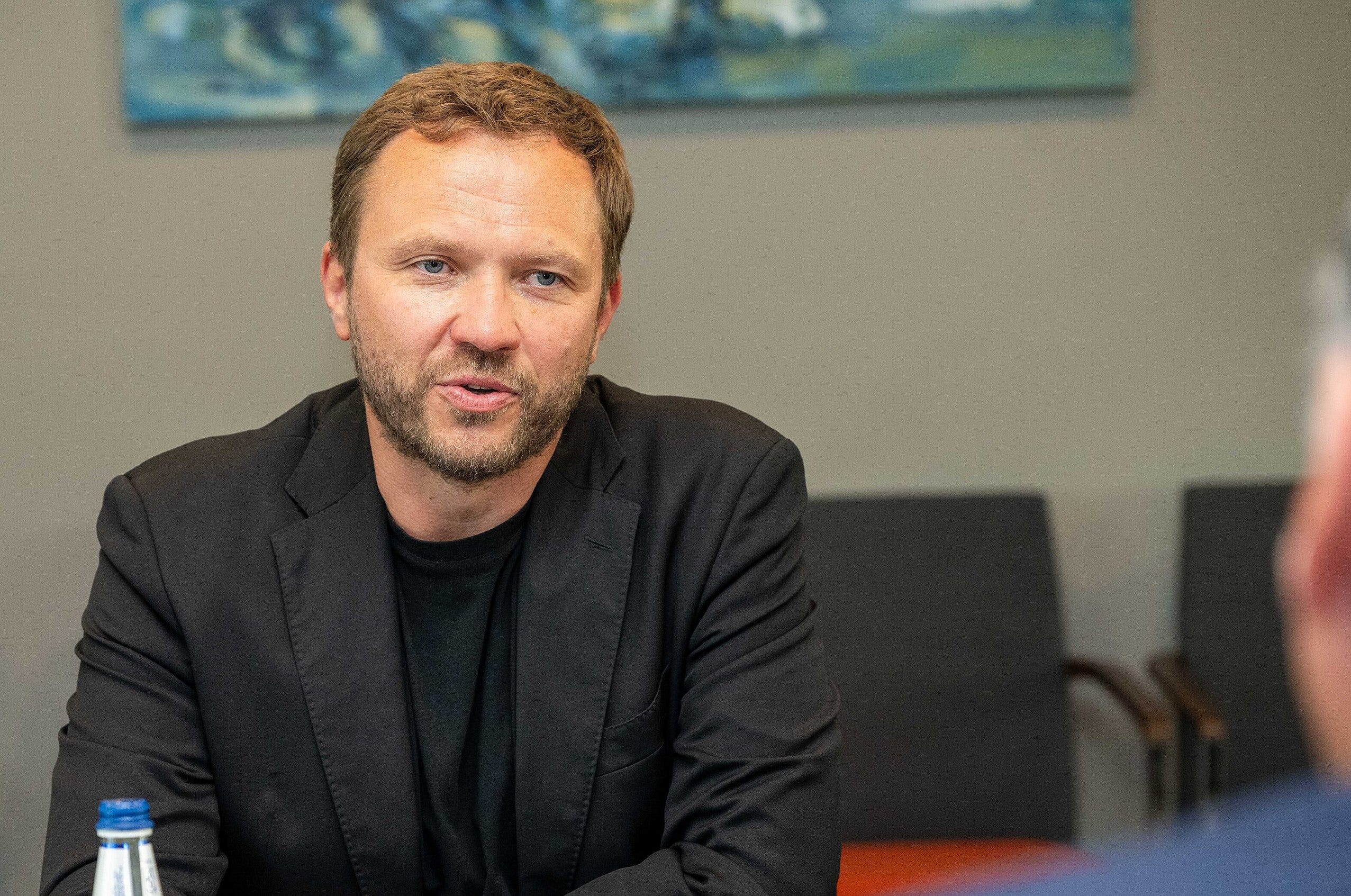
This image is used for illustrative purposes only.
The Estonian argument: a structural warning
Margus Tsahkna, Estonia’s foreign minister, delivered a pointed diagnosis at the margins of the EU’s General Affairs Council in Brussels on Tuesday, May 26 — echoing remarks he had made a day earlier in an interview with Estonian public broadcaster ERR. Russia, he argued, is not seeking dialogue to advance peace — it is seeking to engineer a shift in Europe’s status, from supporter of Ukraine to neutral intermediary. That repositioning would carry an implicit price tag: a bloc that presents itself as an honest broker cannot simultaneously maintain punishing sanctions against one party at the table.
The logic is strategically coherent. Since 2022, the EU has adopted multiple rounds of sanctions targeting the Russian economy. Those measures derive their political legitimacy from a clear posture: the EU is not neutral, it is on Ukraine’s side. Any move toward formal mediation would place that legitimacy under pressure. Tsahkna’s conclusion is blunt — rather than rushing to the table, Europe should intensify pressure until Moscow shows genuine willingness to negotiate.
This sequence — an offer of talks paired with an implicit demand for sanctions relief — resembles a pattern observers have noted in other conflicts where Russia has used diplomacy as a pressure-release valve, though whether that pattern applies directly here remains to be formally established.
A fractured European front
The debate is not simply about whether to talk, but about how to structure it. Ukrainian President Volodymyr Zelensky has called on EU member states to speak “with one voice” and designate a single interlocutor to represent the bloc’s 27 members before Moscow. Several names have been floated: Alexander Stubb, Finland’s president; António Costa, president of the European Council (the EU body that brings together heads of state and government — roughly equivalent to a summit-level executive council); Mario Draghi, former Italian prime minister; and Angela Merkel, former German chancellor.
Enthusiasm, however, is unevenly distributed. French, Italian, Austrian, and Belgian leaders have openly endorsed the envoy idea. Germany, Poland, and the Baltic states have pushed back, as has Romania, whose foreign minister Oana Țoiu called for coherent sanctions coordination with Washington before any discussion of names.
The European Commission — the EU’s executive arm, analogous to a federal government in many of its functions — had signaled some openness to dialogue earlier this year, but has since recalibrated. Paula Pinho, the Commission’s chief spokesperson, stated plainly that no credible sign of Russian willingness to pursue peace had been observed.
What’s really at stake: the security architecture
When Tsahkna invokes “the European security architecture,” it is not rhetorical filler. For the Baltic states — Estonia, Latvia, and Lithuania — which share borders with Russia or its ally Belarus, the Ukrainian conflict is not a distant crisis. It is, in their strategic calculus, a preview of scenarios that could directly threaten them. Tallinn, Riga, and Vilnius joined NATO in 2004 precisely to insulate themselves against this category of threat.
The stakes extend well beyond Ukrainian territory. Putin is demanding that Ukraine formally renounce the entire Donbas region and that Western allies legally recognize Russian-occupied territories as sovereign Russian land — two conditions Kyiv categorically rejects. Accepting these demands as a baseline for negotiation would mean the EU implicitly validating conquest by military force. Whether that precedent would embolden other revisionist actors elsewhere remains an analytical hypothesis the available evidence does not allow one to establish conclusively — but it is a hypothesis European security planners are not prepared to dismiss.
The weekend before the Brussels meeting served as a grim reminder of the context: a combined Russian drone-and-missile strike on Ukrainian cities, including a hypersonic Oreshnik ballistic missile capable of carrying a nuclear warhead, destroyed residential buildings, supermarkets, and energy infrastructure. Moscow has shown no movement toward a ceasefire.
Analysis: neutrality as a trap
The deeper question this moment poses is not “should Europe talk to Putin?” It is: at what point does a legitimate diplomatic overture become an implicit endorsement of the other party?
Since 2022, the EU has built a coherent posture — financial and military support for Ukraine, economic sanctions against Russia, diplomatic isolation of the Kremlin. That coherence is precisely what gives any future opening its leverage.
Diluting it prematurely — before a ceasefire, before a meaningful reduction in strikes, before any Russian concession — could weaken Europe’s position without extracting anything real in return.
It is plausible that the current split between member states reflects less a difference in values than a difference in threat perception. Countries with the greatest geographic exposure to Russian pressure tend to reason in terms of security precedent; those further removed tend to reason in terms of near-term crisis resolution. This tension between time horizons and strategic calculus is structural within the EU — it predates Ukraine and will outlast it.
The Bottom Line
The Cyprus meeting on May 27–28 will not resolve the debate. But it will reveal something essential about the EU’s capacity to hold a common line under pressure. If the 27 member states cannot agree on minimum conditions for opening any talks — a verifiable ceasefire, a reduction in strikes, some form of prisoner exchange — their internal divisions will themselves become a strategic signal that Moscow will read carefully. Can Europe afford to let its disagreements be as legible as its decisions?
Sources: Euronews · ERR (Estonian public broadcaster)