
Hungary's Return
Peter Magyar's election ended Orbán's decade-long EU blocking — and Macron wants Budapest's comeback at the center of his final Bastille Day.

At a Glance
Peter Magyar, Hungary’s new prime minister — elected on April 12 and sworn in on May 9 — met French President Emmanuel Macron at the Élysée Palace on June 3, the clearest signal yet of Budapest’s realignment toward the EU mainstream.
The European Commission announced the release of €16.4 billion in EU funds frozen under Orbán, contingent on democratic reforms by Magyar’s government.
Macron has personally invited Magyar to the July 14 Bastille Day parade, which he wants to give a distinctly “European character” — a symbolic closing act before his presidential term ends.
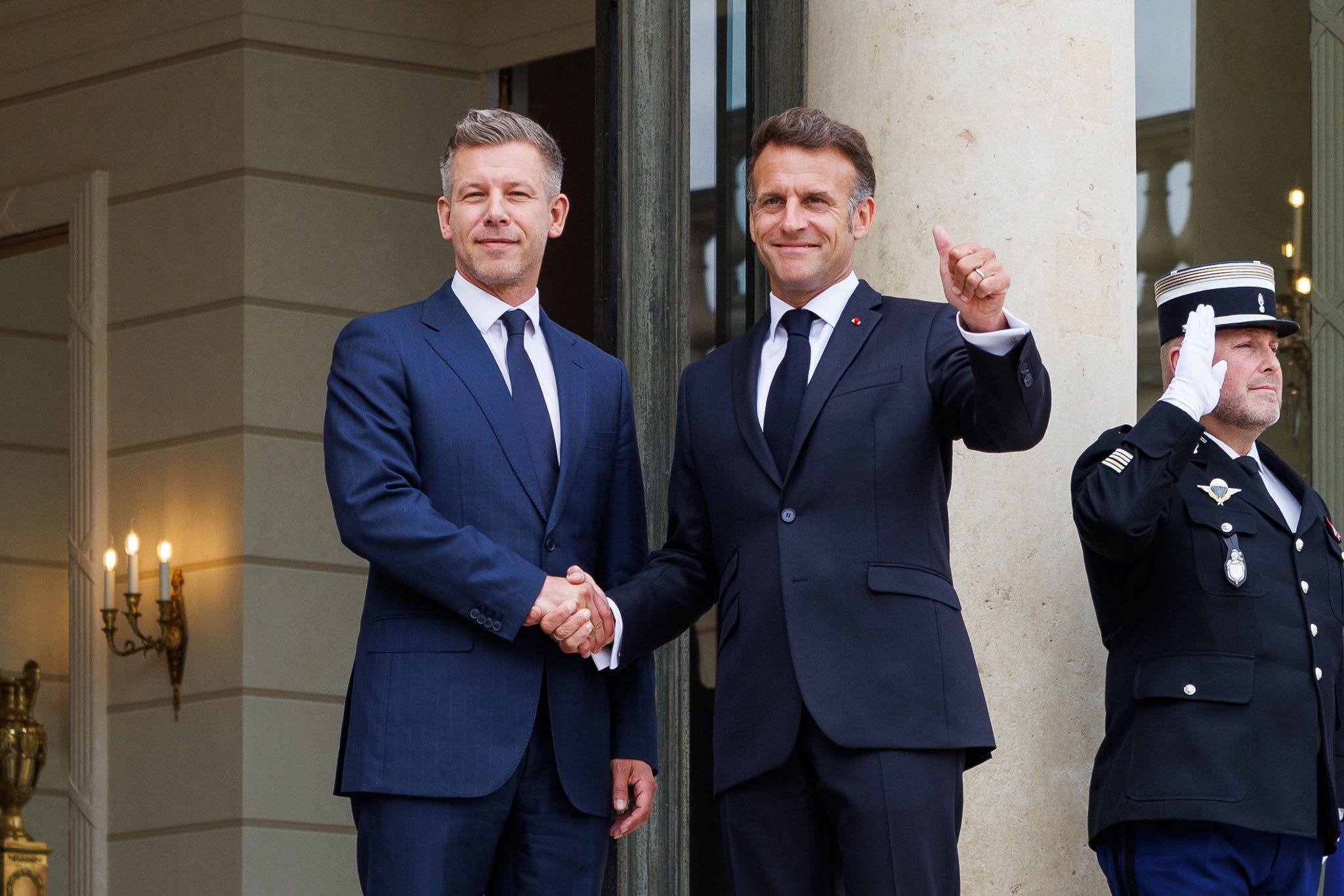
This image is used for illustrative purposes only.
Budapest changes orbit
For more than a decade, Viktor Orbán’s Hungary operated as a persistent wrench in European machinery: blocking EU military and financial support for Ukraine, defying rule-of-law directives, and accumulating frozen structural funds. Peter Magyar’s victory in the April 12 parliamentary elections brought that era to an abrupt close.
Sworn in on May 9, Magyar moved immediately. Within weeks he had visited Warsaw, Vienna, Brussels, and Berlin — before meeting Macron in Paris. The pace signals intent: Hungary is no longer positioning itself as a disruptor but as a partner seeking full reintegration into the EU fold.
What €16.4 billion in frozen funds actually means
The European Commission, the EU’s executive arm, announced last Friday the release of €16.4 billion in funds blocked since Brussels determined Hungary had failed to meet rule-of-law standards. The package comprises three tranches — roughly €10 billion in cohesion funds, €4.2 billion in recovery funds, and €2.2 billion in agricultural support — none of which will flow automatically. Each tranche is conditioned on reforms that Magyar has pledged to implement, particularly on anti-corruption measures and judicial independence.
For Hungary, the stakes are substantial. These funds represent years of suspended EU transfers — a structural shortfall that had weighed on investor confidence and widened the gap between Budapest and European capitals. Magyar personally assured Macron that his government would “do everything against corruption” to attract French and European investment.
This conditional disbursement illustrates a mechanism the EU spent years developing: using budget conditionality as a lever for democratic reform. Its consistent application under European Commission President Ursula von der Leyen remains debated, but the Magyar precedent could establish it as a durable tool for political transformation — provided the promised reforms materialize.
Bastille Day as foreign policy theater
Macron has personally invited Magyar to the July 14 Bastille Day parade — an invitation the Hungarian prime minister has accepted and publicly welcomed. The broader ambition is to give the celebration a strongly “European character,” with one option under consideration being to invite leaders from the “coalition of the willing” — the group of countries prepared to offer security guarantees to Ukraine in the event of a peace agreement with Russia. Magyar’s presence in that format would carry particular weight: his predecessor had actively blocked EU common positions on Ukraine.
In return, Magyar invited Macron to Budapest on October 23, 2026, for the 70th anniversary of the 1956 Hungarian Uprising — the foundational moment of anti-Soviet resistance in Central Europe.
What the Franco-Hungarian rapprochement reveals about the EU in 2026
The two leaders announced plans for a new bilateral strategic partnership to be concluded before year’s end, covering defense, nuclear energy, industry, agriculture, disinformation resilience, and democratic governance.
Magyar also proposed inviting France and Germany to join meetings of the Visegrád Group — the regional bloc comprising Poland, Hungary, Slovakia, and the Czech Republic — a format that under Orbán had frequently amplified Eurosceptic positions within the EU. The proposal is still in discussion, but if it holds, it could alter the EU’s internal balance of power: a Visegrád reoriented toward Paris and Berlin would structurally weaken the lines of resistance that had slowed collective decision-making.
The deeper question remains whether the change in Hungary runs as deep as its diplomatic signals suggest. Magyar is governing a country whose institutions were systematically weakened over more than a decade, according to repeated European Commission assessments. The reforms pledged to von der Leyen and Macron will require confronting well-entrenched networks of interest. A Bastille Day invitation is a beginning. The reality on the ground will take years to verify.
A vote for change is not a completed reform.
The Bottom Line
Hungary under Magyar fits a broader pattern that could represent the structural retreat of hard-right populism in Central Europe, following electoral shifts in Poland and Slovakia in recent years. The real question for the EU is not whether Budapest has changed direction — it is whether the Union’s instruments, starting with budget conditionality, are robust enough to anchor that change over time. €16.4 billion in frozen funds is a lever. It is also a promise the EU will need to honor if reforms materialize — and one Budapest will have every incentive to showcase to its advantage. One indicator worth watching: how Magyar navigates Hungary’s own internal institutional tensions, including those that could yet emerge with other branches of the state.
Sources: Le Figaro · AFP