
Hungary stays in the ICC — and Orbán's parliament overrules itself
Hungary's new parliament has voted to reverse its ICC withdrawal — but the ruling party's own invitation to Netanyahu clouds the return.

At a Glance
On May 27, 2026, Hungary’s parliament voted to annul its own withdrawal from the International Criminal Court (ICC), using an expedited legislative procedure.
The bill passed with the support of all 133 lawmakers from Tisza, the opposition movement led by Péter Magyar; 37 members of the Fidesz-KDNP bloc voted against, and 5 representatives of Mi Hazánk abstained.
The reversal comes weeks after Magyar himself invited Israeli Prime Minister Benjamin Netanyahu — who faces ICC arrest warrants — to an official state ceremony, creating a logical tension that the new majority has yet to publicly resolve.
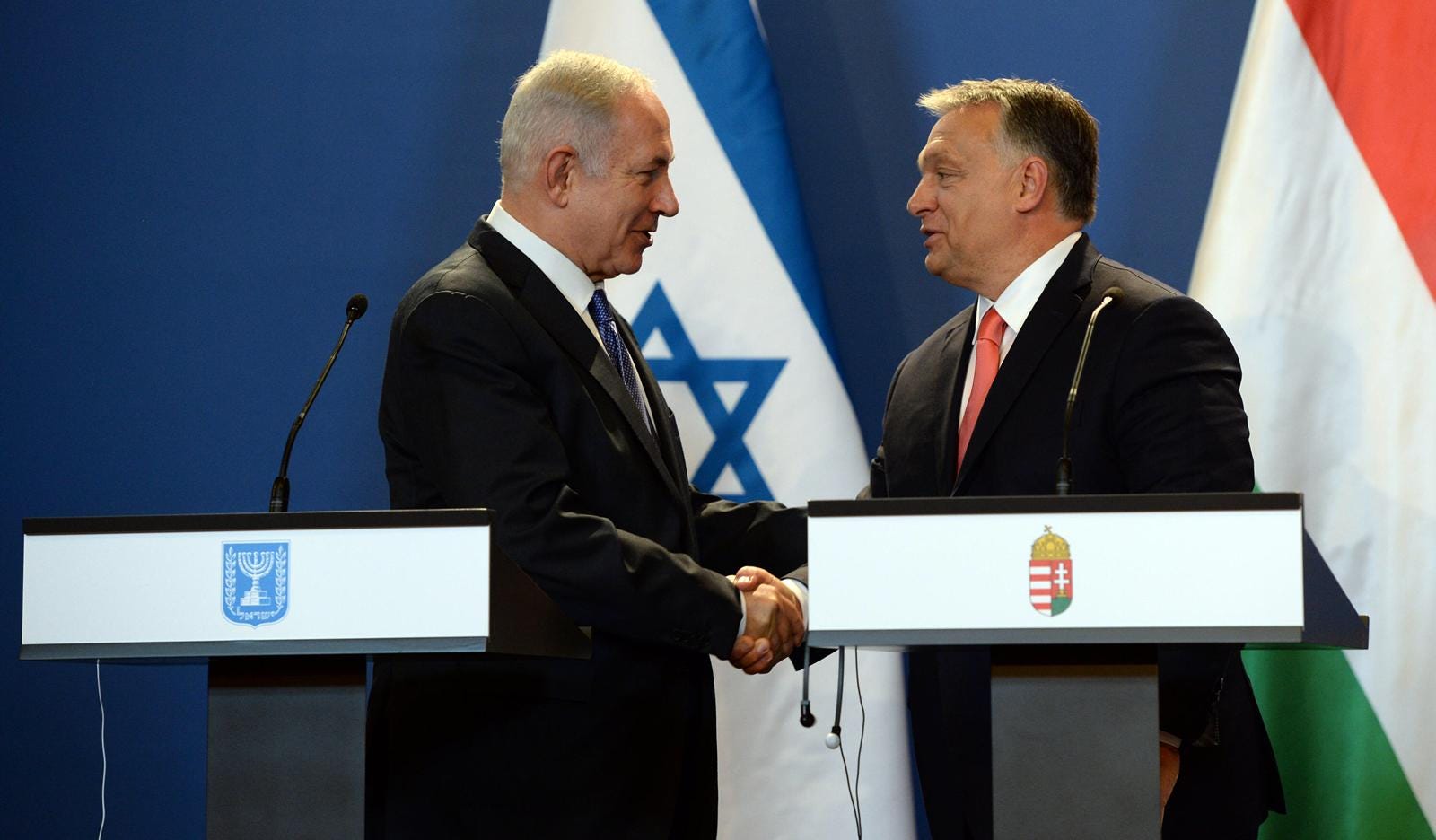
This image is used for illustrative purposes only.
A withdrawal timed to a diplomatic visit
On April 3, 2025, during Benjamin Netanyahu’s official visit to Budapest, Hungary’s then-government under Viktor Orbán announced the country would leave the International Criminal Court. The following month, on May 20, 2025, the then-Fidesz-dominated parliament formally ratified that withdrawal.
The ICC, founded in 2002 under the Rome Statute and based in The Hague, is the world’s permanent international criminal court, with jurisdiction over genocide, crimes against humanity, and war crimes. Think of it as a standing international tribunal for the gravest offenses against human dignity — one that no domestic court can replicate. Hungary had been a member since the court’s inception.
The official justification, offered at the time by Péter Szijjártó, Hungary’s then-foreign minister, was that the ICC had issued arrest warrants against Hamas leaders who were already dead — a move Szijjártó characterized as a political cover to legitimize the warrant targeting Netanyahu, which he called “politically unacceptable.” His framing of the court as a politically motivated institution would, ironically, be echoed a year later by the very opposition that has now voted to return.
Tisza’s majority forces the reversal — Fidesz pushes back
The May 27 vote marks the first major institutional test of Hungary’s new parliamentary balance of power. Tisza’s 133-seat bloc proved sufficient to pass the bill over Fidesz’s objections, signaling a fundamental shift in how Budapest legislates on matters of international law.
The bill was processed through an expedited parliamentary procedure — a move that itself drew the first salvos from the Fidesz opposition. János Bóka, a Fidesz lawmaker and former Minister for European Affairs, raised procedural objections, arguing that the fast-track timeline left no room for substantive constitutional debate and raised issues of compatibility with Hungary’s Basic Law.
Hungary’s parliament is currently debating a constitutional amendment, adding a layer of legal complexity to the reversal. Bóka’s objections, whatever their procedural merit, did not change the outcome: 133 votes for, 37 against.
Mi Hazánk, the far-right nationalist party, abstained — and its lawmaker István Apáti offered the session’s most creative counter-proposal: that Hungary lead the creation of an alternative international criminal court similar to the ICC under Hungarian leadership.
The contradiction at the center of the victory
The vote creates a political puzzle that Tisza has yet to solve publicly. It was Péter Magyar himself who invited Netanyahu to Budapest’s October 23 national commemorations — a date marking Hungary’s 1956 anti-Soviet uprising. Netanyahu is one of the officials against whom the ICC has issued arrest warrants, on charges of war crimes and crimes against humanity in Gaza.
How can a government commit to ICC membership while simultaneously inviting a sitting head of government who is under the court’s arrest warrants?
That was the Fidesz argument — and Tisza offered no public response to it during the parliamentary debate, according to available reporting.
It is plausible that this tension reflects two distinct agendas operating in parallel — Hungary’s broader realignment toward European liberal democratic norms on one hand, and active bilateral diplomacy on the other — rather than a deliberate contradiction. But the practical dilemma remains unresolved: if Netanyahu were to visit Budapest again, Hungary would, in theory, be obligated to detain him. That question has not been answered.
What Budapest’s reversal signals for Europe
Hungary’s return to full ICC membership could send a meaningful signal to its European partners — though the durability of that signal depends on what follows. For years, Budapest under Orbán was seen as the European Union’s most persistent institutional dissident: infringement procedures, frozen structural funds, repeated clashes with the European Commission, the EU’s executive arm.
Every EU member state is a member of the ICC — a point explicitly raised during the parliamentary debate by voices opposing the withdrawal logic. That convergence toward common European standards could, over time, help accelerate the release of EU funds that were frozen under Orbán — though that outcome remains conditional on broader governance reforms that the new Hungarian government has signaled it intends to pursue.
For context: the United States, Russia, and Israel are among the countries that have not ratified the Rome Statute and are therefore not ICC members — though this information draws on sources beyond the article consulted for this piece.
The bottom line
The real question is not whether Hungary stays in the ICC — for now, that is settled. It is whether Péter Magyar can simultaneously realign Budapest with European institutional norms and sustain diplomatic relationships with governments that those same norms treat as problematic partners. That balancing act is not impossible, but it demands a clarity that the invitation to Netanyahu — extended before the re-entry vote — has not yet provided. Europe will be watching.
Sources: Euronews