
Hungary signals end to its two-year veto on Ukraine's EU bid
Budapest has moved to drop its blockade on Ukraine's accession talks — but the formal launch of negotiations still requires a final unanimous vote among all 27 EU members.

At a Glance
On June 3, 2026, Hungary’s EU ambassador signaled his country’s readiness to drop its long-standing objections to Ukraine’s accession talks, in what diplomats described as a sudden shift — a last-minute addition to the agenda of an emergency meeting of EU ambassadors in Brussels.
The move followed a public announcement by Hungary’s new Prime Minister Péter Magyar, who said he had reached a deal with Kyiv over the rights of an over 100,000-strong Hungarian-speaking minority in the Transcarpathia region of western Ukraine — though Kyiv did not immediately confirm the deal’s contents.
The formal launch of negotiations still requires a unanimous vote to be finalized. A formal intergovernmental conference, tentatively scheduled for June 15 or 16 in Luxembourg, is expected to mark the official start — but depends on procedural steps now underway.
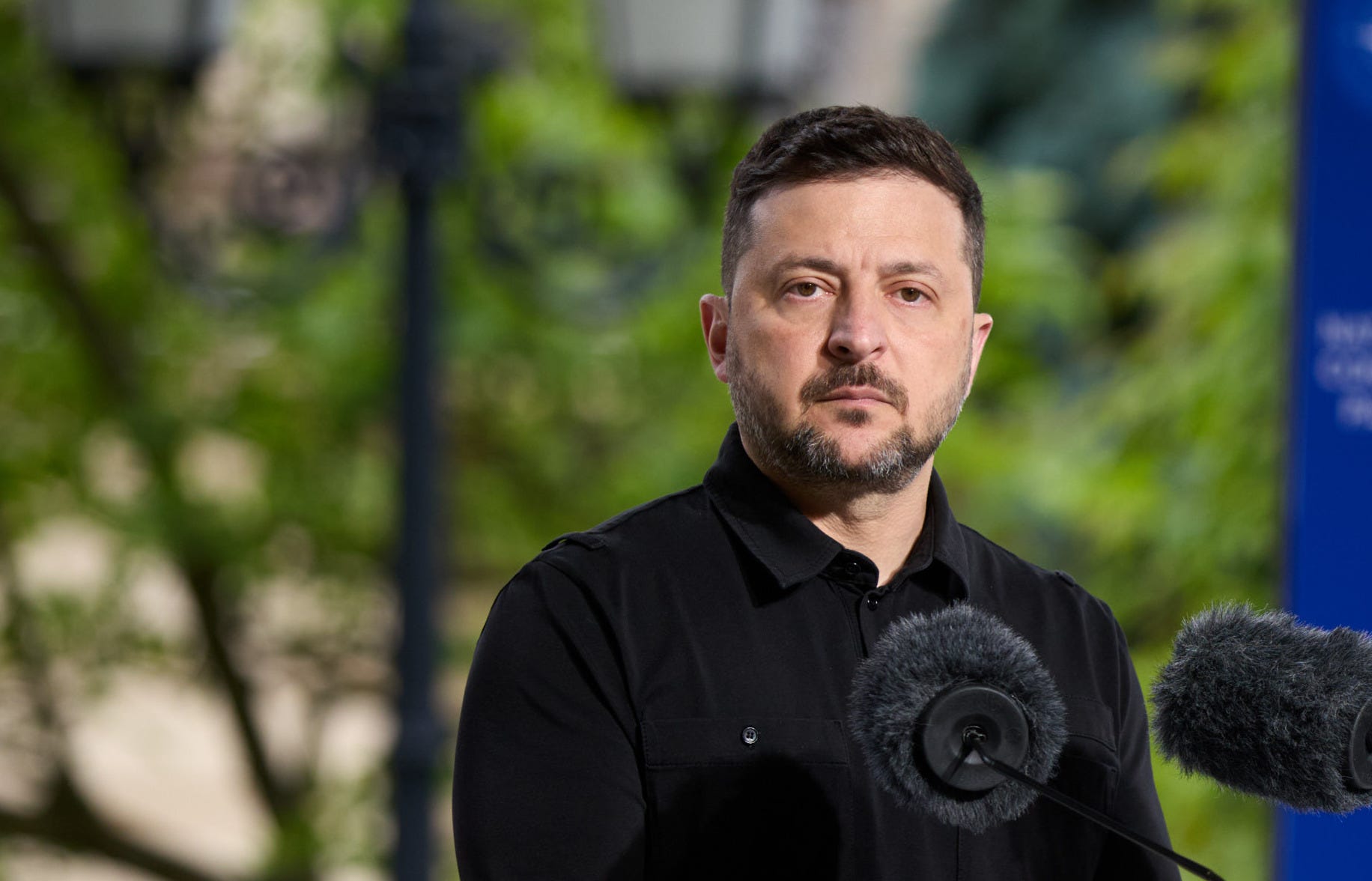
This image is used for illustrative purposes only.
A veto two years in the making — on the verge of falling
Two years. That is how long it has taken to bring Budapest to this point. On June 3, 2026, Hungary’s ambassador to the EU signaled a readiness to drop his country’s objections during what became a last-minute addition to the agenda of the Committee of Permanent Representatives (COREPER), the body of EU member-state ambassadors that prepares decisions for the bloc’s Council. The shift was described by diplomats as sudden, prompting the agenda change on the spot.
The move brings all 27 EU member states within reach of unanimously opening the first cluster of accession talks with Ukraine. Moldova, which has been informally paired with Ukraine throughout this process as a fellow candidate country, would advance alongside it.
The “fundamentals cluster” covers the rule of law, human rights, and the judiciary. By design, it is the first chapter opened and the last to be closed. Ukraine’s accession process involves 33 chapters grouped into six thematic clusters — a framework that, in past enlargements, has taken a decade or more to complete.
How the shift happened: Magyar, Orbán, and Transcarpathia
The Hungarian veto did not soften on its own. It was, above all, brought down at the ballot box. The decisive defeat of Viktor Orbán — Hungary’s prime minister from 2010 to 2025 and one of the EU’s most disruptive internal actors, known for systematically blocking joint decisions on Ukraine-related issues — by Péter Magyar fundamentally altered Budapest’s posture.
Magyar, Hungary’s new prime minister, campaigned on restoring his country’s standing within the European mainstream. Since taking office, he has led direct negotiations with Kyiv on the issue that had provided Orbán’s central justification for the veto: the status of the Hungarian-speaking community in Transcarpathia, a region in western Ukraine bordering Hungary and home to over 100,000 people of Hungarian language and culture.
In a video published on Facebook on June 3, Magyar announced he had reached a comprehensive agreement with Kyiv covering broader linguistic, educational, cultural, and political rights for this community. The specific terms have not been made public. Ukraine did not immediately confirm the contents of the deal as of this writing — a detail that underscores how much remains to be formalized.
The deal’s terms, once confirmed, are expected to be incorporated into the action plan Ukraine submits to Brussels as part of its accession bid.
What “accession” actually means — and what comes next
The political signal is powerful. The procedural and legal reality remains more measured. The COREPER meeting on June 3 did not constitute a formal vote. For the first cluster of talks to officially open, EU member states must complete an exchange of formal letters with Ukraine and Moldova, after which ambassadors will review each country’s stated positions. Only then can a formal intergovernmental conference be convened — currently expected around June 15 or 16 in Luxembourg, though that date is contingent on the procedural steps now underway.
Magyar himself was candid about the longer timeline for full membership.
“If Ukraine manages to close all 33 accession chapters in 10 or 15 years, our country will hold a legally binding referendum on the issue.” — Péter Magyar, Hungary’s prime minister [translated from French]
This caution is widely shared across the EU. Member states most concerned about enlargement pace point to two risks: an overly rapid accession that could compromise the bloc’s institutional standards, and the economic integration of a large eastern European country whose agricultural sector and population would significantly reshape EU budget priorities — including the Common Agricultural Policy (CAP), the EU’s main farm subsidy program.
Why this matters beyond Europe
For readers outside Europe, the significance of this moment requires a brief mapping. The EU accession process is not a political declaration — it is a legal transformation. A country seeking membership must align its entire body of law, its courts, its financial oversight, its borders, and its public administration with EU standards. The process is closer in spirit to a country rewriting its constitution than to signing a trade deal.
Ukraine applied for EU membership days after Russia launched its full-scale invasion in February 2022, and was granted official candidate status that June — a decision that normally takes years, compressed into weeks. Opening the first cluster of formal talks, should it be confirmed in the coming days, would be the next concrete milestone on a road that could, in the most optimistic projections, end with Ukrainian membership sometime in the 2030s or 2040s — and only if the EU undertakes the internal reforms required to absorb a major new member.
The bottom line
Hungary has not yet formally lifted its veto — but it has, for the first time in two years, signaled that it is ready to. The distinction matters: what happened on June 3 in Brussels was a breakthrough in direction, not yet a vote. If confirmed in the coming days, it will mark the end of a blockade that exposed a structural vulnerability at the heart of EU decision-making. The unanimity rule — which requires all 27 members to agree before any step in the accession process can proceed — allowed a single government to hold the entire bloc hostage for two years. No institutional mechanism was strong enough to override it. Only an election could. The next government that decides to test that same lever may not need a minority-rights grievance to justify it.
Sources: Euronews