
Hungary locks term limits into its constitution
Hungary's parliament has passed a constitutional amendment capping the prime minister's tenure at eight years — a direct barrier to Viktor Orbán's return to power after two decades at the helm.

At a Glance
Hungary’s parliament voted on June 15, 2026, by 135 for, 50 against, and 6 abstentions, to enshrine an eight-year term limit — consecutive or not — for all future prime ministers in the country’s constitution.
The amendment, a centerpiece of Prime Minister Péter Magyar’s election platform, is designed to prevent any future leader from entrenching power indefinitely — and effectively blocks Orbán, who accumulated 20 years in office, 16 of them consecutively.
Fidesz, now in opposition, condemned the measure as an infringement on popular sovereignty; Orbán, reelected party leader over the weekend, struck a defiant tone, saying he would return “if needed.”
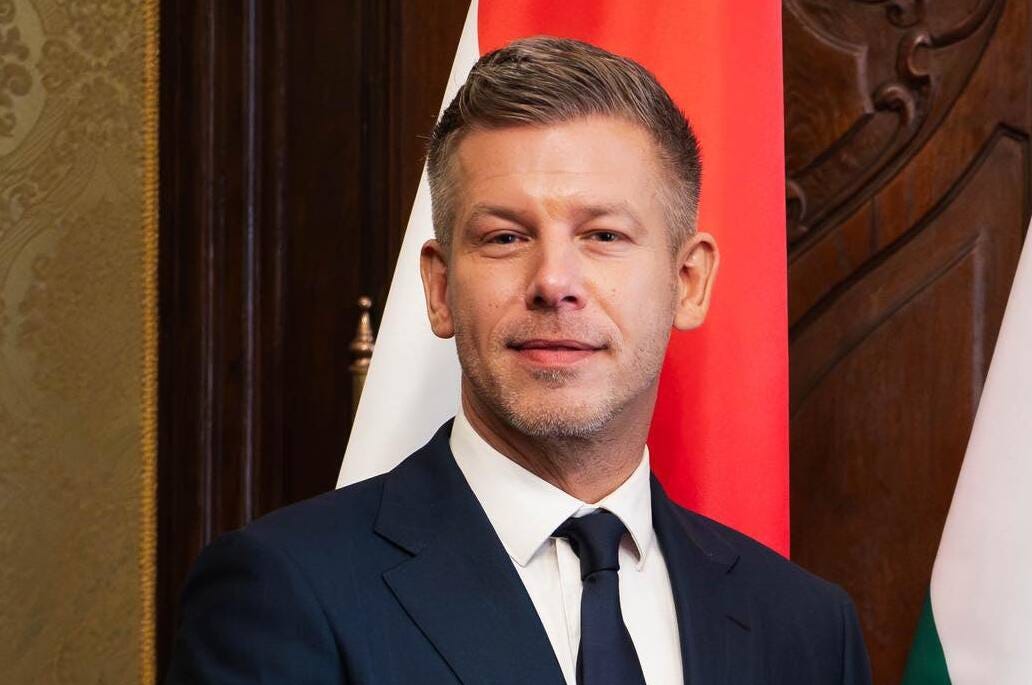
This image is used for illustrative purposes only.
The making of a constitutional firewall
Twenty years in power — sixteen of them uninterrupted: Viktor Orbán’s tenure as Hungary’s head of government had no equivalent in contemporary Central Europe. It is precisely that precedent that Hungary’s parliament moved to write into its constitution as a permanent impossibility.
On June 15, lawmakers passed the amendment by a two-thirds supermajority — 135 votes in favor, 50 against, 6 abstentions — capping the prime minister’s time in office at eight years, whether served consecutively or not. The rule applies to all future holders of the office, including Péter Magyar himself.
Magyar, the conservative pro-European politician who swept to power in May 2026 after a historic election victory that ended Orbán’s rule, had framed the case in blunt institutional terms when he presented the bill in late May: unchecked power, he argued, inevitably causes leaders to lose “all sense of restraint” [translated from French] — erasing any distinction between the state’s interests, the party’s interests, and their own. The goal, he said, was to force every officeholder to think about their succession — something Orbán, by his own record, had declined to do.
Fidesz pushes back, Orbán vows to return
Fidesz — the nationalist party Orbán founded and led for more than three decades, which now sits in opposition following its spring election defeat — voted in a bloc against the amendment. Its members argued the measure would restrict the popular will, a familiar argument from parties accustomed to winning large majorities.
Orbán himself responded on Facebook with what appeared to be studied nonchalance, mocking the legislation as “the Orbán law” [translated from French] and suggesting its urgency was inflated.
“If needed, I’ll be there.” [translated from French]
The statement carried added weight: Orbán had just been reelected to the leadership of Fidesz, signaling he intends to remain the party’s dominant figure.
A lock — but not an absolute one
The new constitutional provision does not permanently rule out an Orbán comeback. It could in theory be overturned by a future parliament through another constitutional amendment — which would require a two-thirds supermajority. Several political analysts suggest it is unlikely that Fidesz could regain that level of parliamentary dominance in the foreseeable future, though Hungary’s recent political history counsels caution about long-range predictions.
The broader context matters here. Hungary spent the better part of the past 15 years at the center of a protracted dispute with the European Union over the erosion of democratic norms — judicial independence, media pluralism, civil society freedoms. The EU invoked Article 7 of its founding treaty against Budapest, a rarely-used mechanism designed to address systemic threats to the rule of law, and suspended portions of Hungary’s EU funding over governance concerns. Magyar’s government has moved to repair those relations; the term-limit amendment is one signal, among several, that the institutional dismantling of the Orbán era is being treated as a structural problem requiring structural solutions.
The bottom line
Hungary has written a lesson from its own recent history into its founding law. But constitutional provisions are only as durable as the majorities that sustain them. The real test is not whether Viktor Orbán could technically return — it is whether Hungary’s post-Orbán political landscape is capable of building institutions sturdy enough that the question eventually stops being worth asking.
Sources: France Info · AFP · RFI