
Hungary signals openness on its Ukraine veto — but the hard work starts now
After sixteen years of obstruction under Viktor Orbán, new Hungarian Prime Minister Péter Magyar has signaled his openness to Ukraine's EU membership negotiations — on one condition.

A significant shift, but not yet a done deal.
At a Glance
Budapest has indicated it is ready to engage on Ukraine’s EU accession process, ending the systematic blockade inherited from the Orbán era.
The condition is specific: a legally guaranteed protection of the linguistic, educational, and cultural rights of the Hungarian minority living in Transcarpathia, a region in western Ukraine.
The formal lifting of the veto depends on concrete progress before the next European Council summit — without which the issue will not make the agenda.
Sixteen years of obstruction, one week of signals
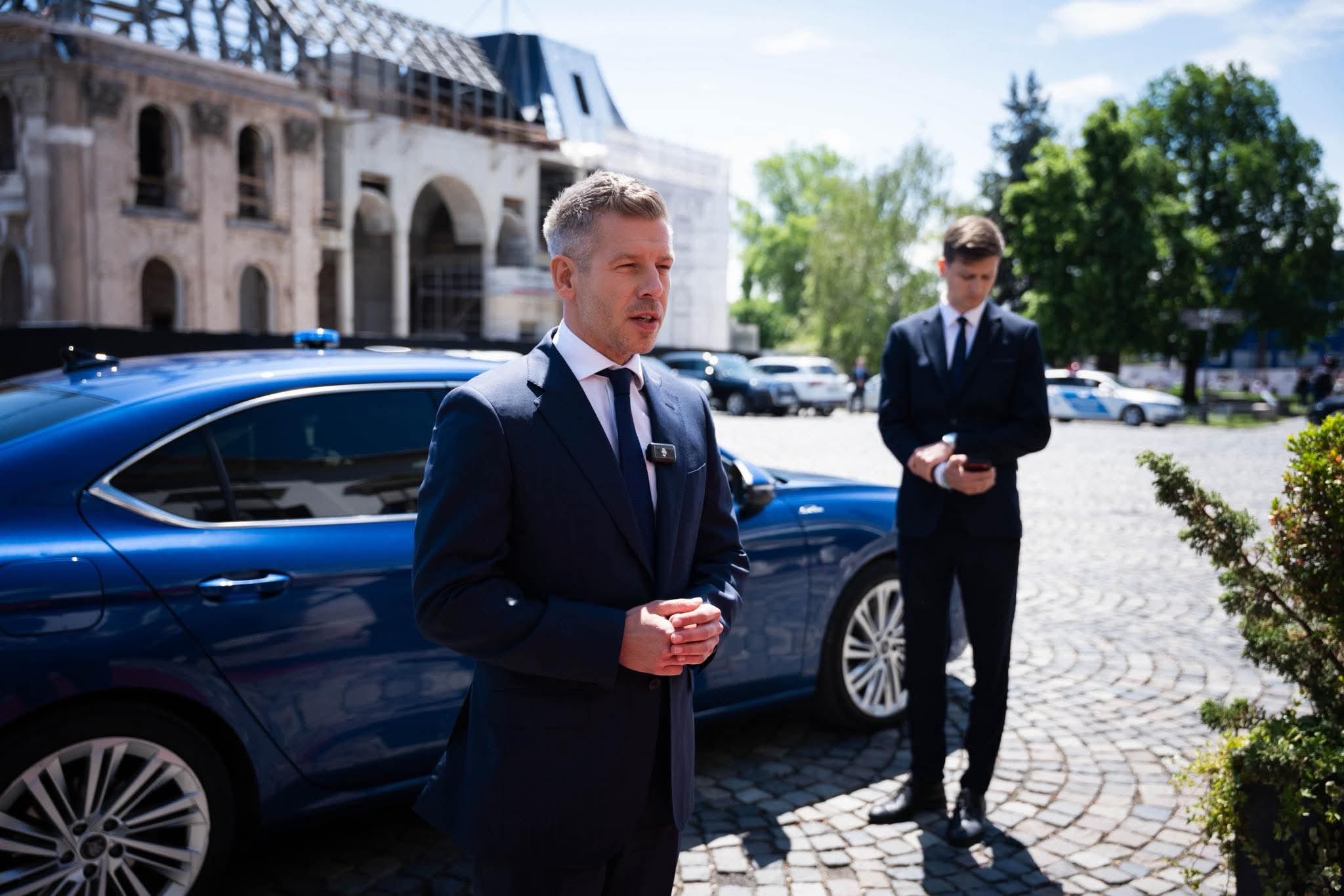
Péter Magyar — Hungary’s prime minister since May 9, 2026, following his landslide victory over Viktor Orbán that ended sixteen years of one-man rule — did not wait for his government to find its footing before sending a strong diplomatic signal toward Kyiv. At a meeting of EU ambassadors on Wednesday, May 13, Hungary’s representative stated that Budapest was now ready to engage with Ukraine to achieve concrete results on the accession file.
This marks a significant signal — but not yet a clean break. Under Orbán, Hungary had systematically blocked the opening of the first cluster of Ukraine’s accession negotiations — a thematic grouping of reform chapters covering key reforms in the rule of law and financial oversight that serve as prerequisites for any meaningful integration into the EU. That veto, unique among the bloc’s twenty-seven member states, had turned Budapest into a persistent irritant for Brussels and what some analysts described as an informal lever of influence for Moscow.
Transcarpathia: the knot at the center of the dispute
The obstacle has a name — and a geography. Transcarpathia, a borderland in western Ukraine with a layered history spanning the Austro-Hungarian Empire, Soviet rule, and independent Ukrainian statehood, is home to a significant Hungarian-speaking minority whose linguistic and educational status has been at the heart of a long-running dispute between Budapest and Kyiv.
The Orbán government had formalized that grievance into an eleven-point plan, demanding the restoration of rights that Ukrainian legislation had, in Budapest’s view, progressively eroded in recent years. Márton Hajdu, chair of the foreign affairs committee of Hungary’s newly elected parliament — drawn from Magyar’s Tisza party — confirmed this condition remains central: the rights of the Hungarian minority must be guaranteed in law, and as soon as possible.
Magyar himself floated the idea on April 28 of a meeting with Ukrainian President Volodymyr Zelensky in early June, proposing Berehove — a Ukrainian city in Transcarpathia widely regarded as the cultural heart of the local ethnic Hungarian community — as a symbolically charged venue.
Ukrainian signals: constructive, but conditional
Kyiv has not been silent. Zelensky met with the Hungarian community of Transcarpathia on April 9 — three days before the Hungarian elections — a gesture whose symbolic weight was not lost on Budapest, which welcomed it as constructive. Ukrainian Foreign Minister Andriy Sybiha signaled his government’s openness to dialogue on all issues, including national minorities, framing the exchange as a step toward rebuilding mutual trust. Technical consultations between Hungarian and Ukrainian experts, with participation from representatives of the Transcarpathian Hungarian community, have since been announced.
Ukraine has also moved on a broader front. In March 2026, Kyiv proclaimed a national day for the Romanian language — mirroring Romania’s existing national day for the Ukrainian language — as part of a wider effort to normalize relations with Bucharest. That precedent could suggest a method: incremental symbolic and legislative concessions, designed to clear European vetoes one by one.
Analysis — what this shift actually reveals
① The mechanics of power. Hungary’s veto over Ukraine was never purely about principle: it was a currency. Orbán used it to negotiate the release of frozen EU funds, to maintain a studied ambiguity toward Moscow, and to cement his position as the bloc’s institutional disruptor-in-chief. Magyar does not share those incentives. His political capital rests on the break with Orbánism — which means he has little structural reason to sustain a veto whose diplomatic cost is high and whose domestic benefit is limited, provided the Transcarpathia question is handled seriously.
② The eleven-point plan: roadmap or minefield? A source close to the Hungarian government, speaking anonymously, warned that Orbán may have embedded deliberately difficult demands within the plan — what the source described as “hidden landmines.” This hypothesis, unconfirmed at this stage, is worth raising: if certain requirements are structurally impossible for Ukraine to satisfy, the process could stall indefinitely without Budapest being formally at fault. Magyar’s team would be well advised to conduct an internal audit of the plan before treating it as a workable roadmap.
③ The European Council as a hard deadline. António Costa, president of the European Council — the body that brings together the heads of state and government of the EU’s twenty-seven member countries, functioning as the bloc’s top executive summit — has made clear he will only put Ukraine’s accession on the agenda if Hungary’s veto is formally lifted in time. That conditionality creates a narrow window: technical consultations have barely begun, and Europe’s political calendar does not reward diplomatic half-measures.
④ What it means beyond the headlines. Ukraine’s accession to the EU remains a years-long process, but its budgetary implications are already live. Ukraine is the most agriculturally productive country on the continent, and its integration into the EU’s Common Agricultural Policy — which accounts for a considerable share of the EU’s total budget — would trigger a significant redistribution of agricultural subsidies across member states.
Unblocking the negotiations is not accession, but it is the first domino.
The Bottom Line
Magyar’s opening is real — but it remains suspended on a central unknown: can Ukraine satisfy Budapest’s demands on minority rights within a politically credible timeframe, while fighting a war and managing a legislative framework on minorities that some observers believe merits closer scrutiny at the European level? And if it succeeds — what remains of the Hungarian veto as a tool of leverage, for Budapest and for those who, until now, may have quietly benefited from it?
Sources: Euronews
Correction, May 19, 2026: An earlier version of this headline stated that Hungary had lifted its veto on Ukraine’s EU accession negotiations. Hungary has signaled openness and named delegations for expert-level consultations; the formal unblock remains conditional on the outcome of the minority-rights track in Transcarpathia.