
Germany's green paradox: clean energy leader, sky-high bills
Germany generates more wind and solar power than any other EU country. Its households still pay some of the bloc's highest electricity rates.

That’s not a contradiction — it’s a warning for all of Europe.
Germany leads the EU in wind and solar power, yet its households pay some of Europe’s highest electricity bills. Here’s why.
At a Glance
Germany covered 59% of its electricity consumption with clean sources in 2025, yet households pay an average of €0.39 per kilowatt-hour — roughly a third more than the EU average of €0.29/kWh.
The culprit is a pricing mechanism known as the merit order: electricity prices are pegged to the most expensive source still needed to meet demand, meaning fossil fuels set the rate even when most power is clean.
The long-term fix requires not just more renewables, but a parallel overhaul of grid infrastructure, energy storage, and electricity market rules.
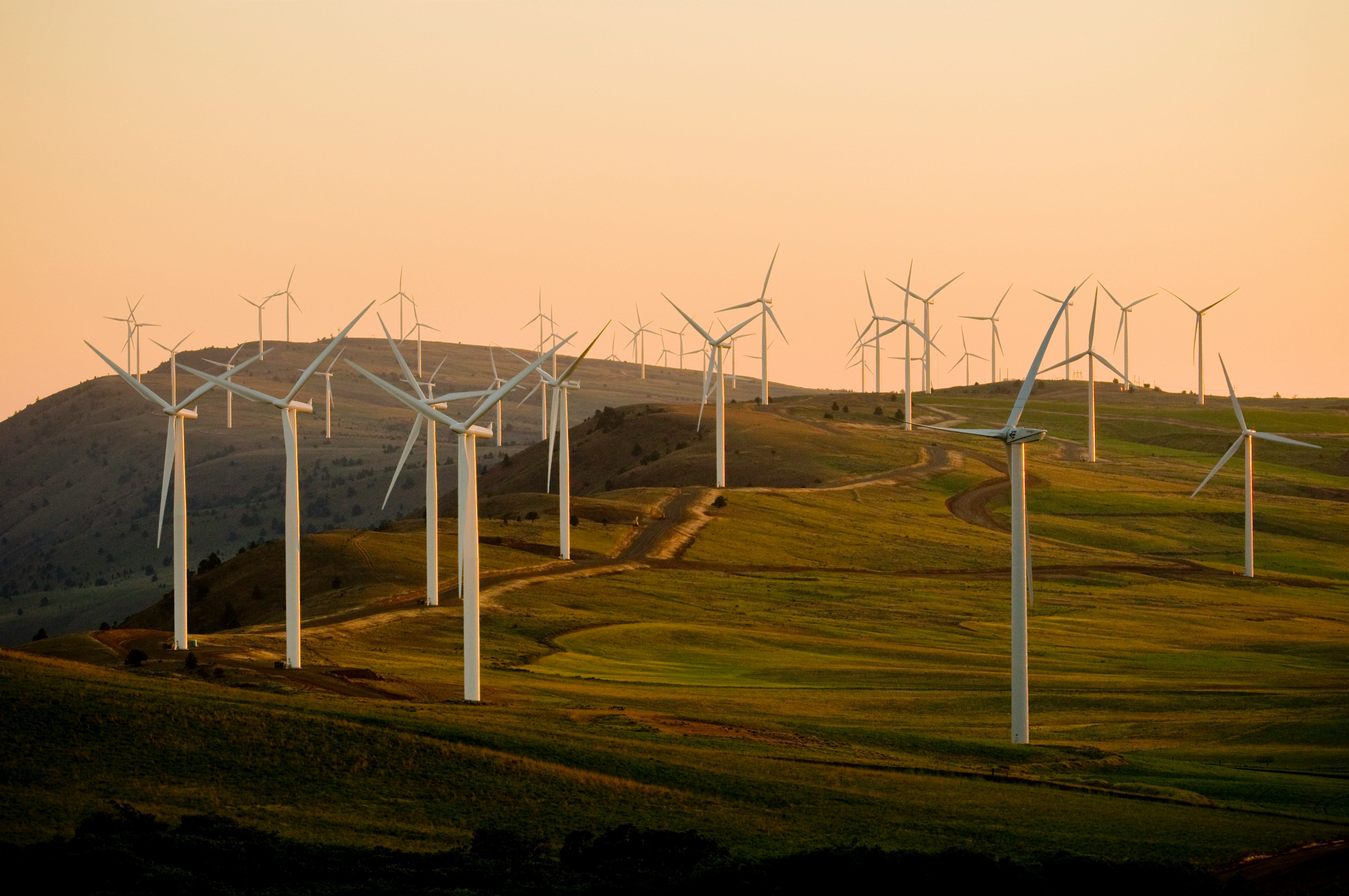
This image is used for illustrative purposes only.
A transition that looks great on paper
Since Germany passed its landmark Erneuerbare-Energien-Gesetz — the Renewable Energy Act, or EEG — in 2000, the share of wind and solar in the country’s electricity mix has climbed from under 2% to nearly 45% as of 2024. By 2025, clean sources accounted for 59% of national power production, according to Ember, a London-based energy think tank, which ranks Germany among the world’s “leading nations” in renewable deployment. The country alone produced more than a quarter of all wind and solar electricity generated across the European Union.
Coal — long the backbone of German power — has fallen from more than half of total output to just 21%. The decarbonization numbers are hard to argue with.
And yet.
The ranking that stings
An analysis by 1KOMMA5°, a German company specializing in solar and battery storage systems whose findings draw on Eurostat data for the second half of 2025, calculates that EU households pay an average of €0.29/kWh, taxes and levies included. German households pay an average of €0.39/kWh — second-highest in the bloc, behind only Ireland at €0.40/kWh. France, which retained its nuclear fleet, comes in at €0.26/kWh, roughly a third cheaper.
In practical terms: a typical family consuming 5,000 kilowatt-hours per year spends approximately €500 more annually in Germany than the EU average. A single person using 1,500 kWh pays over €150 more per year.
This is not a temporary blip. It is the symptom of a market structure that has not kept pace with the energy transition.
Why prices won’t drop: the merit order problem
Electricity prices in Europe are set through what is known as the merit order principle: the most expensive power plant still needed to satisfy demand at any given moment sets the price for all producers. As long as coal or gas is required to cover residual demand, it determines the rate — even if 90% of that day’s electricity came from wind turbines and solar panels.
This mechanism explains why Germany’s renewable abundance has not mechanically translated into lower household bills. The volatility of gas prices — amplified by the rupture with Russian gas supplies after 2022 — extended this structural dependency.
Spain offers a telling counterexample. Thanks to deeper renewable penetration combined with significant hydroelectric and nuclear capacity, fossil fuel plants now influence only about 25% of Spanish electricity prices, down from nearly 100% in 2019 — a 75% reduction in their market grip. In 2025, low-carbon sources — renewables, hydro, and nuclear combined — accounted for 75% of Spain’s electricity mix, compared to 59% in Germany.
The nuclear exit: an aggravating variable
The 2026 Clean Power Progress report by Montel, an energy market intelligence firm, adds important context. In 2022, nuclear power still accounted for 6.6% of Germany’s total electricity output. The country’s complete nuclear exit — the final act of a policy decision taken after Japan’s Fukushima disaster in 2011 — removed a significant source of dispatchable, low-carbon capacity from the grid. That gap was initially filled, at least in part, by fossil fuel plants, delaying the price effects that a deeper renewable build-out might have delivered sooner.
It would be an oversimplification to attribute Germany’s high electricity costs solely to its nuclear phase-out — the issue is structurally more complex. But the removal of that baseload capacity may have prolonged the window during which fossil fuels retain pricing power, a hypothesis the available data supports without fully establishing.
The wasted energy problem
The second major cost driver is less visible but equally significant. In 2025, Germany spent approximately €435 million in curtailment compensation costs — payments made to operators who are forced to shut down plants generating surplus power in overloaded grid zones, while other plants are ramped up elsewhere to rebalance supply. These costs are passed on to consumers through network charges.
The problem is geographic and structural. Europe’s electricity grid was designed for large, centralized power stations — not for the dispersed, intermittent output of thousands of wind farms and solar installations. Clean electricity generated in Germany’s windy northern coast often cannot reach industrial consumers in the south.
Battery energy storage systems, or BESS, are widely identified as a key solution. According to a 2026 report by Solar Power Europe, the EU’s battery storage capacity has increased tenfold since 2021, reaching more than 77 gigawatt-hours (GWh) today — yet the bloc remains far short of what is needed. Meeting the EU’s 2030 targets would require another tenfold increase, to approximately 750 GWh, within five years. Germany and Italy led deployment in 2025, together accounting for a majority of the five markets that delivered over 60% of new EU battery storage capacity.
Taxation: the third cost layer
Strip out taxes and grid fees, and German households would pay just €0.26/kWh — cheaper than Belgium, Luxembourg, and the Netherlands. Germany’s high energy taxation — partly inherited from decades of funding the renewable transition through levies on electricity bills — constitutes a third distinct layer of cost, separate from market pricing mechanics.
Jannik Schall, co-founder of 1KOMMA5°, argues that reducing grid fees requires smarter anticipation of energy flows: intelligent management systems that shift electricity volumes between storage units and flexible consumers before imbalances occur, rather than paying power plants to compensate after the fact.
Why this matters beyond Germany’s borders
Germany’s experience illustrates a tension every European country will face in the years ahead: deploying large volumes of renewable energy is necessary and irreversible, but insufficient on its own to bring down consumer prices. That outcome requires simultaneous — not sequential — investment in grid infrastructure, storage capacity, electricity market reform, and energy taxation policy.
The Spanish model suggests that deeper renewable penetration can push fossil fuels out of the price-setting position. But Spain benefits from hydroelectric and nuclear capacity that Germany does not have — and has deliberately chosen to forgo.
For policymakers in Brussels and beyond, the lesson is clear enough: the energy transition will not be cheap by nature. It will become affordable only if the infrastructure and market reforms that should accompany it are treated with the same urgency as the renewable targets themselves. Germany’s electricity bill is the price of doing one without the other.
The Bottom Line
Germany has proved it is possible to rapidly decarbonize an electricity system without lowering prices. That is an uncomfortable finding for anyone who assumed a clean grid would automatically be a cheap one.
Europe’s energy transition will deliver on its economic promise only if grid investment, storage deployment, and market reform advance at the same pace as wind turbines and solar panels. The gap between those tracks is currently being paid by consumers — in euros, every month, on their electricity bills.
Sources: Euronews · Ember · 1KOMMA5° · Montel · Solar Power Europe · Eurostat