
Germany's EV market roars back
Germany's EV sales jumped 41% as a new government subsidy of up to €6,000 reshapes the market. In May, one in four cars sold was fully electric.

After two difficult years for electric vehicle sales — marked by declining demand, policy uncertainty and industrial turbulence among major automakers — Germany’s car market is surging again. In May 2026, one in four vehicles sold in Germany was fully electric, only the third time the market has reached that threshold. Behind the rebound: a well-targeted government subsidy, an expanding lineup of affordable models, and a fuel price environment that increasingly makes the economic case for going electric.
At a Glance
EV sales in Germany jumped 41% year-over-year, driven by a government purchase incentive of €1,500 to €6,000 (approximately $1,650 to $6,550 at current exchange rates) available to households with a taxable annual income below €80,000.
The used EV market is accelerating in parallel: 120,000 second-hand electric vehicles were sold between January and April — twice the volume of the same period last year and three times the figure from 2024. Used EVs now account for 8% of Germany’s second-hand car market, up from just 3% in 2025.
Tesla and BYD are both benefiting from the rebound: Tesla tripled its year-over-year sales and retook the lead over the Chinese automaker, while Czech brand Skoda’s Enyaq SUV topped the new-vehicle rankings with 13,740 registrations through the end of April.
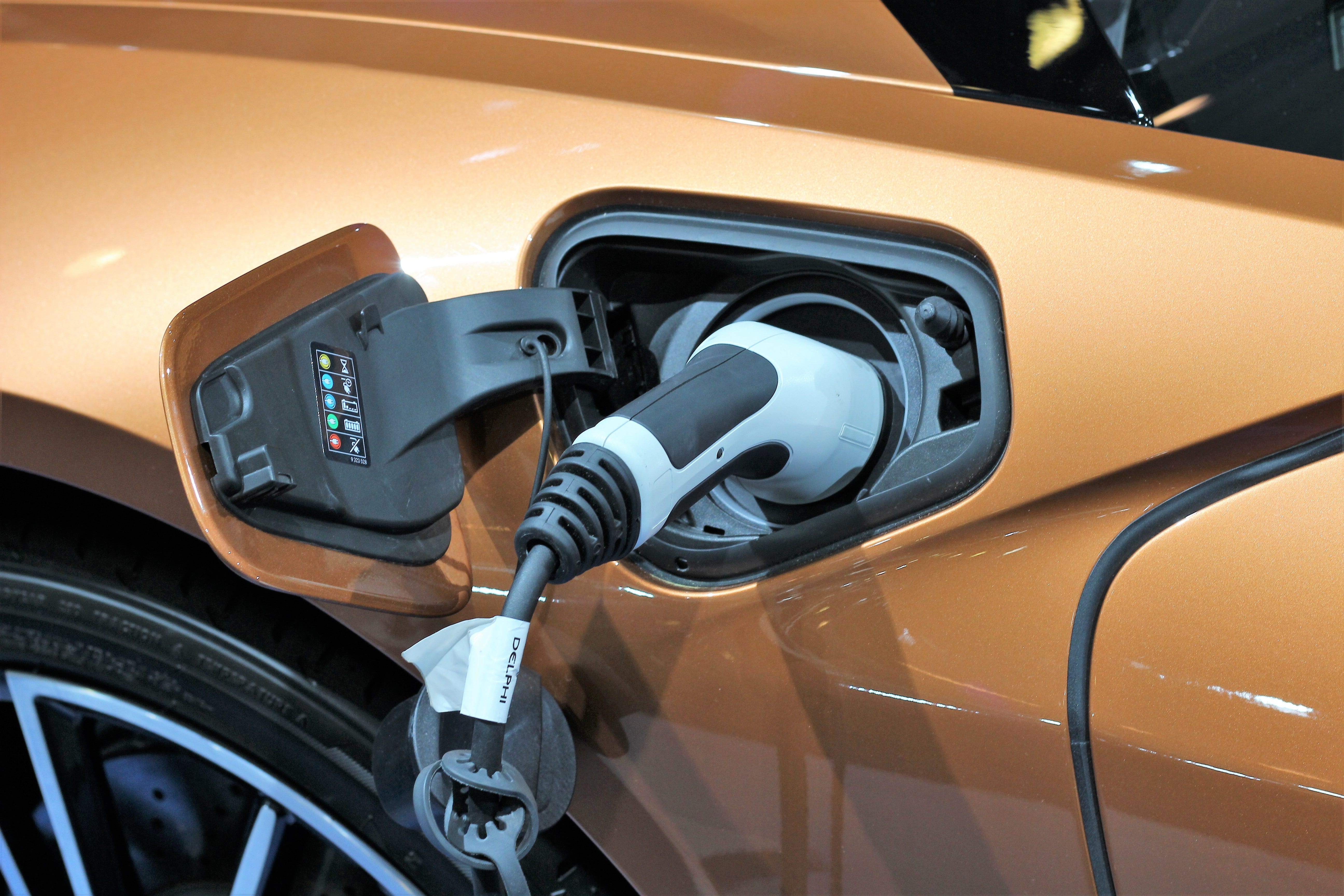
This image is used for illustrative purposes only.
A subsidy with a purpose
Launched in January 2026, Germany’s federal purchase incentive ranges from €1,500 to €6,000 depending on the model — plug-in hybrid or fully battery-electric. It is means-tested: households with a taxable annual income above €80,000 are not eligible, a design choice that explicitly targets the middle class rather than higher-income early adopters who have historically driven EV adoption without needing subsidies.
The effect was immediate. Sales climbed 41% year-over-year. One in five buyers who had previously resisted going electric — citing high purchase prices as the main deterrent — said the government bonus was the deciding factor.
On top of public support, automakers have been offering their own discounts. This may partly reflect pressure to sell more electric models in order to comply with the CO₂ emissions quotas set by the European Union — rules that penalize automakers financially if their fleets exceed defined carbon limits. Combined, public subsidies and manufacturer rebates have brought some entry-level models within reach of €15,000.
Fuel prices as a catalyst
Context matters too. Fuel prices in Germany have climbed sharply: premium unleaded gasoline at times exceeded €2.20 per liter (roughly $9.30 per gallon), while diesel approached €2.50 per liter. Some analysts have linked part of this spike to sustained pressure on global oil markets connected to the ongoing conflict involving Iran. For drivers calculating their total cost of ownership, the math is increasingly tilting toward electric.
Used EVs: a market coming into its own
The second-hand market confirms that Germany’s EV transition is maturing. Between January and April 2026, 120,000 used electric vehicles changed hands — double the volume from the same period in 2025 and triple the 2024 figure. The electric share of total used-car sales has climbed from 3% to 8% in just one year.
Several factors are converging: the fleet of vehicles eligible for resale is growing larger, the variety of available second-hand models is broadening, and concerns about battery longevity — long one of the most cited barriers among prospective used-EV buyers — appear to be fading for at least some segments of the market, though this shift remains difficult to quantify precisely.
Skoda leads, Tesla closes ground on BYD
In the new-vehicle market, the Skoda Enyaq — a compact electric SUV made by the Czech subsidiary of the Volkswagen Group — has led all registrations since the start of the year, with 13,740 units logged through the end of April, according to Germany’s Federal Motor Transport Authority (KBA). It is followed by Volkswagen’s ID.3 and Tesla’s Model Y.
Tesla, which had a difficult 2025 on European markets, has tripled its German sales year-over-year, moving close to 9,000 vehicles in May alone — enough to overtake BYD, the Chinese automaker that has rapidly expanded its European presence. BYD’s own sales are also growing strongly, a sign that competition in the electric segment is intensifying — ultimately to the benefit of consumers.
The bottom line
Germany is demonstrating that a well-designed subsidy — targeted at middle-income households, generous enough to shift purchasing decisions, but not universal — can revive a market in a matter of weeks.
The deeper question is whether other European governments will draw the right lessons, given that several have moved in precisely the opposite direction in recent years, scaling back or eliminating their own EV incentives. The German market in 2026 may be the strongest available argument for a coordinated EU-level industrial policy on clean mobility.
Sources: France Info · Radio France · KBA — Kraftfahrt-Bundesamt (Germany’s Federal Motor Transport Authority)