
G7 finance ministers: united on Russia — but cracks are showing

G7 finance ministers gathered in Paris displayed a united front on sanctions against Moscow — but an American decision to ease pressure on Russian oil, compounded by the ongoing Iranian blockade of the Strait of Hormuz, laid bare the fault lines beneath the surface.
At a Glance
The seven nations reaffirmed their commitment to maintaining economic pressure on Russia, even as Washington unilaterally suspended certain sanctions on Russian oil stored at sea.
The Iranian blockade of the Strait of Hormuz — in effect since March, following the outbreak of war between the United States, Israel, and Iran — dominated discussions, with G7 members calling jointly for the immediate restoration of free navigation.
The final communiqué stressed the group’s commitment to multilateral cooperation, while acknowledging mounting inflationary pressure on global supply chains for energy, food, and fertilizers.
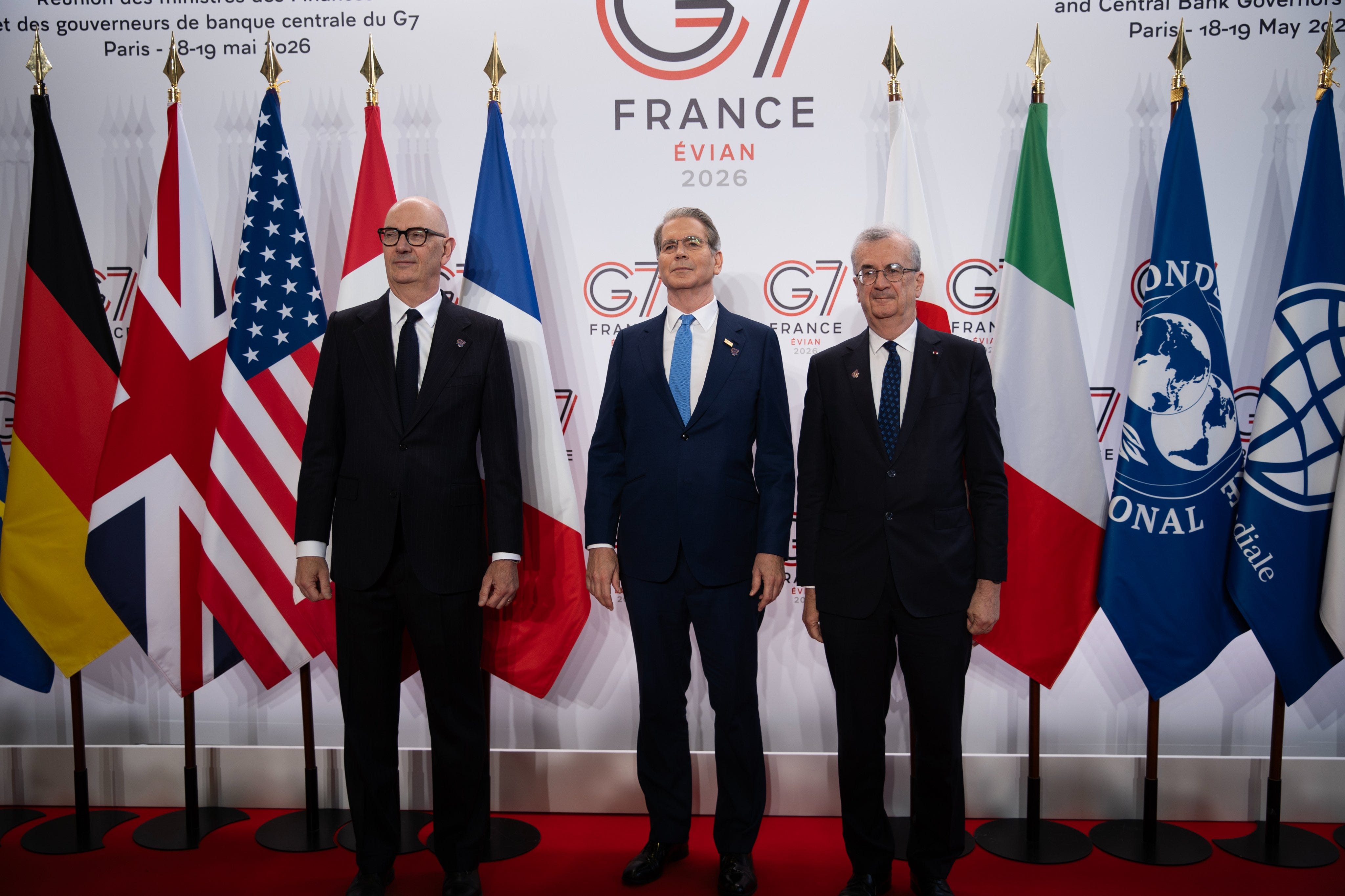
This image is used for illustrative purposes only.
Paris hosts a G7 under geopolitical strain
Finance ministers from the world’s seven leading economies convened in Paris on May 18 and 19 against a backdrop of acute global instability. The war pitting the United States and Israel against Iran has shut down the Strait of Hormuz since March, rattling energy markets and driving up fuel prices worldwide. That shock compounded the ongoing war in Ukraine, whose economic consequences remain central to the G7’s agenda.
It fell to France’s Economy and Finance Minister Roland Lescure — chairing the meeting as part of France’s G7 presidency — to close the two days of talks. His conclusion was carefully calibrated: the member states stood unanimous in their will to maintain pressure on Russia. The phrase, measured and consensus-driven, belied what Lescure himself described as discussions that had been “frank, sometimes difficult.”
The American sanctions waiver: the wrench in the works
The sharpest point of friction was Washington’s decision, announced on the very first day of the summit, to extend a temporary suspension of sanctions on Russian oil held at sea. The U.S. framed the move as a necessary response to the energy market disruptions caused by the Hormuz blockade — a way to avoid piling additional strain on already-stressed oil supplies.
The European Commission, the EU’s executive arm, took a different view. Valdis Dombrovskis, the Commission’s Economy commissioner, publicly denounced the decision before talks even began. In his reading, it was precisely Russia that stood to gain from the surge in fossil fuel prices triggered by the Iran war — making any loosening of sanctions not just premature, but counterproductive.
The transatlantic divergence did not make it into the final communiqué. But it would be difficult to dismiss it as a minor procedural disagreement.
This episode could signal a deeper structural fracture in Western cohesion on the Russia file — one that the summit format papered over without resolving.
The Strait of Hormuz: a chokepoint the G7 cannot ignore
The communiqué explicitly calls for “free and safe transit” through the Strait of Hormuz (the narrow waterway linking the Persian Gulf to global shipping routes). The waterway — through which a decisive share of the world’s seaborne oil trade flows — has been shut by Iran since March. Its closure is driving up pump prices across Europe, inflating maritime transport costs, and — as the communiqué pointedly notes — pushing up the cost of fertilizers and food in the world’s most vulnerable economies.
It is plausible that the emphasis placed on this passage in the joint statement reflects less a disagreement over the diagnosis than a lack of consensus on what to do about it. Between the European members and Washington, the diplomatic approach toward Tehran remains an open question — one the summit was not equipped to answer.
Analysis
Three dynamics from the Paris meeting deserve closer attention.
First, the American decision to temporarily suspend Russian oil sanctions exposes a recurring tension in the G7’s sanctions architecture: economic pressure on adversaries is easier to coordinate when energy prices are stable. When they spike — as Iran’s blockade has ensured — the incentive to carve out exceptions grows, and with it the risk of coalition erosion.
Second, France’s choice to broaden the G7 format by inviting Brazil, India, Kenya, and South Korea is not merely a diplomatic courtesy. It is a deliberate signal that Paris wants the group to function as a legitimate forum for global economic governance — not as a Western caucus. Whether that ambition survives contact with Washington’s more transactional approach to multilateralism remains to be seen.
Third, the summit sets the stage for the leaders’ meeting in Évian, in June, where President Emmanuel Macron will host his counterparts — Donald Trump among them. The finance ministers’ communiqué provides the technical scaffolding. The political test comes later.
The bottom line
The Paris G7 performed unity. But the harder question — how far the United States is willing to hold the line on Russia when its immediate energy interests point in the opposite direction — remains unanswered. That question will not be settled by a communiqué. It will be read in Évian, in June, in the body language between Macron and Trump.
Sources: Euronews · Council of the European Union (G7 Finance Ministers and Central Bank Governors Communiqué, May 19, 2026)