
France's military AI deal with Mistral: sovereignty with gaps
The framework agreement notified to Mistral AI in December 2025 is being hailed as a landmark for France's technological independence. It is a genuine advance — and a bounded one.

At a Glance
On December 16, 2025, France’s Defense Ministry formally notified Mistral AI of a three-year framework agreement covering all branches of the armed forces, overseen by the AMIAD, France’s newly created defense AI agency. Applications range from document analysis to acoustic warfare tools and AI-assisted artillery guidance.
The sovereignty on offer is real but circumscribed: it applies to classified data processed on ASGARD, a high-performance classified computing system brought online in the fall of 2025. It does not resolve structural dependencies — a partly foreign shareholder base, NVIDIA hardware, and Microsoft Azure as distribution channel for non-classified uses.
The deal is the centerpiece of a €2 billion defense AI investment planned under France’s 2024–2030 Military Programming Law. France’s stated goal is a place in the global top three for military AI by 2030.
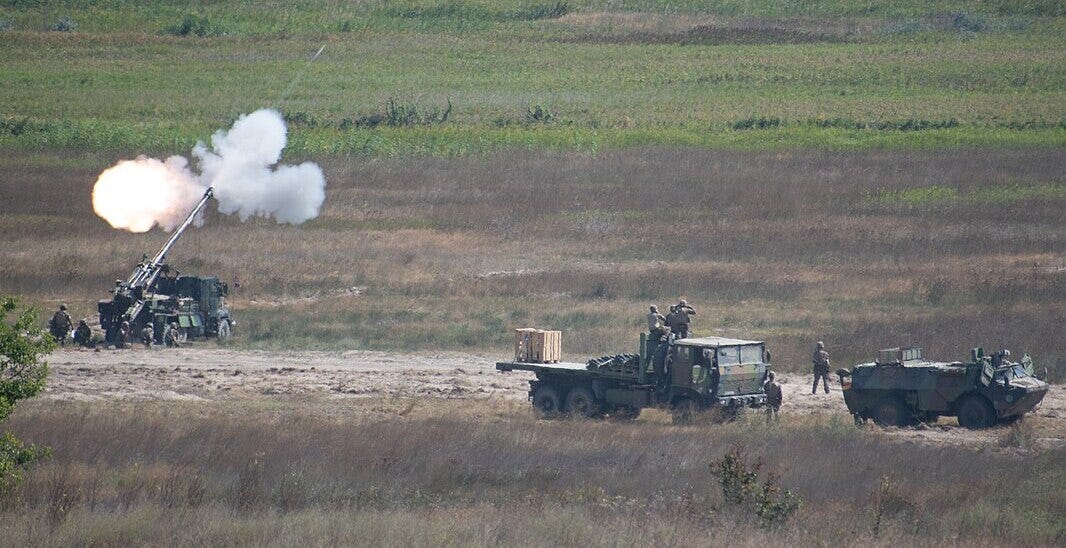
This image is used for illustrative purposes only.
What the agreement actually covers
On December 16, 2025, France’s Ministry of Armed Forces formally notified Mistral AI of a three-year framework agreement. The official public announcement followed on January 8, 2026. The scope is broad: all branches of the armed forces, ministerial directorates, and publicly funded institutions under the ministry’s oversight — including the CEA (France’s atomic energy commission), ONERA (the national aerospace research agency), and the SHOM (the naval hydrographic service).
The agreement grants access to generative AI models, software, and services developed by Mistral AI. Confirmed applications include transcription of meeting records, document translation and analysis, and synthesis of operational reports. The AMIAD — the Ministerial Agency for Defense Artificial Intelligence, which will oversee implementation — has stated broader ambitions: acoustic warfare tools capable of distinguishing the sound signatures of civilian ships, military vessels, and drones, and AI-assisted guidance systems for the Caesar self-propelled howitzer. These remain declared priorities for the agency rather than applications tied to a separate dedicated contract.
The December 2025 agreement builds on a cooperation agreement concluded in March 2025. That earlier arrangement was exploratory. The framework notified in December marks the shift to full industrial scale.
The AMIAD: coordinating without controlling
To understand this contract, it is necessary to understand the institution overseeing it. The Ministerial Agency for Defense Artificial Intelligence was established in May 2024, following an announcement by then-Defense Minister Sébastien Lecornu — now France’s Prime Minister — at a ceremony on the École Polytechnique campus in Palaiseau. Its director is Bertrand Rondepierre.
The AMIAD operates on an annual budget of approximately €300 million — one component of the €2 billion total commitment to defense AI under the 2024–2030 Military Programming Law, France’s equivalent of a defense authorization act. That law allocated €130 million to defense AI in 2024, with the budget designed to double by the end of the programming period. By 2026, France’s defense ministry is projected to employ 800 people on AI-related work.
The agency’s mandate, as defined in the National Assembly’s budget report, is to federate initiatives and serve as a technical reference — without overriding the operational choices of individual military branches. It is a coordinator, not a direct operator.
The infrastructure centerpiece is ASGARD, a high-performance computing system brought online in the fall of 2025 at Mont-Valérien, west of Paris, built by Orange and HPE. The ministry presents it as the most powerful classified supercomputer in Europe. Mistral’s models, for the most sensitive applications, will run on this infrastructure.
Where sovereignty has limits
This is where the official narrative warrants closer examination.
The sovereignty being claimed is real within a defined perimeter: classified data processed on ASGARD, in France, on national infrastructure. For those data, the U.S. Cloud Act — legislation that compels American companies to produce data stored abroad upon government request — does not apply. That is a concrete and meaningful guarantee.
But classified data represents only a fraction of a modern military’s information environment. Non-classified data, routine administrative traffic, training materials, open-source analysis — much of this could run through commercial infrastructure. Since 2024, Mistral’s flagship Large models have been distributed through Microsoft’s Azure cloud. Any organization using Mistral without deploying on its own dedicated infrastructure is processing data on American-controlled servers, subject to the Cloud Act. This is not a loophole. It is a structural feature of how Mistral operates commercially.
The second gap is financial. Mistral AI is described as a national champion, but its shareholder base is considerably more diverse. ASML — the Dutch manufacturer of the extreme ultraviolet lithography machines indispensable to semiconductor production — became Mistral’s largest single shareholder in September 2025, investing €1.3 billion for an 11% economic stake. The American venture capital firm Andreessen Horowitz holds approximately 7%. Mubadala (Abu Dhabi’s sovereign wealth fund), DST Global (Hong Kong), and Hanwha Asset Management (South Korea) also hold positions. French stakeholders — including the founders and state investment bank Bpifrance — hold a majority of the economic capital, estimated at roughly 62% by available sources. The founders also benefit from a reinforced voting structure — a double-class share arrangement that concentrates operational control beyond their economic share. French economic majority, founder control. But Roger Dassen, ASML’s chief financial officer, sits on Mistral’s strategic committee with direct access to governance discussions no other minority investor had previously secured. Not a veto. Influence.
The third gap is hardware. Mistral’s highest-performing models are trained on NVIDIA graphics processing units. Europe’s own alternative, the SiPearl processor, is not expected to be available before 2027–2028. The dependency the framework agreement reduces at the software layer remains fully intact at the hardware layer.
A challenge that goes beyond France
This tension is not uniquely French. In the United States, OpenAI and Anthropic have both signed Pentagon contracts — arrangements that raise the same questions in reverse: privately held companies with diversified shareholders, running on shared cloud infrastructure, serving classified missions. The Federal Trade Commission launched an inquiry into major technology companies’ relationships with AI providers, including the Microsoft-Mistral partnership.
For European allies, the Mistral-Defense Ministry deal functions as a working model. Germany, which has long relied on American infrastructure for public administration, is watching what France builds with ASGARD and the AMIAD. Several European governments — Germany, Luxembourg, Greece, Estonia — are already Mistral customers. The approach France is testing — European-governed AI, deployed on national infrastructure for sensitive data, commercially distributed for routine uses — could become a template for others.
The risks travel with the template. The Cloud Act reaches American companies controlling data stored anywhere, including on European servers. As long as Mistral relies on Azure for part of its commercial services, that exposure persists for non-classified data. The most accurate American analogy: a state agency using AWS for routine email while storing confidential files on its own servers. More secure — but not a solved problem.
Mistral alone? The French AI field it left behind
The Mistral framework agreement is not France’s only bet in defense AI — and it is not explicitly an exclusive one. The ministry has not publicly declared Mistral AI its sole provider, and the AMIAD’s broader mandate encompasses multiple actors across the French defense industrial base. Airbus Defence and Space separately secured a framework contract with the DGA — France’s defense procurement agency — worth up to €50 million in December 2025, focused on integrating AI components into weapons systems and communications infrastructure. Thales and Eviden jointly operate Artemis.IA, a data analytics platform that has absorbed a significant share of earlier defense AI budgets.
In that context, the absence of LightOn from the ministry’s generative AI framework is worth examining. Founded in Paris in 2016 and listed on Euronext Growth in November 2024, LightOn has quietly built a track record in sovereign AI for sensitive environments. Its Paradigm platform is deployable on-premise or in air-gapped infrastructure, meaning data never leaves the client’s walls. That is precisely the architecture the AMIAD says it wants. Paradigm is already in use at Europrop International, the consortium that builds the TP400-D6 turboprop engine powering Airbus’s A400M military transport aircraft. Sodern, a subsidiary of ArianeGroup, runs it on its own infrastructure for classified aerospace data.
Yet LightOn has not secured a direct contract with the defense ministry for generative AI. Its revenue remains modest — approximately €0.71 million in the first half of 2025, bringing full-year 2025 revenue to an estimated €1.7 million, well below its own targets at the time of its IPO. Mistral’s scale, its international profile, and its political backing gave it an advantage LightOn cannot yet match.
What this illustrates is a tension within the sovereignty narrative itself: the ministry chose the French AI company most visible to the market and most legible to allies — not necessarily the one that had built the deepest operational track record in defense-grade deployment. Whether the accord-cadre will remain Mistral-centric or eventually open to other French providers is a question the ministry has not answered publicly. For now, Mistral holds the contract. LightOn holds the use cases.
Analysis
A strategy built since 2018
France did not discover defense AI with Mistral. The defense ministry published its first AI roadmap in 2018. The 2024 strategy — AMIAD, ASGARD, LPM — is a scaling of that earlier groundwork, accelerated by Ukraine, where AI proved decisive in detection, identification, and targeting. The Mistral contract is not improvisation. It is the concrete output of a multi-year policy effort.
Who benefits from the “total sovereignty” narrative
Mistral AI has an obvious interest in being presented as sovereign — it is the company’s primary competitive advantage against OpenAI and Google. The AMIAD has an institutional interest in demonstrating that its mandate is fulfilled. And the French state has a political interest in showing independence from American tech at a moment of geopolitical tension. All three interests converge on the same narrative. That does not make it false. It does make it worth examining.
What the taxpayer is actually funding
€2 billion over seven years for defense AI, €300 million per year for the AMIAD alone. For that investment, France is acquiring sovereign infrastructure for classified data (ASGARD), a coordination agency (AMIAD), and access to a private provider whose capital it does not fully control, whose hardware supply chain it does not own, and whose commercial distribution for routine uses it does not determine. A genuine investment in partial mastery of a critical technology. Not total mastery.
The real underlying question
Can a country achieve AI sovereignty without controlling the hardware and the capital?
The answer the Mistral-Defense Ministry agreement provides is a cautious one: yes, for the most sensitive data — with residual dependencies for everything else. This is stratified sovereignty, and it reflects the reality of the global AI economy in 2026, where no single country controls the full supply chain. The question is not whether that is ideal. It is whether it is acknowledged — or obscured behind a rhetoric of total independence that does not hold up under scrutiny.
The bottom line
France has chosen achievable sovereignty over the chimera of total independence. ASGARD and the AMIAD are real infrastructure, not political theater. Mistral AI is, in practice, the most credible European alternative to a market dominated by American providers subject to American law.
But a framework agreement, however significant, does not resolve the dependency on NVIDIA hardware, does not alter Mistral’s capital structure, and does not lift the Cloud Act exposure for routine data flowing through Azure. And it raises a question the ecosystem itself is already asking: if LightOn can deploy sovereign generative AI inside air-gapped defense infrastructure today, why is it not part of the ministry’s framework? The answer may be scale, visibility, or politics — but it is worth asking.
The deeper question this agreement poses — one no official narrative is currently willing to ask aloud — is this: in ten years, when SiPearl chips exist and Europe has its own compute infrastructure, will France have retained enough leverage over Mistral AI for today’s claimed sovereignty to have become real? Or will it have constructed a new dependency, merely less American than the ones it set out to replace?
Sources: French Ministry of Armed Forces — official statement, January 8, 2026 · Defense AI ministerial strategy, March 2024 · French Military Programming Law 2024–2030 (Légifrance) · National Assembly — AMIAD budget report · French Ministry of Armed Forces — AMIAD six-month review, December 2024 · LightOn / Europrop International — partnership announcement, January 2025 · AFP · Reuters