
France's justice system under fire after girl's presumed death
An 11-year-old's disappearance in southwest France — with a suspect who had been reported multiple times — is convulsing the country's political establishment and reigniting the 2027 presidential race

At a Glance
Lyhanna, age 11, disappeared on May 29, 2026 near Fleurance, in the Gers department of southwestern France. On June 4, a body wearing clothing similar to hers was found in the area — presumed to be that of the missing child, pending autopsy confirmation. The prime suspect, Jérôme Barella, had allegedly been the subject of multiple complaints and reports to authorities before the crime.
French Prime Minister Sébastien Lecornu convened an emergency meeting with the ministers of justice and interior; Justice Minister Gérald Darmanin publicly acknowledged a “poor organizational response.”
Presidential hopefuls across the political spectrum — from the far right to the left — seized on the case to demand sweeping reform of France’s judicial system and stronger protections for children’s testimony.
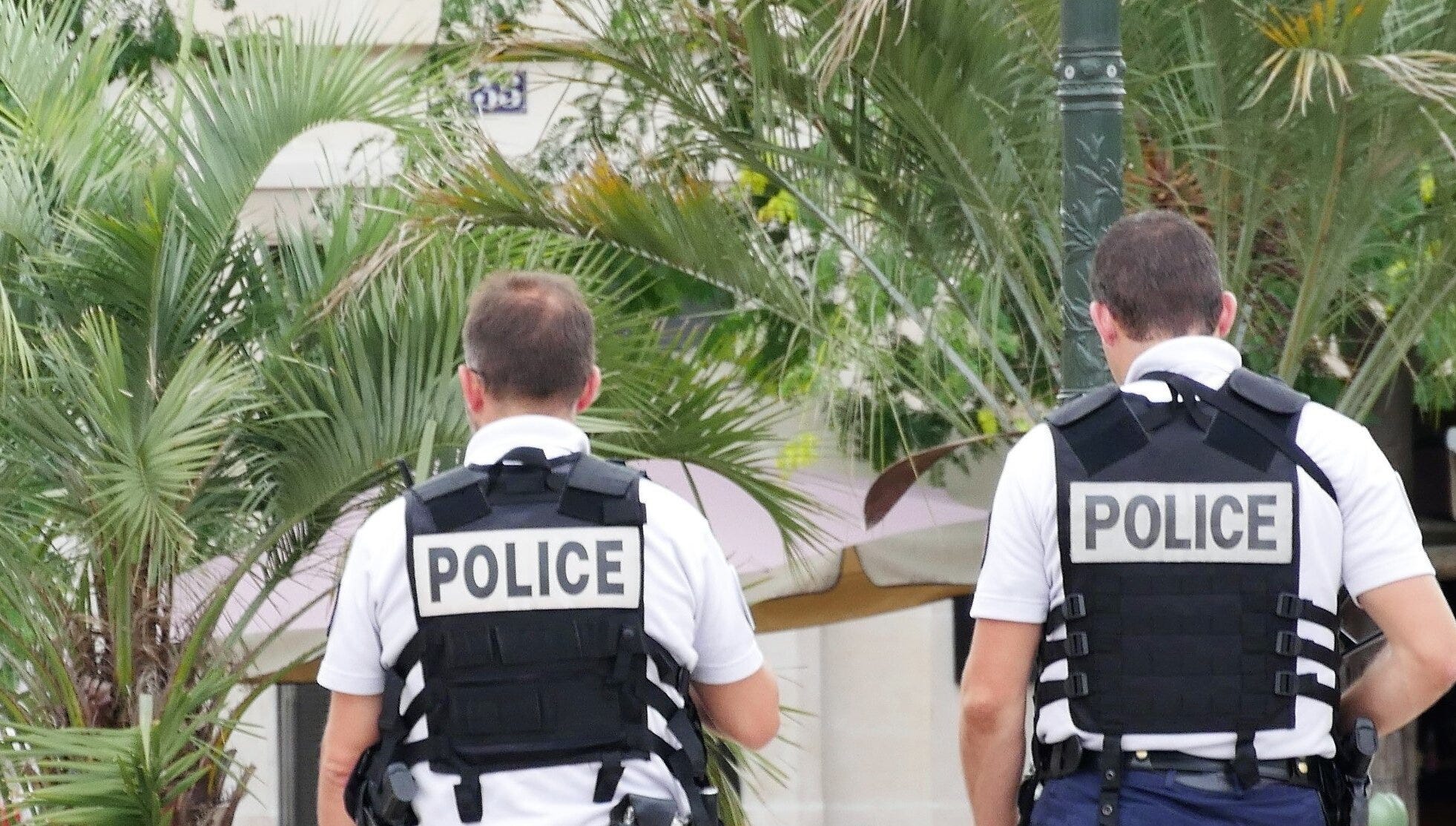
This image is used for illustrative purposes only.
A chain of warnings ignored
On June 4, 2026, a body wearing clothing similar to that of Lyhanna was found near Fleurance, a small town in the Gers, a rural department in southwest France. The 11-year-old schoolgirl had vanished on May 29. Identity has not been formally confirmed pending autopsy, but investigators are working on the presumption that the body is hers. The prime suspect, identified as Jérôme Barella, had reportedly been the subject of multiple complaints and referrals to authorities before the alleged crime — a detail that immediately ignited political outrage.
Cases of this kind expose a recurring structural tension in France’s judicial system: the management of known high-risk individuals across institutions. The pattern is not new. Comparable failures — where warning signs were missed or lost between agencies — have emerged in some of Europe’s most notorious child abuse cases. What is different here is the political context: with less than a year to go before an open presidential race, the tragedy is being turned into a platform.
The government in crisis mode
The executive response came quickly. Prime Minister Sébastien Lecornu canceled a planned trip and summoned the ministers of justice and interior to a crisis meeting in Paris. Justice Minister Gérald Darmanin went further, publicly admitting that the case exposed what he called “poor organization” — a rare concession from a sitting minister on an ongoing case.
That acknowledgment speaks to the scale of public shock. It also reveals the limits of the exercise: a crisis meeting cannot retroactively fix a broken chain of communication.
The 2027 race intrudes on grief
Presidential hopefuls from across the spectrum moved fast.
On the right, Jordan Bardella, president of France’s far-right Rassemblement National (RN) party, accused the state of having “badly failed” and said the French people were demanding accountability. Bruno Retailleau, president of the center-right Les Républicains (LR) party and a declared 2027 candidate, put forward the sharpest diagnosis, calling France’s judicial system “a failure” in need of deep reform. Édouard Philippe, head of the centrist Horizons party and a presidential contender, took a more institutional approach, calling for a “genuine precautionary principle” in cases of child abuse — including faster judicial procedures and clearly assigned responsibility when the system breaks down.
On the left, Marine Tondelier, leader of the Écologistes (France’s Green party) and a declared presidential candidate, criticized a system “incapable of handling sexual and gender-based violence,” pointing to a lack of resources — but not only that. Mathilde Panot, leader of the La France Insoumise (LFI) bloc in parliament and a close ally of hard-left presidential candidate Jean-Luc Mélenchon, attributed the tragedy to years of underfunding of the justice system and what she called systemic patriarchal domination.
Analysis — The reporting breakdown at the heart of the matter
What stands out in this case is not the horror of the crime itself — tragically familiar — but the recurrence of the pattern: a flagged individual, reported multiple times at multiple levels, who continued to move freely until the irreversible happened.
The problem is neither purely budgetary nor purely ideological, even if every political family rushes to reframe it on its own terms. It runs deeper, into how France’s child protection architecture actually functions — specifically, the fragmentation of information-sharing between social services, prosecutorial offices, and law enforcement. According to available legislative records, France’s 2007 child protection law was designed to improve coordination across these bodies, but its implementation has remained uneven across departments. France’s Court of Auditors (the country’s public spending watchdog) has in recent years signaled insufficient resources devoted to children’s justice, though those assessments predate this case and cannot be mechanically applied to it.
The question of whether children are believed when they report abuse — a theme raised by nearly every political figure who commented — is not just rhetorical. France has made advances in how children’s testimony is recorded (specialized rooms, video hearings), but what happens next, in the judicial follow-through, remains deeply inconsistent.
The Bottom Line
The Lyhanna case ultimately raises a question that goes beyond judicial dysfunction: what does a society actually choose to prioritize? The underfunding of France’s child welfare and justice systems has been documented for years.
Reform doesn’t require another tragedy — it requires political will that emotional moments don’t automatically produce.
The candidates now declaring the system broken will eventually have to answer a harder question: what, concretely, would they do differently — and how would they pay for it?
Sources: France Info · AFP