
France's justice system on trial
After Lyhanna's murder, more than 6,000 testimonies from survivors mapped France's dismissed sexual violence complaints on a citizen platform. A judicial crisis made visible.

At a Glance
The citizen platform Cases Dismissed gathered more than 6,000 testimonies from survivors of sexual and gender-based violence within days of the death of Lyhanna, an 11-year-old girl found murdered in southwestern France.
A legal confrontation over the presumption of innocence forced the platform’s founders to remove the option of naming alleged perpetrators, exposing an unresolved tension between survivors’ voices and criminal law.
The Lyhanna case has revealed systemic failures in France’s handling of sexual violence complaints against children — failures the country’s executive can no longer attribute to isolated individual mistakes.
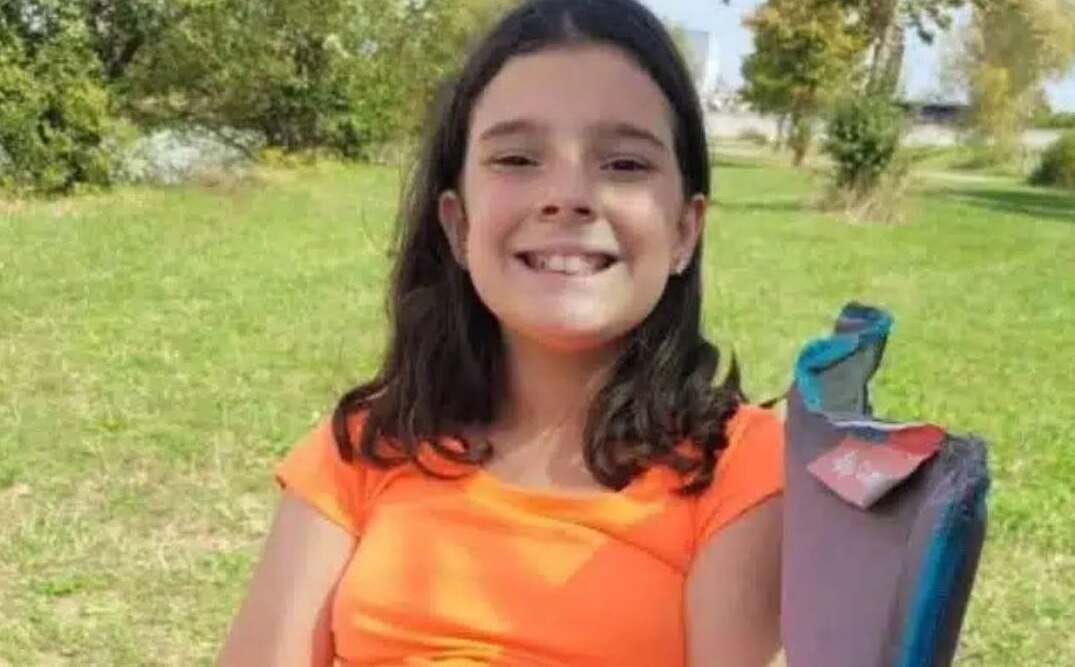
This image is used for illustrative purposes only.
A citizen archive born from a national tragedy
On May 29, 2026, Lyhanna, an 11-year-old middle school student, disappeared in Fleurance, a small town in the Gers department of southwestern France, after leaving school. Her body was found on June 4 inside a disused agricultural silo in Puycasquier, roughly nine miles away. Jérôme Barella, a 41-year-old father of three, was placed under formal judicial investigation — the French legal status that means a judge has found sufficient grounds to investigate a suspect, which is not equivalent to a criminal indictment — for kidnapping and unlawful detention of a minor under 15. On June 18, forensic autopsy results confirmed she had been raped before her death.
What shattered public trust was not only the horror of the crime. It was the timeline that preceded it: Barella had been the subject of complaints for sexual violence against minors in 2022 and again in 2025. The first complaint was dismissed without investigation. For the second, filed in August 2025, he had never been summoned or questioned. France’s prosecutor of Auch confirmed that her office only received the file in December 2025, and did not forward it to law enforcement until January 2026.
In response, President Emmanuel Macron declared from Montenegro that he would accept “no argument based on resources.” Gérald Darmanin, France’s Minister of Justice and the official responsible for the country’s courts and penal system, publicly apologized “on behalf of Justice” to Lyhanna’s family. But public anger exceeded the official messaging.
Within days of the body being found, filmmaker and activist Ève Simonet launched Cases Dismissed on June 9 — a citizen platform built on a simple and radical premise: map, in real time, the geographic spread of sexual violence complaints across France that had been dropped or ignored.
6,000 voices, 99 departments, one common story
In days, more than 6,000 testimonies poured in. The homepage displayed two figures in real time: total testimonies submitted, and the count of what the platform labeled “ignored complaints” — 2,500 as of June 18. A map of France was covered in red dots across 99 of the country’s 101 administrative departments. Behind each dot: a sexual assault, a rape, incest, domestic violence, or abuse in a school, sporting, or family setting.
Alleged perpetrators were overwhelmingly from the victims’ immediate circles — family, friends, colleagues. One thread runs through most accounts: the feeling of not having been heard. Some survivors described abandoning the idea of filing a complaint out of fear or shame. Others reported engaging with the legal system only to see their cases shelved — dismissed on statute of limitations grounds, or closed without prosecution.
For Clémence Andrieux, one of the founders of the collective behind the project, the platform addresses a concrete need: making visible experiences that have long remained isolated and invisible.
The presumption of innocence, that legal wall
At launch, testimonies could include the name of an alleged perpetrator. Andrieux initially defended this: she acknowledged the tension with the presumption of innocence — a bedrock principle of French and European criminal law — but argued that a victim describing her own experience did not violate it.
Supporters of victims’ rights were not unanimous. Anne Bouillon, a lawyer who has spent two decades defending women survivors of rape and sexual assault, stated bluntly that “justice belongs in the courtroom.” Arnaud Gallais, president of the children’s rights association Mouv’enfants and himself a survivor of childhood incest, shared that position — noting he had only publicly named one of his own perpetrators after that person’s death.
On June 18, the collective reversed course, announcing the removal of any ability to name alleged perpetrators in testimonies. The reasoning it put forward was precise: naming someone in a testimony exposes the victim to legal action for defamation or violation of the presumption of innocence, even when the facts have been reported to authorities.
“Testifying about what you experienced is not issuing a verdict.” [translated from French]
The collective added that it could not “in good conscience” leave vulnerable people exposed to that legal risk while fighting its broader battle.
Why this matters beyond France
France’s handling of sexual violence complaints is not a uniquely French problem — but France’s legal architecture makes it a distinctively French paradox. The system gives prosecutors broad discretion to dismiss complaints before investigation begins — a power that, by its very name, Cases Dismissed was created to document. Unlike the U.S. grand jury system, in which an independent body of citizens decides whether to indict, French prosecutors can close a case at the pre-investigation stage without judicial oversight and without notifying the victim in a meaningful, timely way. The Lyhanna case has revived a longstanding debate: should that discretion be constrained by statute when the alleged victim is a child?
Across the European Union, several member states are reported to have moved toward more stringent mandatory investigation protocols for complaints involving minors — a direction France has resisted, citing already-strained court capacity. With more than 6,000 survivors now mapping the consequences of that choice in real time, that argument has become significantly harder to make.
The institutional response: a calculation in progress
The political moment has produced movement, though its depth remains to be seen. On June 15, Prime Minister Sébastien Lecornu, who leads France’s center-right coalition government, met with cross-party lawmakers backing a comprehensive bill against sexual and gender-based violence — legislation that women’s rights groups have demanded for years and that successive governments have deferred. The meeting marked a shift: the week before, the executive had still been describing the Lyhanna failures as isolated.
Whether that shift translates into legislation — or dissolves into the usual cycle of announcements and delays — is the open question. Cases Dismissed has done something courts and statistics could not: it has made the abstract concrete. France now knows, roughly, where its silenced victims live.
The Bottom Line
France now has a collective memory of unprosecuted sexual violence. Cases Dismissed does not replace the justice system — it documents its absence. The real question is not whether a platform like this should exist, but why it had to. As long as the criminal response to sexual violence remains this inconsistent — varying by department, by prosecutor’s office, by caseload — others will emerge after other tragedies. The comprehensive law that associations have demanded for years has not been passed. The standoff between political urgency and legislative inertia has just begun.
Sources: France 24 · AFP · France Info