
France's fuel relief plan: €710 million, but no across-the-board cut
The Lecornu government is targeting fishermen, farmers, home care workers, and taxi drivers — deliberately leaving out a broad tax cut. A politically loaded choice with long-term fiscal implications.

France announced an additional €710 million (approximately $775 million at current exchange rates) in fuel relief on Thursday, May 21 — and made a point of what it was not doing. Prime Minister Sébastien Lecornu, head of the French government, gathered six cabinet ministers to signal the scale of the response to soaring fuel prices driven by the war in the Middle East and disruptions to shipping through the Strait of Hormuz. His message was as much political as economic: no blanket tax relief, no gesture to the crowds, no repeat of the populist instinct that drove some European governments to hand out universal pump subsidies in 2022.
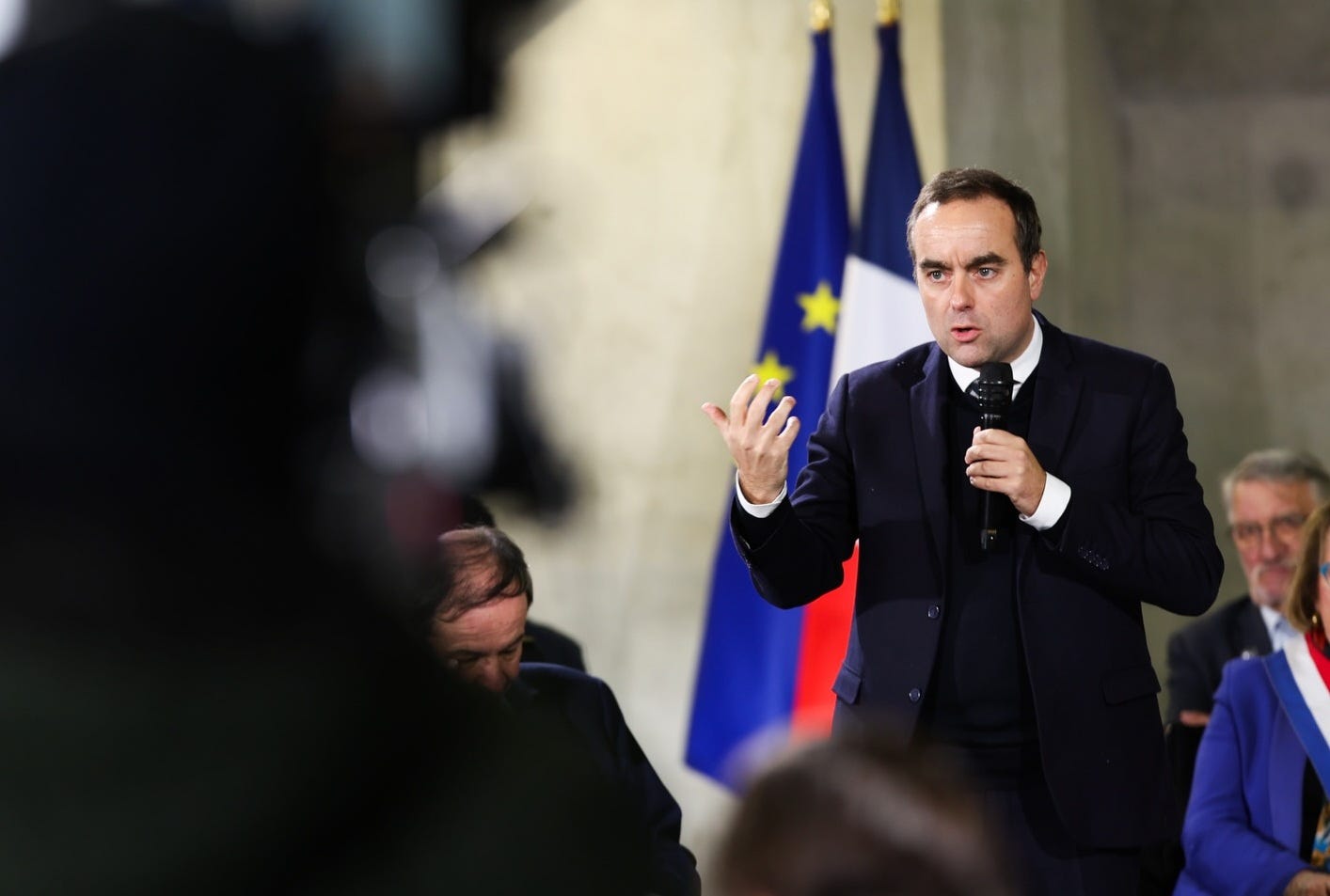
This image is used for illustrative purposes only.
At a Glance
France is deploying an additional €710 million in fuel assistance, on top of €470 million already committed, targeting the sectors hit hardest by rising energy costs.
Prime Minister Lecornu explicitly ruled out any across-the-board fuel tax cut, citing fiscal responsibility — a calculated break from the universal subsidy logic of previous energy crises.
Fishermen, farmers, home care workers, taxi drivers, civil servants, and trucking companies each receive a distinct relief mechanism, with several programs extended by three months.
A targeted fuel relief plan, not a universal subsidy
The backdrop is well-established: fuel prices have been climbing since the escalation of conflict in the Middle East, with particular pressure coming from disruptions to commercial traffic through the Strait of Hormuz — the narrow waterway between Iran and Oman through which roughly a fifth of the world’s oil supply flows. The French government’s response took shape over weeks; Thursday’s announcement gave it a price tag and a political frame.
David Amiel, France’s Minister of Public Action and Accounts, announced the additional €710 million envelope. The breakdown is granular by design.
Low-income workers who drive long distances for work — about 3 million people — will see their existing fuel aid doubled, from €50 to €100, and extended for three more months starting in June, translating to a 20-cent-per-liter reduction at the pump. Fishermen will receive a rebate of 30 to 35 cents per liter of diesel, within the framework set by the European Commission, the EU’s executive arm responsible for overseeing state aid rules. Farmers are entitled to 15 cents per liter of agricultural diesel (GNR).
The trucking sector will see its existing subsidies extended by three months. Civil servants will have their mileage reimbursements increased by 20 cents per liter — the same uplift extended to home care workers, who will also gain access to a social leasing program for electric vehicle purchases. Taxi drivers will be eligible for a purchase grant of up to €5,500 for electric vehicles, available from October 1. Small business owners will see the fuel bonus ceiling doubled — from €300 to €600 per year — with eligibility criteria removed entirely, according to SME Minister Serge Papin.
Analysis: the political calculus of selectivity
A deliberate ideological stance
The decision to withhold a universal fuel tax cut is not merely a budgetary call. It reflects a political posture: Lecornu is refusing the logic of the electoral handout. His phrasing at the press conference — that he would not “bother” [translated from French] the French by telling them to drive less, while simultaneously rejecting any “indiscriminate” tax measure — sketches a prime minister intent on avoiding what could be seen as a repetition of the 2022 pump subsidies, which several economists at the time criticized for their high fiscal cost and questionable redistributive effect.
That choice, however, could expose the government to a symmetric critique: middle-income workers who rely on their cars but fall outside the eligible professional categories would receive no relief under this framework, even as inflation remains persistent.
The efficiency question no one asked
The multiplication of sector-specific windows raises an administrative question the press conference left open: who verifies, who disburses, and on what timeline? France’s experience with residential energy retrofit grants and complex tax credit schemes suggests that proclaimed simplification does not always survive regulatory implementation. The doubling and streamlining of the SME bonus is a step in the right direction, but the overall architecture remains fragmented — a patchwork that could prove harder to navigate than it appears.
A quiet European constraint
The reference to the European Commission’s framework for fishermen is worth noting. It signals that fuel subsidies in France — as in other EU member states — are not left to national discretion alone. They operate within a state aid regime that limits how much governments can spend and on whom. This constraint, rarely mentioned in the domestic political debate, is nonetheless a structural feature of France’s room for maneuver — and a reason, beyond political will, why a truly universal measure would have faced legal hurdles at the EU level regardless.
The Bottom Line
The Lecornu government has placed a bet on fiscal discipline over electoral generosity. The logic holds — but it rests on an assumption yet to be tested: that French voters will accept conditional, profession-based relief rather than a universal break at the pump.
Should the Strait of Hormuz crisis worsen and prices climb further, the selectivity of this package could quickly look inadequate — and the pressure for a universal measure, which Lecornu went out of his way to preempt, may return with greater force than before.
Sources: Euronews France