
France's EV charging push: 400,000 stations by 2030
France is betting that infrastructure can drive electric vehicle adoption — but the math only works if the cars follow.

France already has between 185,000 and 192,000 public EV charging points, depending on the counting methodology. By 2030, President Emmanuel Macron wants that number to reach 400,000. On May 26, 2026, Macron convened a broad coalition of energy and infrastructure players at the Élysée Palace, the French presidential residence, to lock in concrete commitments: 240,000 additional charging points by the end of the decade, including 60,000 fast and ultra-fast stations. The timeline is tight. The question isn’t whether France can build the infrastructure — it’s whether it will be in the right places, at the right cost, for the right cars.
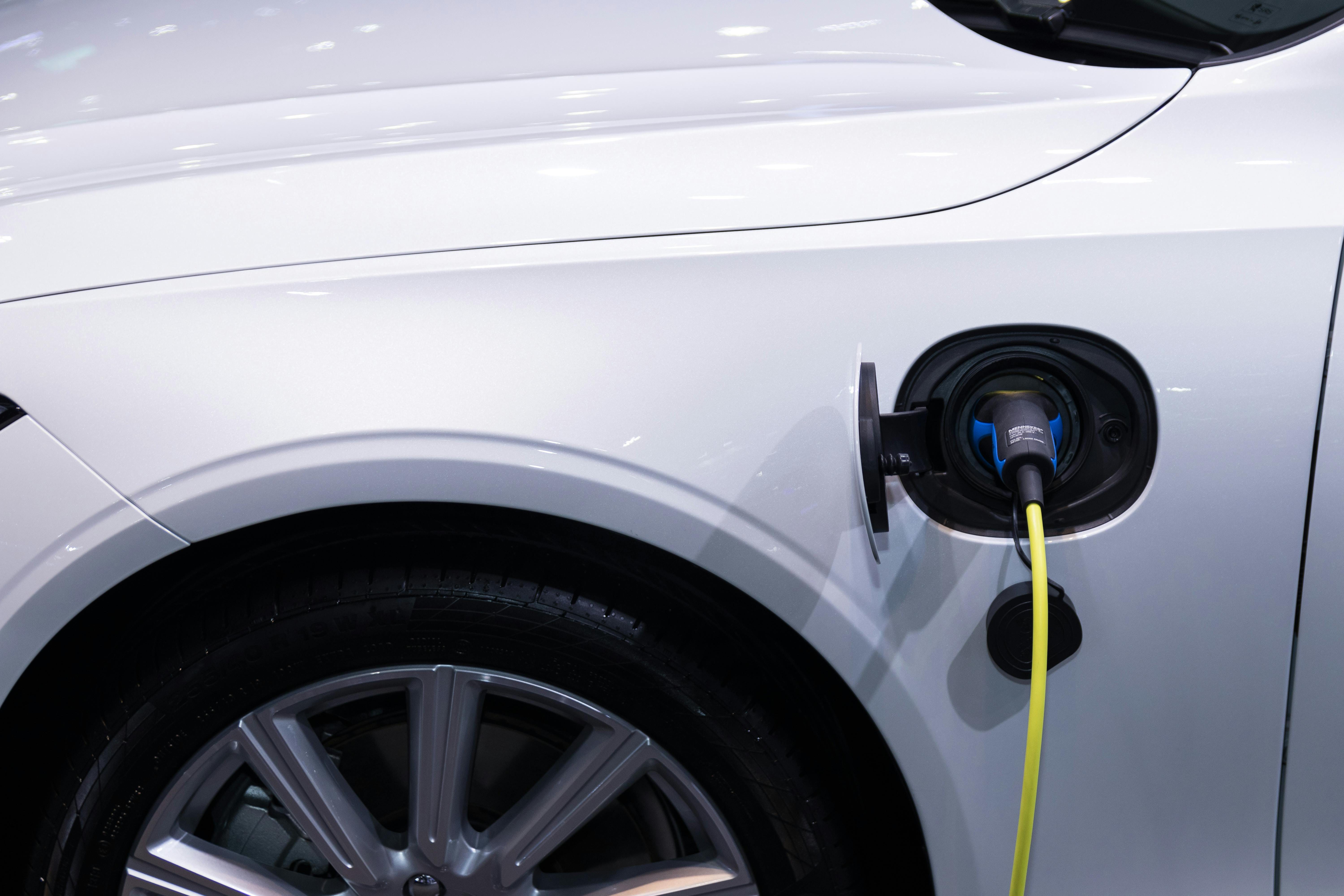
This image is used for illustrative purposes only.
At a Glance
France has committed to reaching 400,000 public EV charging points by 2030, up from roughly 185,000–192,000 today, following a May 26, 2026 summit at the Élysée Palace.
Of the 240,000 additional stations pledged, 60,000 will be fast or ultra-fast chargers — the category that makes long-distance electric travel viable.
Charging operator Electra pledged €300 million in investment by 2030; operators including Engie and retailer Leclerc also announced expansion commitments, with Leclerc targeting 10,000 stations at its stores.
Why this number matters
France is one of Europe’s largest car markets, with roughly 2.2 million new vehicle registrations annually. Electric vehicles have been gaining ground, but remained a minority of new sales as recently as 2025 — squeezed between high purchase prices and what the industry calls “range anxiety,” the fear of running out of charge with no station in sight. This psychological barrier is consistently ranked among the top deterrents to EV adoption in European consumer surveys.
The answer is fast chargers, not slow ones. A standard AC charger (7 to 22 kW) replenishes a battery over several hours — useful overnight at home, useless on a highway between Paris and Lyon. A fast DC charger (50 to 350 kW) can bring a battery to 80% in 20 to 40 minutes, depending on the vehicle. That is the technical minimum for long-distance electric travel to feel competitive with a gasoline stop.
The May 26 pledge fits within a binding EU regulatory framework. The Alternative Fuels Infrastructure Regulation, which entered into force in 2023, requires member states to meet mandatory fast-charger deployment targets along major road corridors, with milestones in 2025 and 2027. For American readers, a rough equivalent would be the federal charging mandates attached to the 2021 Infrastructure Investment and Jobs Act — a legal obligation, not merely an aspiration.
The politics of voluntary commitments
The Élysée summit was broader than a meeting of charging operators. It brought together players from across the energy and infrastructure ecosystem — electricity grid operators, construction firms, energy distributors, and retailers — reflecting Macron’s framing of EV charging as a systemic challenge, not merely a commercial one. The charging commitments were the most headline-ready element of a wider conversation about electrifying French energy consumption.
That format — voluntary pledges extracted under presidential gaze — has become a trademark of French industrial policy. The approach echoes the “Choose France” investor summits Macron has hosted since 2017: convene private actors, secure public commitments, and position the presidency as the guarantor of industrial momentum.
The cast of players is telling. Electra is a French fast-charging startup whose model centers on high-power urban stations in parking garages; its €300 million commitment signals a significant acceleration. Engie, operating through its charging brand Vianeo, is deepening an EV infrastructure strategy already active across France and Belgium. Leclerc, France’s largest grocery retailer by market share, sees a commercial opportunity: charging as a loyalty driver more powerful than a points program.
The timing of this announcement is not incidental. France is in a municipal election cycle in 2026, and energy costs have re-emerged as a kitchen-table issue after two years of debate over household electricity prices. Staging a concrete plan — with names, numbers, and companies on record — serves a political function alongside its industrial one. That political reading, however, remains an inference; it is not established as fact in the available record.
What 400,000 stations do — and don’t — solve
At 68 million inhabitants, 400,000 public charging points would translate to roughly one station per 170 residents — a ratio that would match current Dutch standards, among the best in Europe. But aggregate ratios obscure geography. Charging infrastructure naturally gravitates toward high-traffic commercial sites, highways, and urban centers. Rural France — home to roughly 20% of the population — risks remaining underserved unless deployment incentives are deliberately structured to correct this imbalance.
The 60,000 fast and ultra-fast chargers deserve the sharpest scrutiny. Today, the per-kilometer cost of a fast highway charge can exceed the equivalent gasoline cost in some pricing configurations, limiting the economic case for switching. Wider deployment, if it increases competition among operators, could push those prices down — but only if the market remains genuinely competitive and doesn’t consolidate around a handful of dominant providers.
The real question: infrastructure without vehicles?
The May 26 announcement is entirely about supply-side infrastructure. It says nothing about the vehicles. That gap is the crux. France’s charging network will be useful in precise proportion to how fast the electric vehicle fleet grows. If adoption stalls — due to purchase costs, instability in public subsidies, or the kind of global trade disruptions that have pressured EV markets across Europe — France’s charging ambition would be running ahead of the fleet it is meant to serve.
The EU has confirmed that sales of new internal-combustion vehicles will be prohibited from 2035, a decision that could still be revisited under political pressure. That ruling creates a nine-year transition window. France’s 2030 infrastructure bet is ultimately a wager on the convergence of two curves: rising EV penetration in the active fleet, and available chargers to service them. The history of energy transitions is full of cases where one curve outran the other — with costly consequences in either direction.
The bottom line
France can build 400,000 charging points. The harder question is whether 400,000 will be too many — if electric vehicle adoption keeps lagging — or already too few, if it suddenly accelerates. Infrastructure doesn’t generate demand. It enables it. The real pressure on this system isn’t industrial: it’s fiscal, social, and geographic. A charging station in an empty parking lot is not a solved problem. It’s an expensive placeholder.
Infrastructure doesn’t generate demand. It enables it.
Sources: France Info · EU Alternative Fuels Infrastructure Regulation (AFIR)