
France's Cyprus deal and NATO's eastern fault line
When France and Cyprus signed a defense pact on June 8, Turkey's anger was expected — but the real story is NATO's eastern fracture.

At a Glance
The France-Cyprus Status of Forces Agreement (SOFA) signed on June 8, 2026, doesn’t create a French military presence on Cyprus — it formalizes and entrenches one that has been operationally real since at least 2017, now with binding obligations on exercises, logistics, and personnel exchanges.
The evening before the signing, Turkish fighter jets shadowed aircraft carrying the Greek, French, and Dutch defense ministers as they approached Cyprus — an incident now under investigation by the European Commission, and the real escalation of the week.
Turkey is hosting the 2026 NATO summit while simultaneously challenging the sovereignty of an EU member state. That paradox no longer has a precedent in the alliance’s history.
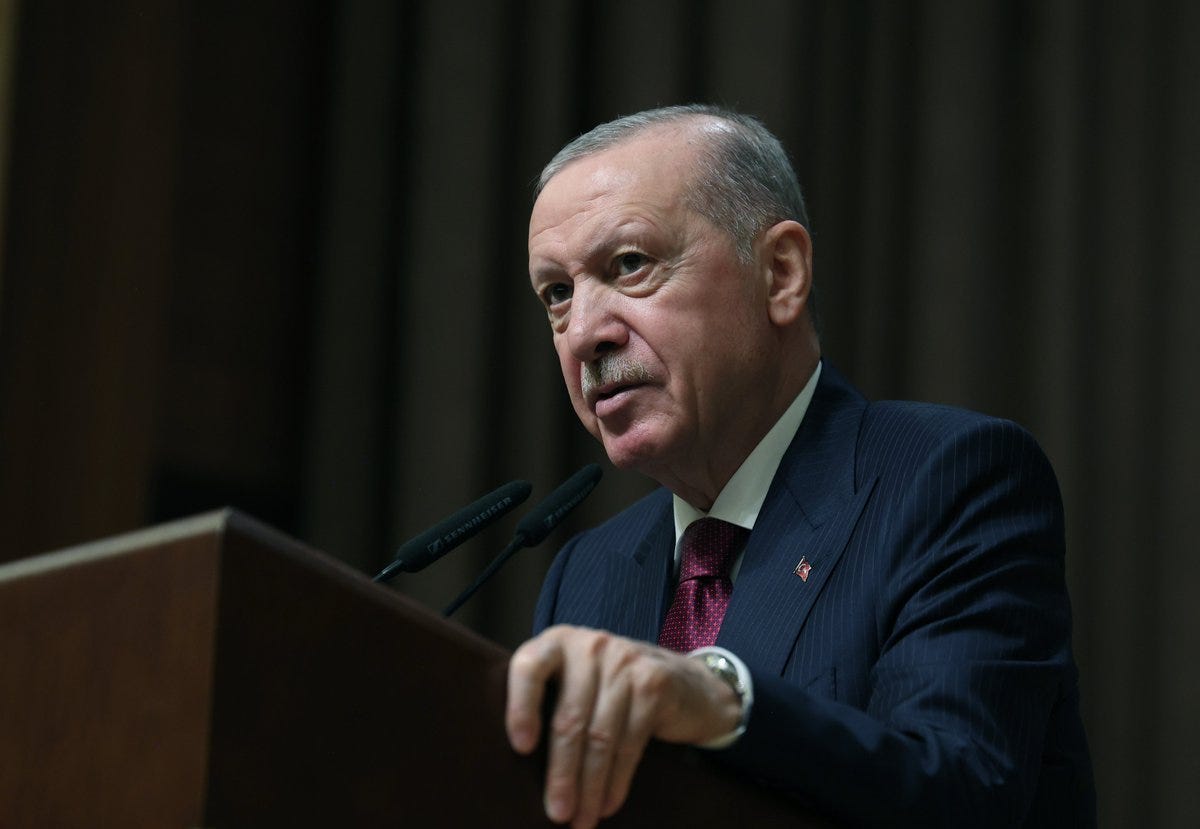
This image is used for illustrative purposes only.
What the Nicosia agreement actually says
On June 8, 2026, French Defense Minister Catherine Vautrin and Cypriot Defense Minister Vasilis Palmas signed a Status of Forces Agreement (SOFA) in Nicosia — a standard legal instrument in international law that defines the rights and obligations governing foreign troop presence on national territory: the legal status of military personnel, operational conditions, criminal jurisdiction, logistics.
What the agreement does in practice goes beyond a symbolic handshake. It establishes a permanent framework for joint French-Cypriot exercises, personnel exchanges, operational coordination, and the structural presence of French forces on the island. The Cypriot government was quick to characterize this presence as “strictly humanitarian,” focused on security and evacuation operations in the eastern Mediterranean and the Middle East. The framing is politically useful. The agreement’s actual scope — covering operational cooperation, military interoperability, and defense industry collaboration — is broader than the word “humanitarian” suggests.
French forces have used Cyprus as a staging point for years. The island served as a hub during Lebanese evacuation missions and, more recently, for naval operations in the Red Sea. A defense cooperation agreement between Paris and Nicosia had already been signed in Paris in April 2017 and ratified by France’s National Assembly in 2019. The June 2026 SOFA doesn’t build a Franco-Cypriot military relationship from scratch: it locks it into a durable legal architecture, converting what was an operational practice into a binding mutual obligation.
The signing took place alongside an informal meeting of EU defense ministers in Nicosia, held as part of Cyprus’s rotating presidency of the Council of the European Union. The timing was deliberate: Cyprus chose to make this agreement the signature political act of its EU presidency — a signal directed as much at Ankara as at Brussels.
The escalation nobody is talking about: the eve-of-signing incident
Erdogan’s speech before the Turkish parliament captured most of the media attention. It should be read alongside a less-covered event that occurred the evening before the signing.
On the evening of June 7, as aircraft carrying Greek Defense Minister Nikos Dendias, French Defense Minister Catherine Vautrin, and the Dutch defense delegation approached Larnaca on their way to the EU meeting, they encountered radio interference from Tymbou airport — the Nicosia airport in Turkish-controlled northern Cyprus, not recognized by international aviation authorities — along with the shadowing of at least one aircraft by Turkish F-16s. Victor Papadopoulos, director of the press office of the presidency of the Republic of Cyprus, confirmed that his office had been notified of the interference directly by the three ministers. In the case of Dendias specifically, Turkish jets were observed tracking his aircraft at a distance before all delegations landed safely at Larnaca. A second interference episode involving Dendias’s aircraft was reported approximately 40 minutes after the first.
Turkey denied the accusations in detail. Ankara’s Communications Directorate stated that six aircraft had flown between Greece and Cyprus that evening, that four of them had entered what it described as TRNC airspace, and that two F-16s were scrambled as a precautionary response — remaining, it insisted, within northern Cyprus airspace at all times and conducting no harassment. Turkish Cypriot air traffic controllers similarly rejected the allegations as politically motivated.
The competing accounts are now under review by the European Commission. Whatever the outcome, the sequencing matters: the incident occurred hours before the SOFA signing, not after — suggesting Turkey’s response was calibrated as a warning, not a reaction. If the Commission’s investigation confirms deliberate interference, the mechanisms of European solidarity could formally be invoked — including Article 42.7 of the Treaty on European Union, the EU’s mutual defense clause. But the treaty itself complicates any such move: Article 42.7 explicitly states that for member states that are NATO members, the alliance remains “the foundation of their collective defence.” Invoking an EU clause against a NATO ally, with no EU military command structure capable of acting independently of NATO, would be less a legal remedy than a political declaration — significant, but operationally hollow.
It would not be the first military friction between Paris and Ankara in the Mediterranean. In June 2020, the French frigate Courbet, participating in NATO’s Sea Guardian operation, was reportedly subjected to multiple targeting radar lock-ons by a Turkish warship — an act French naval authorities described as “extremely aggressive,” according to reporting by Le Monde and Reuters at the time. Paris temporarily suspended its participation in the operation and filed a formal complaint with NATO. That complaint led to no formal sanction.
What international law says — and what Ankara disputes
To understand the tension underlying the entire crisis, it is necessary to return to the international legal architecture of the Cyprus question.
In July 1974, Turkish military forces intervened in Cyprus following a coup orchestrated by Greece’s ruling junta. Turkey invoked the 1960 Treaty of Guarantee, which grants Ankara — along with the United Kingdom and Greece — a role as guarantor of Cyprus’s independence and territorial integrity. That guarantee is real: it is enshrined in an international treaty. What international law contests is the transformation of that temporary military intervention into a permanent partition.
In 1983, authorities in the northern part of the island unilaterally proclaimed the “Turkish Republic of Northern Cyprus” (TRNC) — a self-declared entity recognized only by Turkey. The United Nations Security Council responded with resolutions 541 and 550, which declared the independence proclamation “legally invalid” and called for its reversal. Every other member of the international community — including all NATO allies — considers the entire island to be the territory of the Republic of Cyprus, an EU member state since 2004.
This is the legal foundation on which the France-Cyprus SOFA rests. France signed an agreement with the internationally recognized government of an EU member state, on its sovereign territory. Turkey’s counter-position is that the agreement threatens an entity only Ankara recognizes as a state, on territory only Ankara considers separate. Those two legal positions have coexisted for 40 years. The SOFA makes their coexistence structurally harder to sustain.
The eastern Mediterranean as a laboratory for NATO’s fracture
The rise of the France-Greece-Cyprus axis in the eastern Mediterranean reflects, in part, a vacuum. Growing U.S. ambiguity under the Trump administration regarding its long-term commitment to European security has pushed Paris to build an alternative defense architecture — one anchored in European Union law, specifically Article 42.7 of the Treaty on European Union (the EU’s mutual defense clause, binding among EU members — though the treaty itself defers to NATO as the foundation of collective defense for member states that belong to the alliance), rather than in the transatlantic framework.
France and Greece concluded a strategic partnership in 2021 that includes an explicit mutual assistance clause. Greece, Cyprus, and Israel signed a joint military action plan in late 2025 committing to increased air and naval exercises in the eastern Mediterranean from 2026 onward. France plays the role of backstop power: arms supplier, agreement signatory, institutional anchor.
This parallel structure creates structural friction inside NATO. Turkey — a founding member, the alliance’s second-largest military force by personnel, and the host of the 2026 NATO summit — sees this architecture as an attempt to work around it. That perception is not unfounded. Turkish officials have raised, in diplomatic circles, the possibility of formally annexing the TRNC as Turkey’s “82nd province” — a step that, if taken, would place the alliance in a situation without historical precedent: a NATO member absorbing the territory of a state that is a partner of the European Union.
The 2026 NATO summit will be held on Turkish soil. At the same time, the European Commission is investigating a Turkish military interference in the airspace of an EU member state. These two realities are not yet in open contradiction. They are moving toward one.
Analysis
The long arc of escalation
The current crisis did not emerge from a vacuum. Since at least 2019 — when Turkish drilling vessels, escorted by naval ships, operated inside Cyprus’s exclusive economic zone (EEZ) — the eastern Mediterranean has been the theater of a structural rivalry between Europe’s emerging security architecture and Ankara’s regional ambitions. The 2020 Courbet incident demonstrated that NATO possessed no credible mechanism for resolving a conflict between two of its members. Six years later, that institutional gap remains.
The mechanics of power
Erdogan’s speech before Turkey’s parliament was not solely a diplomatic warning. It was a statement delivered to two audiences simultaneously: the international community and the deputies of his AKP party, at a moment when the Turkish president is consolidating his position in the wake of the March 2025 arrest and suspension from office of Ekrem İmamoğlu, Istanbul’s elected mayor and the opposition’s most credible presidential challenger. The rhetoric of protecting Turkish Cypriots and Turkish interests in the eastern Mediterranean is a well-rehearsed domestic register. It may, however, carry operational consequences this time: the June 7 airspace incident suggests Turkey is prepared to cross lines it had previously held.
The cost of strategic ambiguity
EU member states are simultaneously funding NATO — of which Turkey remains an active and powerful member — and a European Defense Fund designed to build strategic autonomy that structurally excludes anything Ankara could veto or block. That double investment, without political resolution of the underlying contradiction, risks becoming structurally self-defeating. A clarification of Turkey’s role within the European security architecture — even a painful one — would at minimum allow resources to be allocated with coherence.
The real question
The France-Cyprus SOFA raises a question chancelleries are reluctant to voice directly: can Article 42.7 of the Treaty on European Union — which obligates member states to provide aid and assistance if another is the victim of armed aggression — be invoked against a NATO member? The honest answer is: not meaningfully. The treaty’s own language subordinates the clause to NATO’s primacy for member states that belong to the alliance. The EU lacks an autonomous military command capable of acting without NATO infrastructure. What invocation of Article 42.7 could produce, in this context, is political pressure and symbolic solidarity — not operational deterrence. That gap between the letter of the treaty and its practical limits is itself the story: Europe has a mutual defense clause it cannot fully use against a member of its own principal security alliance.
The Bottom Line
NATO has never faced a situation in which one of its members annexed the territory of a partner of the European Union.
The question no one wants to ask aloud: if Turkey were to formally absorb the TRNC — a scenario discussed in Turkish diplomatic circles, though not an imminent official policy — which article of the NATO treaty would apply, and which would not? Article 5 of the North Atlantic Treaty — the collective defense clause, under which an attack on one ally is treated as an attack on all — was designed for external threats. It contains no mechanism for the scenario in which the aggressor is a member. NATO has survived considerable internal tensions. It has never been tested by one member annexing the territory of a European Union partner. Cyprus may yet become that test.
Sources: France’s National Assembly (2019 ratification law, France-Cyprus defense cooperation agreement 2017) · United Nations Security Council (resolutions 541/1983 and 550/1984) · Euronews (SOFA agreement, June 9, 2026) · Foundation for Defense of Democracies (June 8 airspace incident, June 9, 2026) · Greek City Times (SOFA announcement, April–May 2026 ; airspace incident, June 8, 2026) · Cyprus Mail (airspace incident, June 9, 2026) · AFP/Boursorama (Erdogan statement, June 10, 2026)