
France's conservative billionaire lays out his playbook
A French tycoon bankrolling right-wing think tanks told a Senate panel he wants to reshape his country's politics — without ever running for office.

At a Glance
Pierre-Edouard Stérin, a 52-year-old French billionaire who turned a €5,000 family loan into a €1.4 billion fortune through the Smartbox gift experience company, has lived as a tax exile in Belgium since 2012 and appeared before a French Senate inquiry panel on June 4, 2026, to answer questions about private foundation funding of political activity.
He openly described his Périclès initiative as a “metapolitical” project designed to spread liberal-conservative ideas in France and help bring about a “right-wing liberal conservative” government — without directly backing any party or candidate.
His appearance followed two separate refusals in 2025 to testify before a National Assembly inquiry panel — including after invoking security concerns — which led to a judicial police summons in November 2025. Under French law, refusing to appear before a parliamentary inquiry panel carries a penalty of up to two years in prison and a €7,500 fine (approximately $8,200).
This image is used for illustrative purposes only.
The man who wants to redraw France’s ideological map
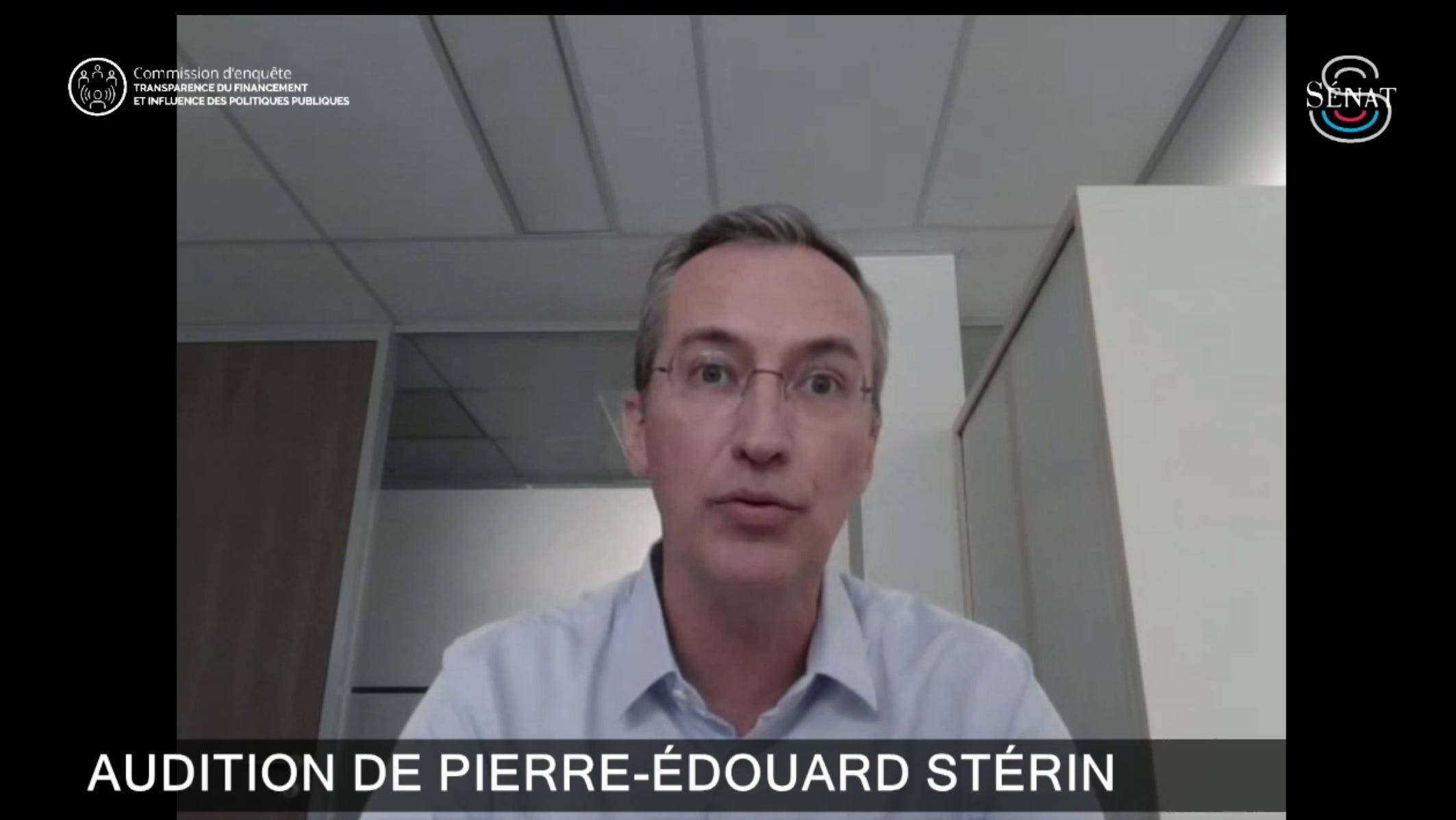
He describes himself as center-right — but his ambitions run considerably further. On June 4, Pierre-Edouard Stérin, a 52-year-old billionaire tax exile based in Belgium, appeared via videoconference before a French Senate inquiry commission examining the mechanisms by which private foundations fund political life in France. For over an hour and a half, the man who parlayed a €5,000 family loan into a €1.4 billion fortune through the Smartbox gift experience brand before pivoting to conservative philanthropy laid out, with disarming calm, a project he calls “metapolitical.”
The commission was examining two foundations Stérin created: the Fonds du bien commun, which backs projects in culture, education, and disability services, and Périclès, the politically oriented vehicle. Périclès does not fund parties or election campaigns. Instead, it supports think tanks and advocacy groups positioned to shift the terms of public debate upstream of the ballot box. The goal, Stérin acknowledged openly, is to “spread liberal-conservative ideas in France” and ultimately produce, “we hope,” a “right-wing liberal conservative” governing majority — in the “coming months” or “coming years.”
His self-described political coordinates are precise and deliberately provocative. On immigration, he said he supports “remigration” — the forced return of undocumented foreigners, those convicted of crimes, and those unemployed for more than twelve months — which places him, in his own words, “to the right of the far right.” On economics, he said he stands “to the far left of the far right.” The framing is a calculated attempt to distinguish himself from Marine Le Pen’s Rassemblement National (RN), France’s far-right party, while occupying a similar cultural terrain. Not electoral. Metapolitical.
“I don’t do this out of self-interest,” he told senators. “I prefer the world of business by far” — an arena he described as ideal for deploying what he called his “main talent”: making money. He dedicated only “10% of his time” to these activities, he added.
A French answer to the Heritage Foundation?
What Stérin is building has no direct equivalent in French political culture — but it closely resembles a model long established in the United States and the United Kingdom. The Heritage Foundation, founded in Washington in 1973, helped lay the intellectual groundwork for Ronald Reagan’s presidency. Britain’s Institute of Economic Affairs performed a similar function for Margaret Thatcher. Both operated outside the formal party system, shaping the ideological climate rather than winning elections directly.
France has lacked a comparable conservative infrastructure. Stérin, who conceded spending just a fraction of his time on these ventures, may be positioning himself to fill that gap. Whether Périclès has the scale and staying power to matter is a separate question — but the intent, at least, was stated clearly before the Senate.
The legal gray zone
Stérin insisted before the commission that his activities were entirely lawful: no party funding, no direct electoral spending, and no legal proceedings initiated or ongoing against either of his foundations. He described Périclès as deliberately structured to stay within French legal boundaries.
But the Senate’s inquiry raised a more specific concern. The commission has questioned the use of repayable advances — essentially interest-free loans with no expectation of repayment — rather than outright donations to fund the Fonds du bien commun. The inquiry rapporteur, socialist senator Colombe Brossel, told reporters that the practice appeared to have no clear legal basis. “A priori, that’s not really something the law provides for,” she said. The practical effect, senators suggested, may be to obscure the true nature and scale of the financial flows.
Stérin’s response added little clarity. On multiple occasions, he acknowledged he did not know the technical details of his own holding company’s financial arrangements and referred senators to his teams, who he said were “far more competent” to answer. “We are faced with a kind of studied vagueness,” Brossel said after the hearing. “We have not obtained the answers we needed on the transparency of his financing.”
The shadow of a prior snub
The June 4 hearing took place by videoconference, from Belgium, where Stérin has lived since 2012 for tax purposes. That geographic footnote carries history. In 2025, Stérin twice refused to appear in person before a National Assembly inquiry commission — a separate body from the Senate. On the first occasion, he cited security concerns, claiming he feared for his safety outside the Assembly building. The commission took those concerns seriously enough to seek guarantees from France’s Interior Ministry, which subsequently confirmed it could ensure his safe passage. Stérin still did not show up. The National Assembly commission chair described the pattern as a “dilatory maneuver.” He was later summoned for questioning by France’s judicial police in November 2025.
This time, Stérin played it differently. Appearing by videoconference, visibly relaxed and occasionally self-deprecating about his career trajectory, he answered every question — while repeatedly directing the most technical ones to colleagues who were not in the room.
The real question Stérin’s hearing raises is not “who funds what” — it’s “who gets to define the terms on which politics is fought.”
The bottom line
Private money shaping public debate is nothing new in democratic systems. What the Stérin hearing surfaces is a structural gap in France’s regulatory framework: the boundary between philanthropy and political action remains legally blurred, and the mechanisms by which private foundations influence intellectual life operate largely outside the transparency requirements that govern party finance. Stérin insisted his structures are legal. His Senate questioners left the hearing saying they still could not verify that claim — because he could not tell them, in precise terms, how the money actually flows. That gap between declared intent and demonstrable structure is precisely the one France’s legislators are now trying to close.
Sources: France Info · AFP · Public Sénat · Assemblée nationale