
France's child protection failure: how Europe is reading the breakdown
The murder of Lyhanna, 11, by a man whose warning signs dated back to 2017 has shocked Europe — and forced France into a reckoning its own leaders are not shying away from.

The little girl was 11 years old. She was found dead in the Gers department of southwestern France on June 4, 2026 — approximately six days after she disappeared on May 29. The murder of Lyhanna has left France in collective shock. But across Europe, the reaction has been more than emotional. It has been political and systemic. From Berlin to Madrid, from Rome to London, the European press has reached a broadly shared conclusion: France’s institutions — its courts, its prosecutors, its government — failed to protect her. French leaders, for their part, have not disputed that assessment.
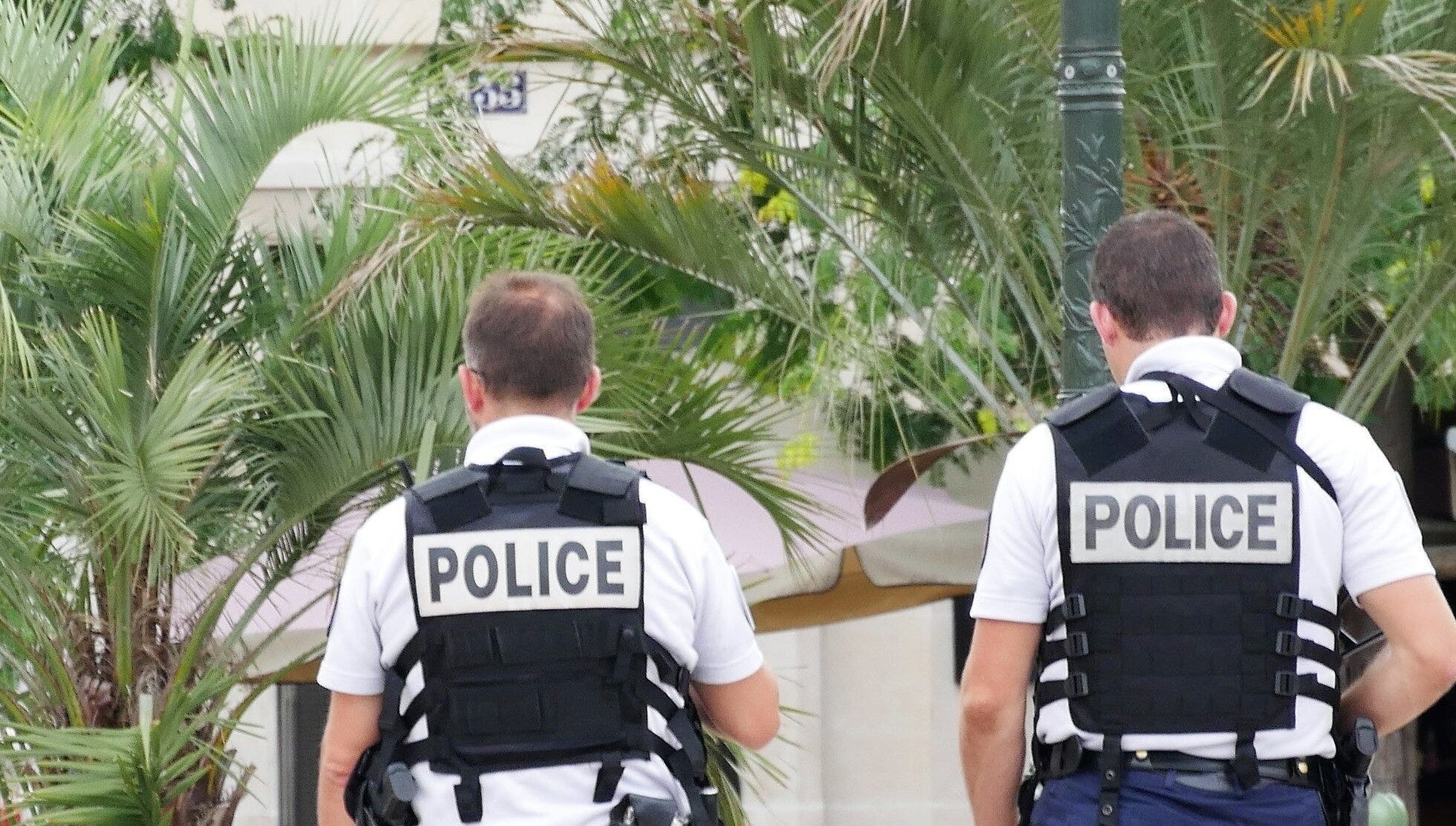
This image is used for illustrative purposes only.
At a Glance
The prime suspect, Jérôme Barella, 41, the father of one of Lyhanna’s friends, had accumulated multiple warning signs since 2017 — including several reports for sexual touching and at least two formal complaints of rape involving minors, the most recent filed in August 2025 and still pending without Barella having been questioned on it.
European outlets characterized the situation as a “judicial scandal” and a “bureaucratic fiasco,” indicting both the government and the justice system — a verdict much of France’s own political class has echoed.
With a presidential election now less than a year away, the case has been immediately politicized, with France’s far-right Rassemblement National (RN) party exploiting it to revive its long-standing claim that the French judiciary is dangerously lenient.
Warning signs that accumulated for years
Jérôme Barella was not unknown to the justice system. According to Clémence Meyer, the chief prosecutor of Auch, reports of sexual touching involving minors date back to 2017. A first formal complaint of rape was filed in 2022 and dismissed without charges. A second was filed in August 2025, remained open at the time of the murder, and had not yet led to Barella being questioned. Multiple other reports and procedural steps had accumulated in the intervening years without resulting in any protective action.
Spain’s El País placed the case in a longer series of similar failures in France — from surgeon Joël Le Scouarnec, convicted of abusing minor patients, to revelations of sexual abuse in Parisian after-school programs. Its broader point: victims are not heard; complaints are ignored or dismissed — not through malice, but through systemic breakdown.
French justice has heavily redirected its resources toward drug trafficking and terrorism over recent years. That reallocation, however justified in those domains, may have drained the capacity to handle child protection cases through the ordinary court system.
A government caught between two fires
The French government issued public expressions of regret. The European press was not impressed. Germany’s Der Spiegel suggested the apologies looked more like damage control than genuine accountability. Italy’s La Repubblica concluded that the case had cast doubt over the entire apparatus of the French state — government and judiciary alike.
The BBC offered the sharpest analysis of the political mechanics at play: the government finds itself trapped between an increasingly outraged public and a judicial corps that refuses to be made a scapegoat. Prosecutors, in turn, point to chronic understaffing and an overwhelming caseload that current resources cannot absorb.
That three-way tension — citizens, executive, judiciary — points to structural strain, not a one-off mistake.
The budget question no one wants to answer
Switzerland’s Le Temps asked the question most directly: what if Lyhanna’s disappearance was the starkest illustration yet of France’s fiscal constraints? France has made real investments in terrorism and drug-crime prosecution — politically visible, electorally rewarding. Child protection, less spectacular, may have absorbed the consequences of a structurally uneven allocation of resources.
That is not a comfortable conclusion. It implies that budgetary choices — deliberate or otherwise — have direct consequences for the safety of the most vulnerable children. And that no amount of reform rhetoric will be enough until the funding follows.
When grief becomes electoral fuel
The mourning period was brief. Jordan Bardella, president of France’s far-right Rassemblement National (RN) — the party long led by Marine Le Pen, a three-time presidential candidate — quickly positioned himself as the voice of public outrage, using the case to amplify the RN’s long-standing narrative about judicial leniency.
Der Spiegel noted the move with precision: the RN sees the case as a validation of its positions, not an opportunity it manufactured. That distinction matters. The terrain was already prepared — by years of ignored reports, shelved complaints, and underfunded courts. Populism simply moved in.
Spain’s El País noted that Justice Minister Gérald Darmanin had traveled to Spain in April to study the country’s landmark 2004 legislation — the Ley Orgánica de Medidas de Protección Integral contra la Violencia de Género, Spain’s comprehensive law against gender-based violence, widely considered a pioneering model in Europe. The political will for reform appeared to exist. Whether it can survive the electoral cycle now closing in is another question.
Analysis: a systemic failure — and a reckoning France is having with itself
What is striking about Europe’s coverage of the Lyhanna case is the refusal to treat it as an exception. From Berlin to Madrid, the reading is consistent: this child’s murder exposed a structural deficit in France’s chain of protection — reporting, investigation, follow-up, preventive action.
That reading, notably, is shared inside France. President Macron, Justice Minister Darmanin, and voices across the political spectrum have acknowledged failures at every level of the system. This is not a story of a country blind to its own dysfunction — it is a story of a country that has named the dysfunction repeatedly, and has struggled to fix it.
The compounding factors are well documented: a justice system underfunded in this specific segment, a public debate that collapses into electoral positioning faster than it produces policy, and an institutional tendency to acknowledge systemic flaws only after catastrophe. That pattern is not unique to France. But the stakes, here, were measured in a child’s life.
Justice Minister Darmanin’s interest in the Spanish 2004 model is a credible starting point. That legislation combined dedicated funding, specialist training, and specialized courts — a framework other European countries have since adapted for child-protection purposes. Transposing that logic to France would require political and financial commitment of comparable scale, and a willingness to resist the pull of the next campaign.
The Bottom Line
Could Lyhanna’s death have been prevented? Technically, yes — the warning signs were there. Institutionally, the answer is more complex: they were there, but in a system that lacked both the resources and the procedures to act on them in time. France knows what went wrong. Its leaders have said so. The question that remains is whether knowing, this time, will be enough to change anything.
How many more children will fall through the same gaps before reform becomes a budget line rather than a campaign promise?
Sources: L’Express · Der Spiegel · El País · BBC · Le Temps