
France's Cadmium Exemption
France has the highest cadmium contamination rates in Europe — the result of Moroccan phosphate imports and a regulatory exemption Paris has quietly maintained for years.

At a Glance
Nearly half of French adults (47.6%) exceed established toxicological reference values for cadmium, according to France’s National Food Safety Agency (Anses) — a level unmatched anywhere else in Europe.
France imports roughly 40% of its phosphate fertilizers from Morocco, where the underlying geology produces phosphate rock with naturally high cadmium content. The country also holds a special exemption allowing it to use fertilizers containing up to 90 mg of cadmium per kilogram — 50% above the EU-wide limit of 60 mg/kg set in 2019.
A bill being debated in France’s National Assembly on June 2, 2026 would phase down those thresholds, but the government is pushing for a slower timeline stretching to 2038.
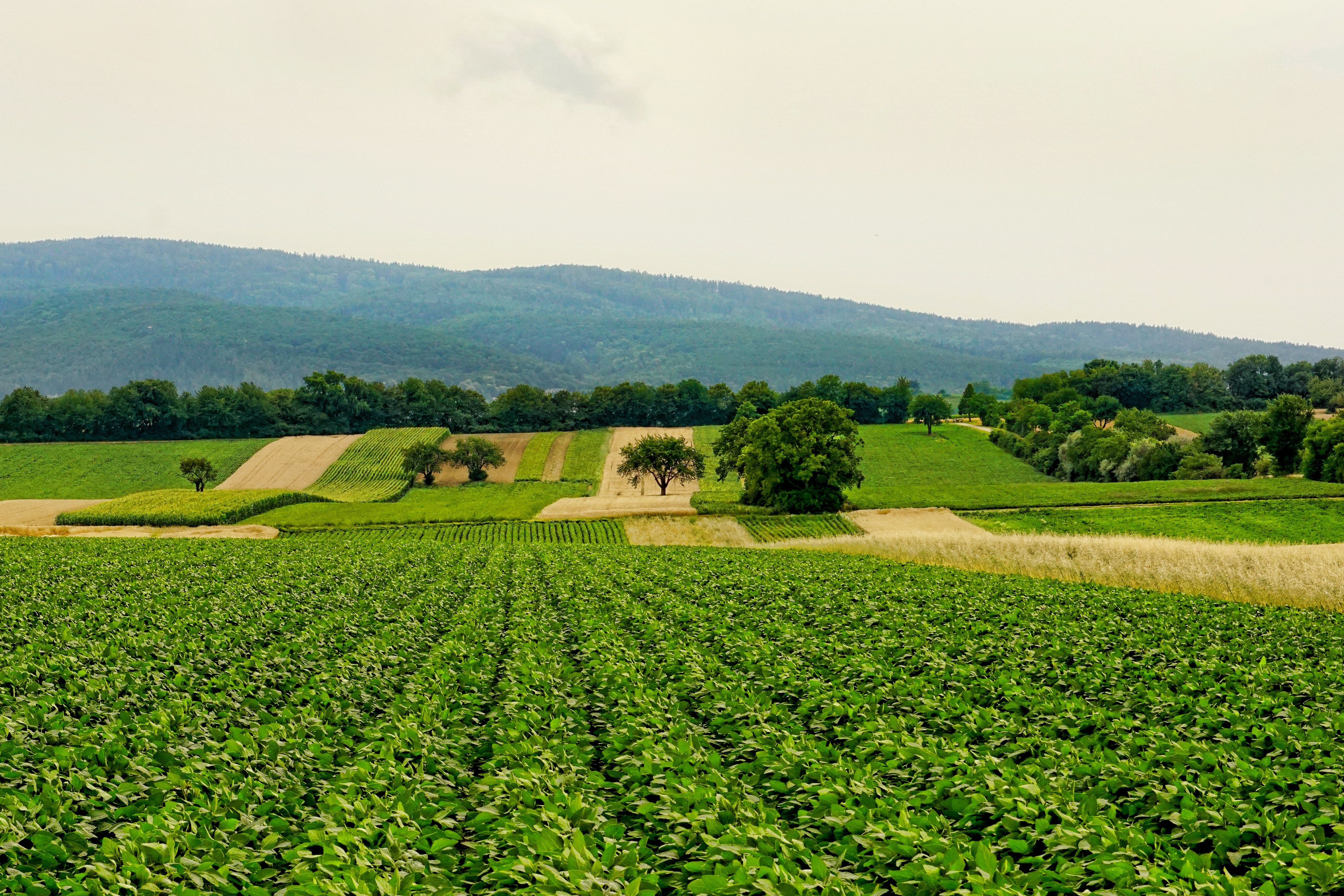
This image is used for illustrative purposes only.
Where the cadmium comes from
Cadmium is a heavy metal classified as carcinogenic, mutagenic, and toxic to reproduction. It occurs naturally in soils but becomes more concentrated when phosphate fertilizers are applied to farmland. Crops absorb it, it moves up the food chain, and it ends up in the most ordinary staples — bread, pasta, potatoes, rice. Diet accounts for up to 98% of cadmium exposure in France. Once ingested, the metal accumulates in the body and can over time cause damage to the kidneys, lungs, pancreas, and bones.
What distinguishes France from its neighbors is not what its people eat. Italians consume roughly three times more pasta per capita — about 55 pounds per year, compared to 17.6 pounds in France — yet they have lower cadmium exposure. The difference lies in the fertilizers spread across French fields.
The Moroccan phosphate dependency
France imports 95% of its phosphate fertilizers, with approximately 40% coming from Morocco. The problem is geological: North African phosphate deposits are sedimentary rock formations that can carry significantly elevated cadmium levels. By contrast, igneous rocks — the kind extracted in South Africa or Russia — typically contain far lower concentrations, according to France’s National Institute for Agriculture, Food and Environmental Research (Inrae).
Italy diversifies its fertilizer supply, sourcing phosphate from Morocco but also from Jordan and Russia. The result shows in the soil: French farmland carries cadmium levels twice those of the European average, twice as high as in Germany, and three times higher than in Belgium, whose farmers source primarily from northern Europe.
Diversifying supply away from Morocco would touch a nerve. Behind the country’s phosphate exports stands OCP (Office Chérifien des Phosphates), the world’s largest phosphate producer, the largest company in Morocco, and an enterprise in which the Moroccan state is the primary shareholder. The French government has not put supply diversification on the agenda.
A regulatory carve-out, quietly maintained
Morocco’s geology alone does not fully explain France’s cadmium exposure gap. There is also the matter of a standing regulatory exemption. France has for years been permitted to use phosphate fertilizers containing up to 90 mg/kg of cadmium — while the rest of the EU has been capped at 60 mg/kg since 2019. Finland, Hungary, and Slovakia already operate at 20 mg/kg, the level Anses recommends France adopt.
OCP claims to have significantly reduced the cadmium content of its products and says it has been supplying the EU with fertilizers below 20 mg/kg since February 2025. Investigative journalist Martin Boudot pushes back: the fertilizers arriving from Morocco are still running at 60 to 90 mg/kg, he argues, and no independent scientific study has been produced to substantiate OCP’s stated figures.
The bill introduced by French MP Clémentine Autain, of the center-left L’Après party, and French Green MP Benoît Biteau would establish a two-step reduction: 40 mg/kg by 2027, followed by 20 mg/kg by 2030. The Ministry of Agriculture advocates a more gradual approach — 60 mg/kg in 2027, 40 mg/kg in 2030, and 20 mg/kg only by 2038.
A slow-moving health crisis
This case illustrates a recurring pattern in European public health governance: when the source of a hazard is diffuse, economically entangled with foreign policy, and delayed in its effects, the political response tends to dissipate. Cadmium produces no acute, visible crisis. It accumulates. That is precisely what makes it politically tractable to defer — and medically costly to ignore.
France’s cadmium exemption is not a bureaucratic accident. It reflects a deliberate trade-off between health protection and a web of agricultural, commercial, and diplomatic interests.
The burden of that trade-off is being carried silently by the 47.6% of French adults whose bodies have absorbed what policy has preferred not to address.
And even if the thresholds were tightened tomorrow, the timeline for results is sobering. A reduction in fertilizer cadmium content would not produce measurable changes in crop levels for several decades, according to Inrae. The contamination now registered in French bodies is the consequence of decisions made — or not made — a generation ago.
The bottom line
The real question this issue raises is not technical. It is about the scope of European health sovereignty. Can France meaningfully reduce its population’s cadmium exposure without restructuring its phosphate supply chain — that is, without renegotiating a strategically sensitive partnership with Rabat? And if the answer is no, who bears responsibility for that choice: Parliament, the executive, or OCP?
Sources: France Info · France Culture · Inrae · Anses · France 5