
France's broken justice: Darmanin holds as the cracks widen
The murder of an 11-year-old girl has exposed a French judicial system stretched beyond its limits — and structurally unable to protect its most vulnerable children.

A child disappears on May 29, 2026. Her body is found on June 4, six days later, inside a grain silo in Puycasquier, a small town in southwestern France. The prime suspect, Jérôme Barella, a 41-year-old father of one of the victim’s classmates, had been the subject of multiple complaints and official reports for sexual violence against minors — without ever being questioned. A complaint filed in August 2025 had gone unanswered when Lyhanna vanished.
That sequence — documented, known, ignored — has sent shockwaves across France.
At a Glance
Jérôme Barella, the prime suspect in Lyhanna’s murder, had been the subject of at least four complaints and official reports for sexual violence against minors between 2017 and Lyhanna’s disappearance, without ever being questioned by investigators.
France’s Justice Minister Gérald Darmanin — the country’s equivalent of an attorney general — is refusing to resign but has acknowledged a “terrible failure of the state” and ordered prosecutors nationwide to review 70,000 backlogged cases involving alleged child abuse before July 14.
Only 1% of rapes and 1% of incest cases result in a conviction in France, according to Socialist MP Céline Thiébault-Martinez. A justice system that almost never convicts: that is what tens of thousands of protesters took to the streets Monday night to demand answers about.
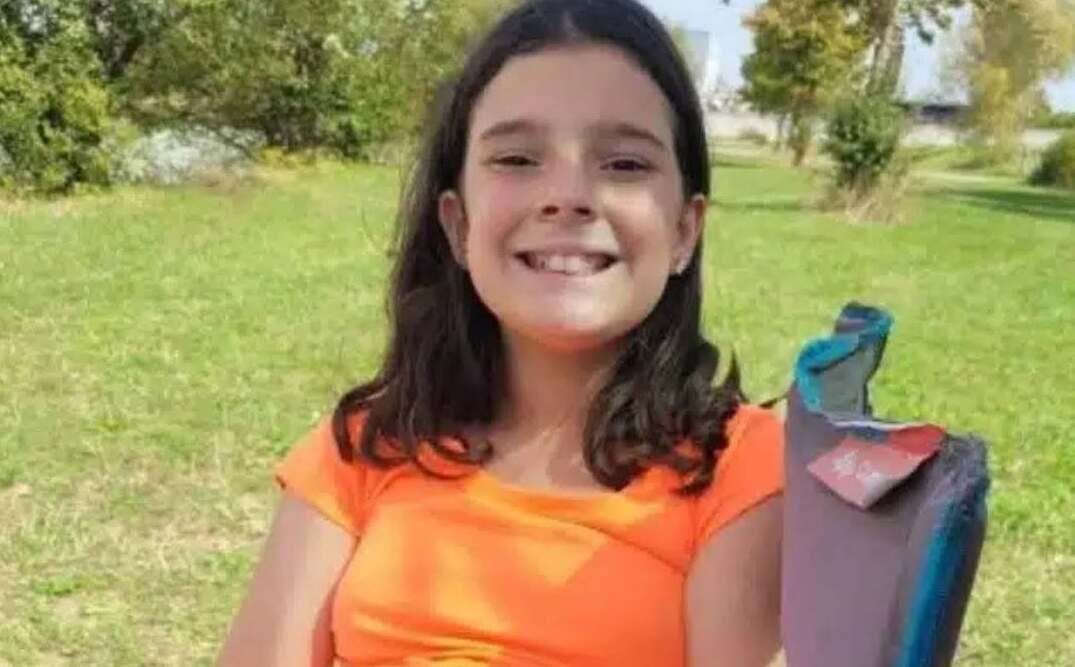
This image is used for illustrative purposes only.
The anatomy of a preventable failure
The case against Jérôme Barella was not thin. At least four complaints or official reports for sexual violence against minors between 2017 and Lyhanna’s disappearance — including two complaints for the rape of minors, one of which was dropped without charges and another that was still pending. And yet, when Lyhanna disappeared on May 29, 2026, the man had still not been questioned by investigators.
The timeline is damning. A fresh complaint was filed in August 2025 by the prosecutor’s office in Toulouse, which then transferred jurisdiction to the office in Auch, the territorially competent authority. The file was sent by regular mail in late 2025 and didn’t reach the local gendarmerie (France’s national military police force) in Lectoure until January 9, 2026. Nine months after the initial complaint, the prime suspect had still not been questioned.
Darmanin conceded at his June 8 press conference that the system had failed to prioritize rape cases involving minors. This is not minor administrative friction. It is a judicial chain where every link operated according to its own procedures — and where the collective result was the failure to protect a child.
A system running on empty
The magistrates’ union is not describing an isolated incident. Ludovic Friat, president of the Union syndicale des magistrats (USM), France’s main magistrates’ union, wrote to the minister Monday warning of a structural staffing crisis: France has three to four times fewer prosecutors than comparable European countries, and half as many judges and court clerks — while the caseload for sexual and gender-based violence has surged.
Those numbers reframe Darmanin’s emergency order. By instructing prosecutors nationwide to review 70,000 backlogged cases before July 14, the minister is conceding that the Barella case may represent a far larger, largely invisible problem — and that a joint inspection covering the justice system, the national police, and the Education Ministry, due to report within 15 days, may confirm as much.
“The inspectorate will tell us.” — Gérald Darmanin, June 8, 2026
The magistrates of the Bobigny courthouse — France’s second-largest jurisdiction — publicly denounced what they called the minister’s “hypocrisy” on child protection and the government’s “willful blindness” to a systematic abandonment of child welfare services. The Union syndicale des magistrats told Darmanin directly: his political responsibility for the state of the system was “total.” [translated from French]
Politics enters the courtroom
Darmanin and Interior Minister Laurent Nuñez were scheduled to appear before the Senate — France’s upper legislative chamber — Tuesday morning to answer questions about the failures surrounding Lyhanna’s death. Yaël Braun-Pivet, president of France’s National Assembly, pushed the government to schedule a comprehensive cross-party bill on sexual and gender-based violence for the extraordinary legislative session, in July or September. The bill, co-signed by around 100 lawmakers and covering 79 articles, was filed in late 2025 and had never been examined. It addresses prevention, law enforcement, the courts, education, and support associations.
Across the political spectrum, the case has become electoral ammunition ahead of France’s next presidential race. Jordan Bardella, president of France’s far-right Rassemblement National (RN) party, said Lyhanna’s death “could have been prevented” and demanded accountability. Pierre Jouvet, secretary-general of the center-left Socialist Party, said on France 3 that in Darmanin’s position, he would have “submitted his resignation to the president.” [translated from French] Mathilde Panot, president of the hard-left La France Insoumise (LFI) group in the National Assembly, accused the minister on franceinfo of “looking for a scapegoat among judges.”
That evening, thousands of protesters gathered in dozens of cities across France and outside the Justice Ministry in Paris, called by feminist and child protection organizations including NousToutes, the Fondation des femmes, Face à l’inceste, and the Collectif féministe contre le viol. Despite a ban on the rally at Place Vendôme — where the ministry is located — hundreds gathered outside its gates, chanting “Darmanin resign” and “Justice for children.”
The Bottom Line
A comprehensive cross-party bill addressing violence against women and children was filed in late 2025. It had 79 articles and around 100 co-sponsors. It had never been examined. The Lyhanna case has forced it back onto the legislative agenda with a brutality no parliamentary procedure could have produced. The real question is not whether Darmanin will resign — it is whether France has the political will and the structural means to act before the next Lyhanna.
Sources: RFI · Euronews · AFP · franceinfo · France 3