
France's Barrot on three fronts at once
France's foreign minister says Israeli strikes on Beirut won't happen — for now. But Paris is betting on a diplomacy it can't fully control.

At a Glance
Jean-Noël Barrot, France’s foreign minister, said he understands that Israeli strikes threatening Beirut “will not take place” — based on statements by Israeli officials as of Tuesday morning.
France engaged in emergency diplomacy over the weekend: President Macron spoke with President Trump on Sunday; Barrot held separate calls with his Iranian and American counterparts on Monday.
On the Iran-U.S. nuclear standoff, Barrot called a deal “within reach” while Tehran declared negotiations suspended — a gap that leaves global shipping routes, energy markets and Lebanon itself dangerously exposed.
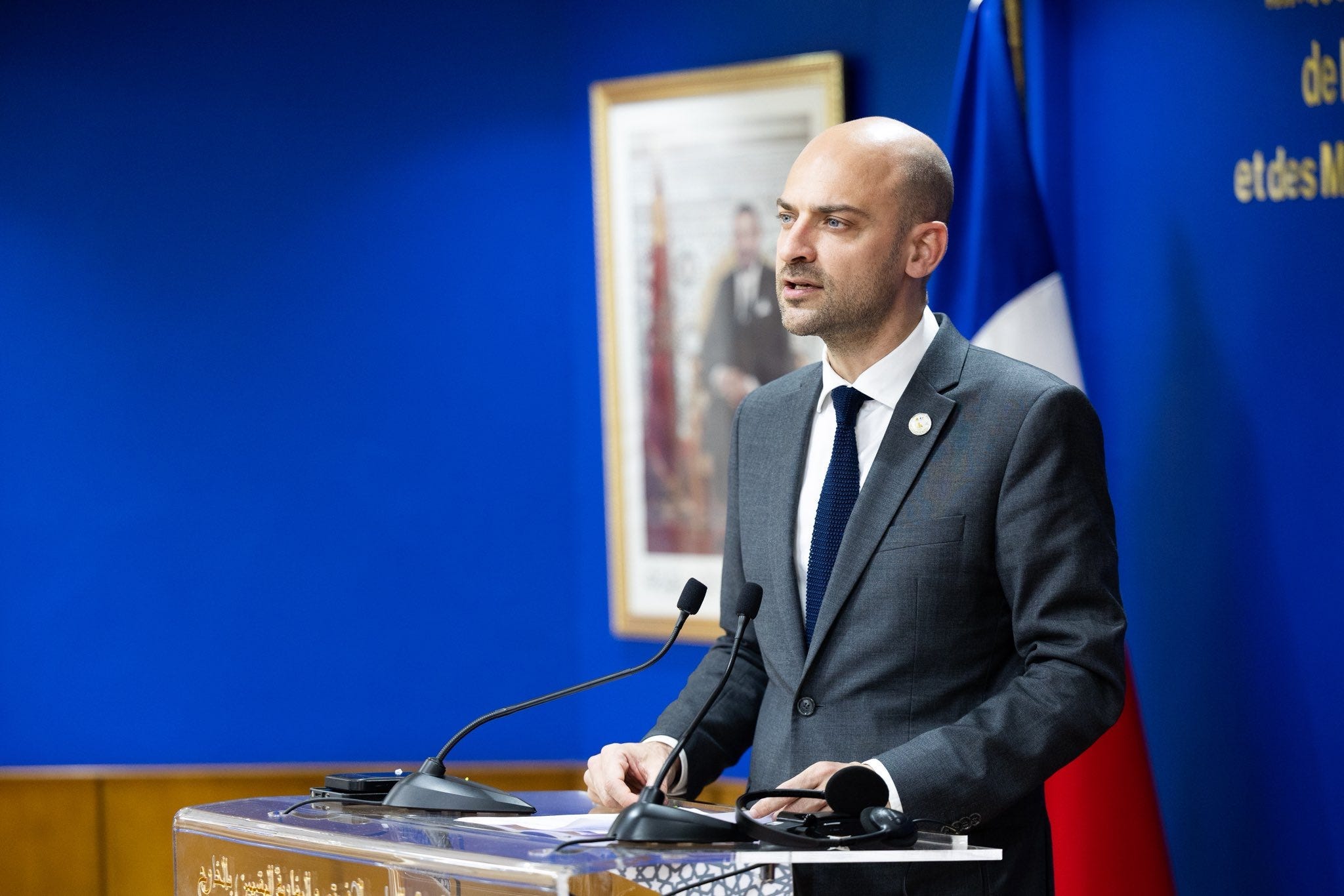
This image is used for illustrative purposes only.
Beirut won’t be struck — for now
The assurance was firm, but conditional. Speaking Tuesday, June 2, on France 2’s morning program Les 4 Vérités, Jean-Noël Barrot, France’s foreign minister in the government of Prime Minister Sébastien Lecornu, said he understood from statements by Israeli officials that threatened strikes against Beirut would not be carried out — “at this stage.”
That qualifier matters. The assurance is not a diplomatic guarantee obtained in writing. It reflects what Barrot said he had read from Israeli authorities that morning — a distinction that, in a fast-moving military situation, is not trivial.
The diplomatic weekend that preceded this statement was dense. French President Emmanuel Macron spoke with U.S. President Donald Trump on Sunday. Barrot held separate calls with his Iranian and American counterparts on Monday. France also called for an emergency session of the United Nations Security Council. The French rationale, spelled out plainly by Barrot: Lebanon must not become a sacrificial victim of a deal that is struggling to be concluded between Iran and the United States.
France’s position has remained consistent: it recognizes Israel’s right to self-defense, including against attacks by Hezbollah — the Iranian-backed Lebanese militant group and political party. But any continuation of military operations and prolonged occupation of Lebanese territory is unjustifiable. The goal for talks scheduled in Washington later this week is the restoration of Lebanese state authority, the disarmament of Hezbollah, and an Israeli withdrawal.
How much does France actually matter here?
The question was put to Barrot directly: if Netanyahu pulled back from striking Beirut, wasn’t that because of Trump, not Macron? Barrot did not dispute the premise. Instead, he reframed the argument.
France, he noted, was the first country to stand beside Lebanon when the war began — providing emergency humanitarian aid and, more recently, delivering 39 VAB armored personnel carriers to the Lebanese army. He also invoked the sacrifice of two French peacekeepers serving with UNIFIL — the United Nations Interim Force in Lebanon, a multinational peacekeeping mission established in 1978 — who were killed in the line of duty: Staff Sergeant Florian Montorio and Corporal First Class Anicet Girardin.
What France is defending, implicitly, is not a claim to decisive leverage over Israeli military decisions. It is a claim to sustained presence and long-term credibility. Whether that is enough, in a crisis shaped by Washington and Tehran, is a question Barrot did not answer — because it remains unanswered.
Iran and the U.S.: a deal “within reach,” but stalled
The contradiction is glaring. Trump’s team describes nuclear negotiations with Iran as advancing rapidly. Tehran says talks have been suspended. Barrot refused to adjudicate publicly, but maintained that an agreement is “within reach” and that both sides “must now do everything to reach one.”
The framing is revealing. “Within reach” is a political aspiration, not a confirmed diplomatic status. What France is expressing is urgency, not certainty. The Strait of Hormuz — the narrow waterway through which roughly 20 percent of global oil passes — remains disrupted. Barrot pointed out that France is not a bystander: the knock-on effects on energy prices, fertilizers and freight are already felt across Europe.
This may explain why France continues to position itself as a back-channel between Tehran and Washington, even without a formal mediation mandate. It is the kind of role Paris has traditionally sought — present, active, and structurally unable to be ignored, even when it cannot determine outcomes.
Analysis — A balancing act with shrinking room for error
France’s diplomatic posture toward Lebanon, Israel and Iran reflects a coherent doctrine: universal application of international law, opposition to escalation, support for multilateral frameworks. Its limits are equally clear. Paris has no direct leverage over Israeli military choices and no decisive influence over Tehran’s internal calculus.
The decision on the Eurosatory defense exhibition — held in Paris from June 15 to 19, with Israel restricted to displaying defensive equipment only — could be read as a calibrated signal. It is not an arms embargo. But it is not a blank check either. Barrot justified it as consistent with “past decisions,” which suggests a deliberate attempt to apply quiet pressure without triggering an open diplomatic rupture.
The deeper tension, which Barrot did not name, is this: France is simultaneously endorsing Israel’s right to self-defense, condemning its occupation of Lebanese territory, and urging Iran and the United States to reach a nuclear deal. All three positions are logically coherent. But holding all three at once, indefinitely, without a resolution to any of them, could begin to look less like balance and more like paralysis.
Lebanon has become the pressure point where the Iran-U.S. nuclear standoff, the question of Hezbollah’s future, and Europe’s capacity to matter in a conflict it did not choose all converge.
The Bottom Line
France is betting on presence, continuity and dialogue — a long game with real costs and no guaranteed payoff. The test will come not in what was said on France 2 on Tuesday morning, but in what happens in Washington this week, and whether the parties at the table have more to gain from a deal than from the next round of strikes.
Sources: France 2 · franceinfo