
France scrambles Rafale jets 11 times in a week over the Baltics
Eleven Russian military aircraft intercepted in seven days — France's NATO jets send a clear message from Lithuania's eastern frontier.

At a Glance
French Rafale jets scrambled from Šiauliai Air Base in Lithuania carried out 11 interceptions of Russian aircraft in a single week, France’s armed forces spokesperson Colonel Guillaume Vernet confirmed June 4, 2026.
The intercepted aircraft included Soviet-era military transports, reconnaissance planes, and fighter jets — a mix that suggests a deliberate probing of NATO’s response patterns rather than routine operations.
The interceptions come amid a broader wave of aerial pressure on the Baltic states: drone incursions over Estonia, Latvia, and Lithuania, a Russian explosive drone crash in Romania, and unsubstantiated Russian claims that the Baltics allow Ukraine to launch strikes through their airspace.
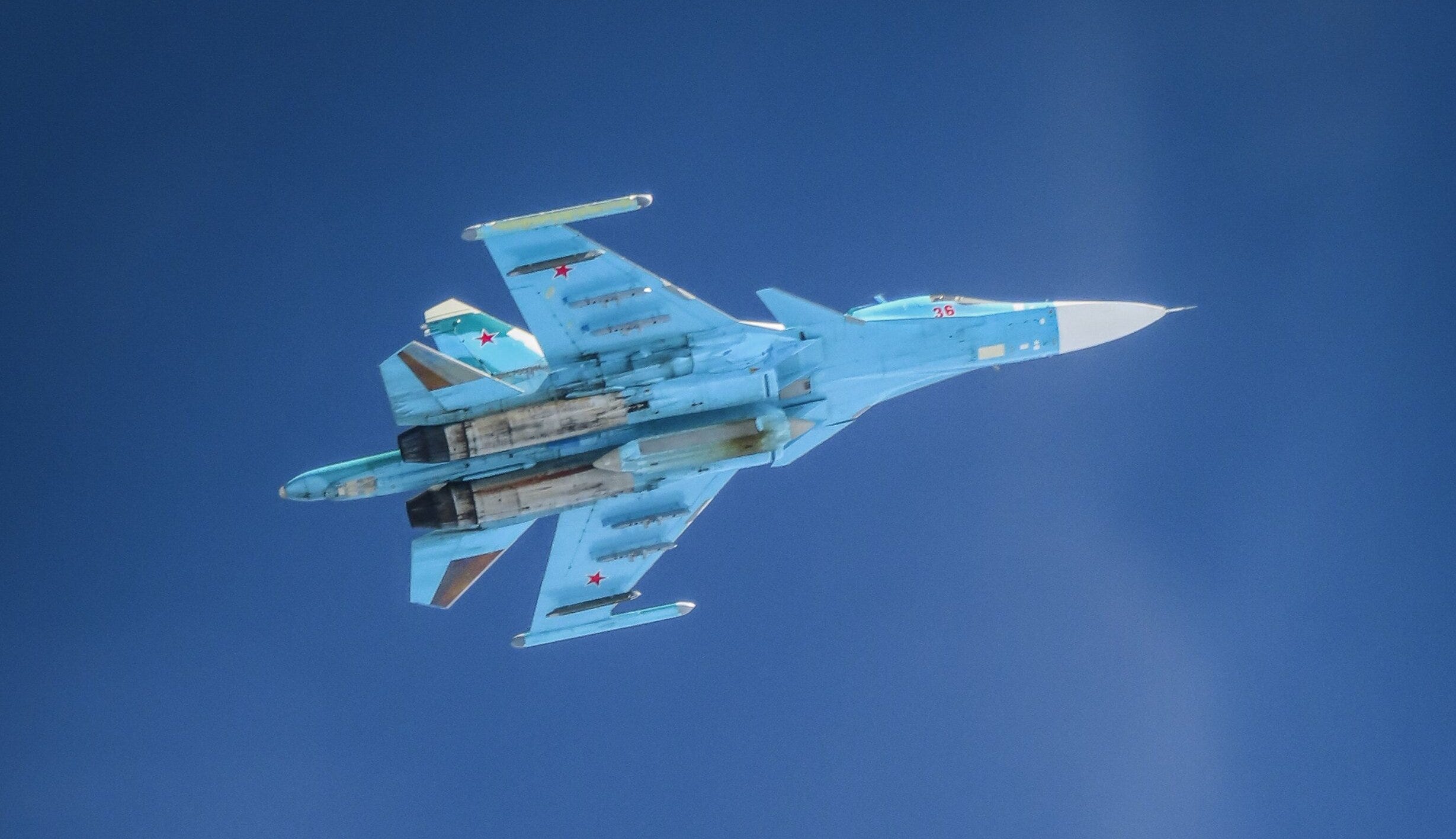
This image is used for illustrative purposes only.
Over the past week, French Rafale jets scrambled from Lithuania’s Šiauliai Air Base on multiple occasions to intercept Russian aircraft flying without flight plans or radio contact over the Baltic Sea. The tally — eleven interceptions in seven days — was confirmed Wednesday by Colonel Guillaume Vernet, a spokesperson for France’s armed forces. The number puts a figure on something that official communiqués rarely name outright: Russia is systematically testing NATO’s reflexes on its eastern flank.
What happened in the skies over the Baltics
On Tuesday, June 3, French forces operating out of Šiauliai scrambled to intercept six Russian aircraft in a single day “operating within the Baltic Area of Responsibility,” according to NATO Air Command (AIRCOM), NATO’s centralized air operations headquarters.
The intercepted aircraft ranged widely in type. They included the Ilyushin Il-18 and Antonov An-12 — Soviet-era military transport aircraft — as well as Sukhoi Su-24 tactical strike jets and the Antonov An-30, a reconnaissance aircraft designed for aerial photography. Together, they don’t constitute a coherent tactical formation. They look more like a survey: different altitudes, different capabilities, different behaviors, all testing the same question — how fast will NATO respond, and how?
What Baltic Air Policing is, and why it exists
France is currently leading NATO’s Baltic Air Policing mission, a rotating four-month responsibility established in 2004 when Estonia, Latvia, and Lithuania — the three Baltic states, all former Soviet republics that joined the NATO alliance that year — joined the alliance. The three countries’ air forces are too small to independently patrol their own airspace. Under the NATO mission, allied nations take turns stationing fighter jets at Šiauliai Air Base in Lithuania to ensure round-the-clock coverage.
France’s current rotation began April 1, 2026. Four Rafale B jets from France’s 4th Fighter Wing are based there, alongside more than 100 personnel.
The mission has grown steadily more intense since Russia’s annexation of Crimea from Ukraine in 2014, and sharply more so following Russia’s full-scale invasion of Ukraine in February 2022. NATO figures show that 2025 saw 18 violations or near-violations of alliance airspace by Russian military aircraft — the majority occurring over the Baltic Sea.
Drones, accusations, and the broader pattern
The aerial intercepts are one piece of a larger puzzle. Over the past month, unidentified drones have penetrated the airspace of all three Baltic states: an incident over Estonia led to a NATO jet shooting down a stray Ukrainian drone; Latvia issued a public warning after detecting an unmanned aerial vehicle in its airspace; and Vilnius airport was temporarily shut down following a drone alert.
Last week, a Russian drone carrying explosives crashed onto the roof of a residential apartment building in the Romanian city of Galați, on the Danube River near the Ukrainian border, injuring two people.
Against this backdrop, Moscow has publicly accused the Baltic governments of allowing Ukraine to use their airspace to carry out strikes on Russian soil. The Baltic governments rejected the claim in a joint statement, calling it a “blatant disinformation campaign.” They stated that the Nordic-Baltic countries have never allowed their territory or airspace to be used for attacks on Russian soil.
Why this week, why this tempo
The timing of the current surge is worth examining. The first weeks of a new NATO rotation have historically served as a probing period: the opposing side tests response times, intercept altitudes, and deployment patterns. The breadth of aircraft types used — transports, strike jets, a reconnaissance aircraft — is consistent with that logic. It is plausible that Moscow has been running a structured evaluation rather than simply carrying out routine operations, though this cannot be established from available information alone.
There is also a broader strategic backdrop. Russia’s war against Ukraine is in its fourth year. Western arms deliveries continue. Ukraine’s NATO membership prospects have moved from theoretical to active discussion in Brussels. In this context, sustained aerial pressure along the Baltic coast could serve a dual purpose: demonstrating a persistent presence at NATO’s border, and sustaining an undercurrent of insecurity in populations already rattled by the drone incidents.
Every Rafale scramble from Šiauliai is, in operational terms, a successful deterrence event: a Russian aircraft was identified, escorted, and the alliance’s response proved credible.
What the pattern does not do is shift the balance. The risk lies in the slow normalization of non-compliant Russian activity, and in the possibility that what is treated as background noise could, at some point, carry a different signal.
The Bottom Line
Eleven interceptions in a week. Is this the sign of a deliberate escalation, a scheduled probing campaign, or simply activity that NATO is now documenting with greater precision than before? The answer determines whether the current surge is a warning to interpret — or a dangerous new baseline quietly becoming routine. The remaining weeks of France’s rotation at Šiauliai will offer the first real data points.
Sources: Euronews · Associated Press · French Armed Forces (État-Major des Armées) · NATO Air Command (AIRCOM)