
France puts AI on the school syllabus
Starting fall 2027, all French 10th-graders will take a mandatory weekly AI class. A bold political bet — with real questions for the classroom.

France has taught arithmetic for two centuries. Now it is adding artificial intelligence to the syllabus. Prime Minister Sébastien Lecornu, the head of the French government, announced on June 19 that starting in the fall of 2027, all students in seconde — the first year of upper secondary school, roughly equivalent to 10th grade — will receive one hour of AI instruction per week, embedded in an existing digital technology course. The announcement came during VivaTech, Europe’s largest tech trade show, held in Paris from June 17–20. It was not an isolated move: three days earlier, Lecornu had unveiled €655 million (approximately $720 million) in additional AI investment, and announced that France’s domestic intelligence agency had selected a French alternative to replace Palantir, the American data analytics firm, in a transition expected to unfold over the coming years. The political intent is clear. What remains to be seen is whether the education system can deliver.
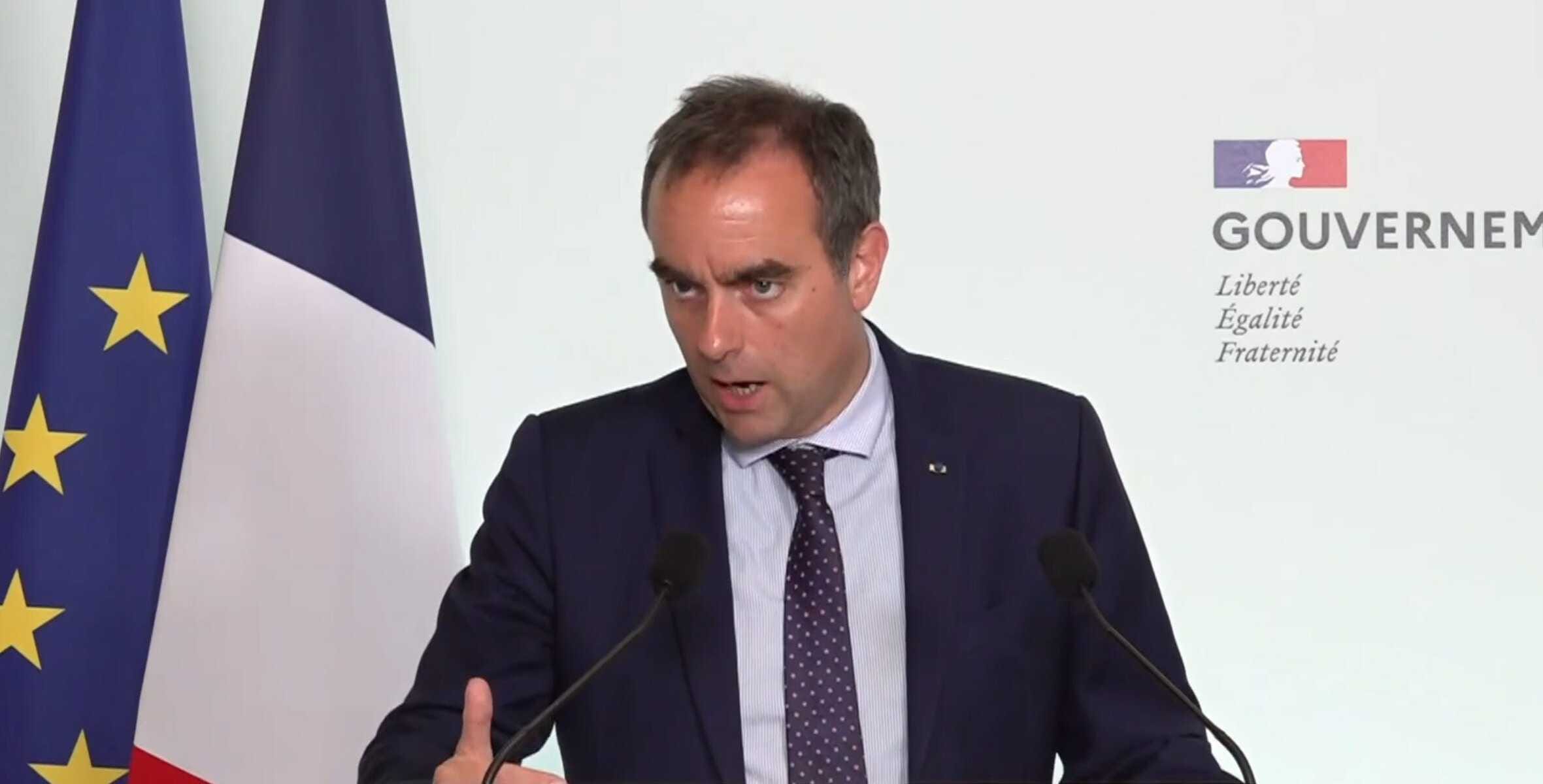
This image is used for illustrative purposes only.
At a Glance
Starting fall 2027, a mandatory weekly AI class will be built into the digital technology curriculum for all French 10th-graders — a strong signal to the rest of Europe.
The education announcement is part of a broader AI push: €655 million in additional public investment and the selection of a French replacement for U.S. data firm Palantir at France’s domestic intelligence agency.
Key questions remain unanswered: teacher training, exact curriculum content, and how to fit AI into a course that currently runs only 90 minutes per week.
What the government announced
Lecornu chose VivaTech — now in its tenth edition and one of the premier gatherings of the global tech industry — as the backdrop for a series of announcements framed explicitly around digital sovereignty. The AI education measure was posted on X on June 19, with a statement that was as much political declaration as policy.
The country, he argued, could not afford to let an entire generation discover artificial intelligence without the tools to understand and control it.
The weekly hour will be folded into the sciences numériques et technologie (SNT) course — a mandatory digital literacy class taken by all students in their first year of the lycée, France’s upper secondary school. The initiative was developed under Education Minister Édouard Geffray, who has held the post since October 2025 and had earlier outlined the measure at VivaTech on the same day. Topics will include how AI models work, their practical uses, ethics, digital sovereignty, and critical thinking against misinformation and manipulation.
Three days before the education announcement, on June 16, Lecornu had laid out the broader framework. The government plans to channel an additional €655 million through France 2030, the national investment program, into AI infrastructure, computing capacity, research, companies, and industrial supply chains. And in the move that drew the most attention, France’s domestic intelligence service — the Direction générale de la sécurité intérieure (DGSI), roughly equivalent to a domestic counterintelligence bureau — announced it had selected ChapsVision, a French firm founded in 2019 and specializing in large-scale data analysis, to replace Palantir, the American data analytics company whose co-founder Peter Thiel is a close ally of Donald Trump. The transition is expected to take place over the coming years, with Palantir remaining operational in the interim.
Why now, and why VivaTech
The timing is deliberate. VivaTech has become a stage where French and European tech policy is performed as much as announced. Attaching major policy decisions to the event means reaching industry leaders, investors, and international media simultaneously.
But geopolitics are doing much of the work. As artificial intelligence capabilities become increasingly concentrated in a small number of American companies — and, to a lesser degree, Chinese ones — France, like the European Union as a whole, faces a structural choice: accept technological dependency as a fact of life, or invest sufficiently to maintain meaningful autonomy. The Palantir decision makes the stakes tangible. A U.S. software company was embedded in France’s most sensitive domestic security infrastructure. Selecting a French replacement is both an operational decision and a political signal about where the government sees its red lines.
The education dimension serves a longer-term logic. Teaching teenagers to understand how AI systems work — not just how to use them — responds to a growing concern: that the current generation is becoming technically fluent in AI tools while remaining intellectually defenseless against the biases, manipulations, and dependencies those systems generate.
Analysis: a real ambition on complicated terrain
The intent is serious. The execution is hard.
The first friction point is time. The SNT course runs for 90 minutes per week. Devoting a full hour to AI within that slot would, according to teachers’ unions who have already called for clarification, significantly compress the time available for the rest of the curriculum — internet literacy, data, algorithms, and cybersecurity.
The second challenge is teacher training. Generative AI is not currently part of the curriculum in France’s teacher education schools. Building the capacity to deliver rigorous instruction on language models, algorithmic ethics, and data sovereignty across a national secondary school system — by fall 2027 — is a substantial undertaking on a tight timeline.
The third dimension is the one that reaches beyond France. A mandatory AI literacy course for an entire cohort of secondary students, delivered nationwide, would set a precedent within the European Union. At a moment when the EU’s landmark AI Act — which came into force in 2024 — remains largely an institutional and regulatory affair, anchoring the debate in the classroom would represent a meaningful shift. Other European governments will be watching.
On the budget side, €655 million is a genuine commitment, but the gap between France’s AI investment and that of the United States or China remains vast. The return on that investment will depend heavily on how well it connects with European-level initiatives — the AI Gigafactories program launched in spring 2025 by the European Commission — and on whether French players can carve out high-value niches rather than simply replicating at small scale what American giants do at enormous scale.
The bottom line
A full cohort of French teenagers will learn what a language model is before they sit their final exams. That is a decision worth taking seriously — and asking the right questions about. The real issue is not whether AI belongs in school: it is already there, on every student’s phone. The question is whether the school system can turn passive familiarity into active understanding. Between a policy announcement and the classroom of a public lycée in Clichy or Lyon, there is a year and a half — and a substantial pedagogical gap to close.
Sources: France Info · France 24 · AFP · Public Sénat · info.gouv.fr · Ministère de l’Éducation nationale