
France on alert: Foreign interference targets 2027 vote
With France's 2027 presidential election approaching, PM Lecornu warns of serious foreign interference risks — and pushes for emergency legislation to protect democracy.

One year before France goes to the polls to choose its next president, Prime Minister Sébastien Lecornu convened every major political party at Matignon, the prime ministerial residence, for a working session unprecedented in format: a collective briefing on foreign interference in the democratic process. The verdict, delivered from the headquarters of France’s national security secretariat (SGDSN), was blunt. The 2026 municipal elections were a dress rehearsal. The 2027 presidential race will be the real target.
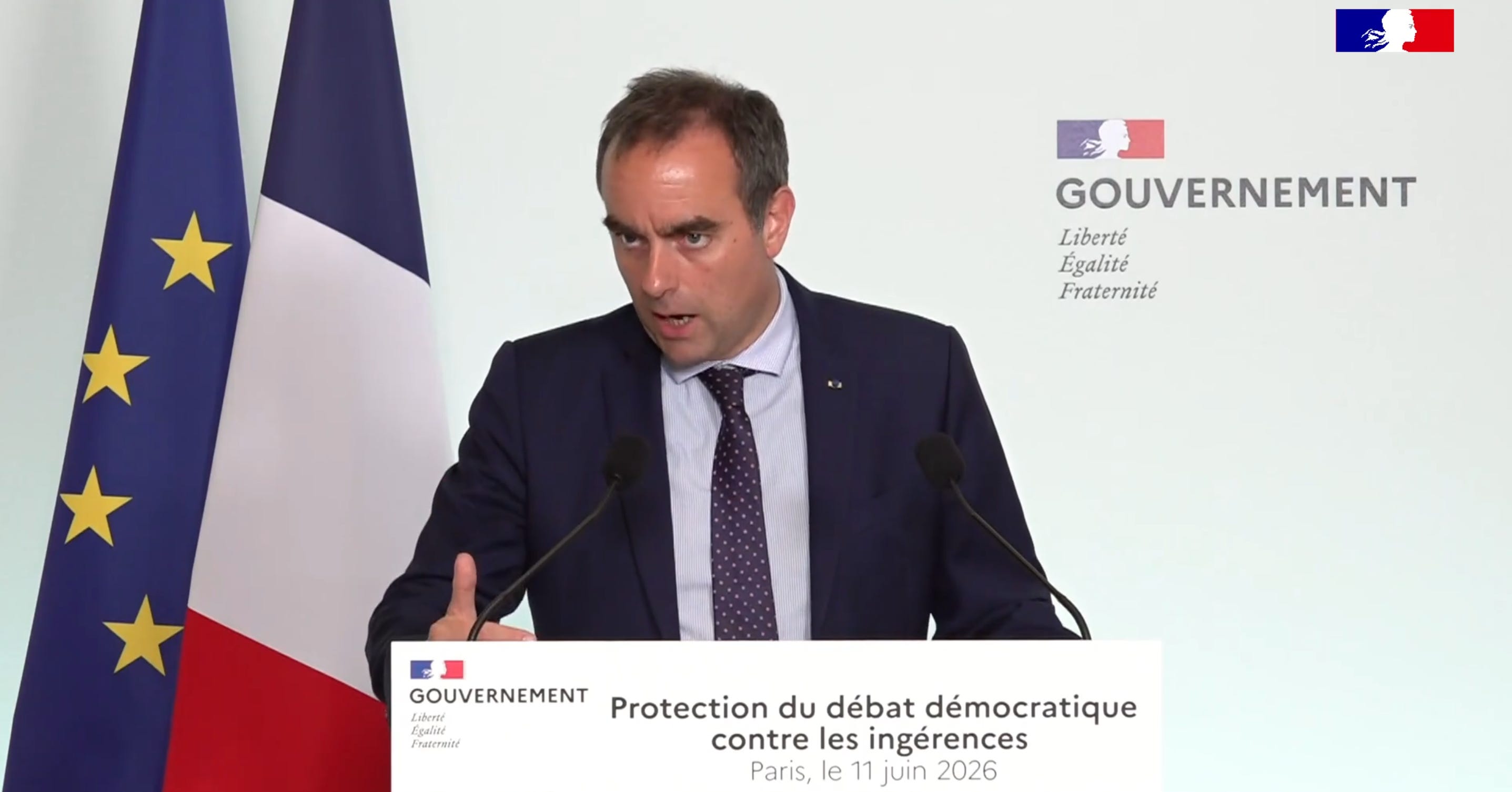
This image is used for illustrative purposes only.
At a Glance
Lecornu warned of “serious looming threats” of foreign interference ahead of the 2027 presidential election, following four documented operations during the 2026 municipal elections — all assessed as limited in impact, but significant in sophistication.
France’s digital watchdog Viginum, created in 2021, detected 25 foreign interference attempts during the 2024 European Parliament and legislative elections — growing in volume, contained in effect.
A legislative package announced by President Emmanuel Macron in April 2026 is currently in preliminary consultation with the Conseil d’État and could reach parliament this fall, featuring new emergency injunctions and tougher criminal penalties.
The facts: four operations, one warning
The prime minister laid out what is known. Four foreign interference operations were documented during France’s 2026 municipal elections. The most striking targeted candidates of La France Insoumise (LFI), France’s hard-left party founded by Jean-Luc Mélenchon — using fabricated rape accusations and forged campaign visuals. Their impact on the vote was limited, but the Paris prosecutor’s office has opened an investigation, and the perpetrator remains unidentified. The operation appears to have originated from a private firm based in Israel, according to French authorities, who say they have asked Israeli officials for both explanations and cooperation.
A separate operation targeted Pierre-Yves Bournazel, a candidate from the centrist Horizons party in Paris. The overall impact of these operations was assessed as “limited,” but their sophistication alarmed security services. France’s top national security official had previously described the municipal elections as a “dress rehearsal.”
Viginum: a recognized shield, an escalating threat
Since its creation in July 2021, Viginum — France’s dedicated service for monitoring and countering foreign digital interference — has built expertise that ranks France among the top three European countries in this field, according to Benoît Grünemwald, a cybersecurity expert at the firm Eset. The service now employs around 60 analysts.
But the threat it monitors is mutating rapidly. Artificial intelligence is reshaping the equation: large language models (LLMs), the engines behind generative AI, now allow any actor — regardless of language skills — to produce high-quality French-language content at scale. In 2024, 25 interference attempts were detected during elections to the European Parliament, the EU’s directly elected legislative body, and France’s own National Assembly — without major effect on public debate. By 2027, the context will be fundamentally different: a wide-open presidential race, with no incumbent on the ballot, in a country politically fractured since the conviction of Marine Le Pen, RN’s longtime leader and three-time presidential candidate, barred from running after being found guilty of misappropriating European Parliament funds.
Xenia Fedorova: the red line
Thursday’s meeting at Matignon also addressed a more delicate question: the growing presence of Xenia Fedorova in media properties owned by conservative billionaire Vincent Bolloré. A former director of RT France — the French-language arm of Russia’s state-controlled broadcaster, banned from the European Union in 2022 — Fedorova now hosts a show within the Bolloré media group. France’s executive considers her a conduit for “Kremlin disinformation.”
European Parliament members have called for sanctions against her, and questions have been raised about the renewal of her ten-year French residency permit in 2024. Lecornu drew a red line: she must not “undermine France’s fundamental national interests.” He nevertheless drew a distinction between “propaganda” — protected under freedom of expression — and interference in the strict operational sense. “If we have to ban everyone who spreads propaganda with ideas we disagree with, we’ll end up banning a lot of people,” he said.
The debate crystallizes a tension no democracy has yet resolved: where does free expression end, and where does organized destabilization begin?
A law in the making — but running out of time
Lecornu outlined plans for the legislation President Emmanuel Macron announced in April 2026 — Macron himself having been targeted in 2017 by the “MacronLeaks” cyberattack, a mass leak of campaign emails days before the first-round runoff, which French officials attributed to actors linked to Russia. The draft is currently in preliminary review by the Conseil d’État, France’s highest administrative court, which vets the legal soundness of government bills before they are submitted to parliament. Proposed measures include new emergency court injunctions that could be triggered during election periods, and tougher penalties for interference operations, currently seen as insufficiently deterrent.
The bill could reach parliament this fall. And the clock is ticking: France’s first presidential round is scheduled for April 2027, leaving barely ten months between any legislative debate and polling day.
“Not a single country in Europe has been spared from electoral interference since 2024.”
— Nathalie Loiseau, Member of the European Parliament, Horizons party
Analysis: a democracy learning to defend itself
What happened at Matignon on Thursday was not routine. Gathering all political parties — including opposition groups — around a working table on foreign interference means normalizing a subject that had long been treated as classified intelligence business. It also means acknowledging a shared vulnerability.
France has a nationally recognized digital defense apparatus. But its legal arsenal lags behind the threat. The conviction of Marine Le Pen — which upended the presidential landscape and deepened existing political fractures — could represent, for foreign actors seeking to destabilize France, a strategic opening: an open race, multiple candidates, an angry electorate primed for activation.
The risk is not that foreign states will choose France’s next president. The risk is that they could make the choice more chaotic, more corrosive, less democratic — without a single spy on the ground, using only servers, algorithms, and a precise understanding of where French society is already broken.
The Bottom Line
The question is no longer whether France will be targeted. It already is. The real question is whether a democracy can legislate fast enough against a threat that reinvents itself faster than laws can be written — and whether Thursday’s transparency offensive by Lecornu is the beginning of genuine democratic resilience, or simply the acknowledgment of a race France may not be able to win.
Sources: France Info · France 24 · AFP