
France failed Lyhanna
In France, 6,000 people paid tribute to Lyhanna, 11. The case exposes the flaws of a justice system that had received prior warnings about the suspect.

At a Glance
Lyhanna, an 11-year-old girl, vanished on May 29 in Fleurance, a small town in southwestern France, after being filmed entering the car of the main suspect, Jérôme Barella, 41, the father of one of her friends. Her body was discovered on June 4 in a grain silo near the town.
Barella had already been the subject of at least four complaints and two official reports for suspected child sexual abuse before the case — none of which had led to prosecution.
French Justice Minister Gérald Darmanin apologized to the family on behalf of the justice system and announced a review of approximately 70,000 pending cases involving children, to be completed by July 14.
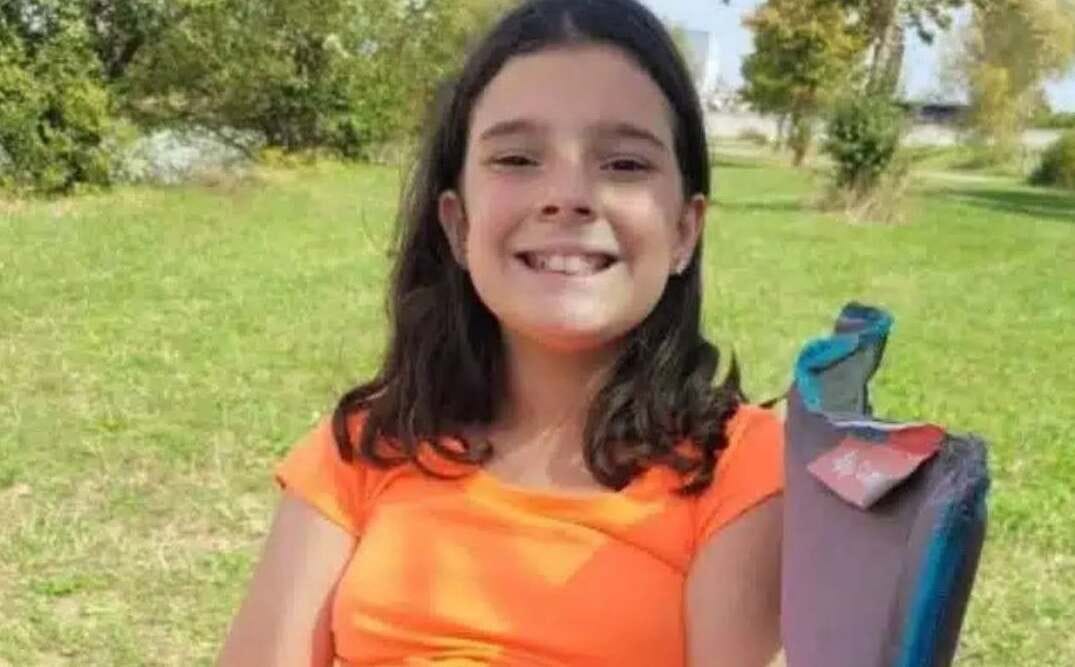
This image is used for illustrative purposes only.
A white march, a nation in mourning
On Sunday, June 7, some 6,000 people gathered in Fleurance, a town of 7,000 in the Gers department of southwestern France, for a white march in memory of Lyhanna. Dressed in white, carrying flowers, they marched behind a banner that read: “Never again. We love you. We miss you.”
Lyhanna’s aunt read aloud a message from the girl’s mother:
“Our whole little world has collapsed.”
And this phrase, addressed directly to her daughter: “Lyhanna, forgive us. Forgive us for what you endured. We love you so much.” [translated from French]
The family had specifically asked to march alongside the mayors and local elected officials who had mobilized during the six days of searching that followed the girl’s disappearance. The procession was secured by 150 officers from the gendarmerie — France’s national police force with jurisdiction over rural areas, roughly equivalent to a state police in the U.S.
A known suspect, ignored warnings
Barella was the father of one of Lyhanna’s friends. The girl had been filmed entering his vehicle on May 29. Her body was recovered on June 4 in an agricultural grain silo near Fleurance.
Barella was placed under formal judicial investigation — a procedural status under French law that opens an investigative phase but does not constitute a criminal charge or conviction — for kidnapping and unlawful confinement. The exact cause of death had not yet been established at the time of the march. When presented before the examining magistrate at the Agen courthouse, he exercised his right to remain silent.
What triggered the national shockwave was less the crime itself than what preceded it: Barella had been the subject of at least four complaints and two official reports for suspected child sexual abuse. Not one had resulted in prosecution. The chain of handling those alerts — involving police, prosecutors, examining judges and child welfare services — is now at the center of a national controversy.
The state on the defensive
The political response was swift and unusually contrite. President Emmanuel Macron called the situation an “unacceptable dysfunction.” Justice Minister Gérald Darmanin went further: on Friday evening, appearing on TF1 — France’s leading private television channel — he issued a public apology “on behalf of the justice system” to Lyhanna’s family, and pledged to sanction magistrates for “professional misconduct.”
On Sunday, Darmanin announced a measure of unprecedented scale: he ordered France’s senior prosecutors — known as procureurs généraux, who oversee the country’s regional court systems — to review “all complaints involving children,” totaling approximately 70,000 cases, by July 14. He also stated he would personally meet with each senior prosecutor before any summer recess — which he ruled out taking until the process was complete.
This sequence — a sitting justice minister’s public apology, a mass review of pending cases, announced disciplinary proceedings — could signal that the failures exposed by the Lyhanna case are not isolated but structural, though such a conclusion cannot be formally established at this stage.
The mechanics of a systemic failure
France, like most European democracies, operates a chronically overstretched judicial system. Criminal courts process tens of thousands of cases each year with staffing that has not grown proportionally. In that context, child sexual abuse complaints — often based on testimony that is difficult to substantiate in legal terms — can end up in long processing queues or handled without adequate human resources.
Coordination between actors is a second structural bottleneck. In France, child protection falls under the responsibility of conseils départementaux — elected county councils roughly equivalent to county governments in the U.S. — whose practices vary widely across France’s 101 departments. This institutional fragmentation can create blind spots: each actor holds a piece of the information picture, with no unified system to aggregate its meaning.
In Montestruc-sur-Gers, where the suspect lives, the village entrance sign was covered with a sheet bearing a spray-painted message calling for the death penalty for child abusers. That reaction — understandable in its emotional intensity — points to deep public frustration with a justice system perceived as ineffective. It should not, however, obscure the core issue: what failed here was not the severity of applicable sentences but the handling of prior warnings.
The Bottom Line
Lyhanna’s death raises a question that democratic societies in Europe — and beyond — struggle to answer: how does a state governed by law protect its most vulnerable members when warnings exist but the mechanisms to act on them break down? The review of 70,000 cases announced by the justice minister is an emergency response. It will prove insufficient unless it is accompanied by structural reform of how France reports, coordinates, and processes alerts of violence against children. The real question for the months ahead: is the French system prepared to reform itself in depth — or will this mobilization, too, go unanswered?
Sources: Euronews · RFI · AFP