
France bars Israeli offensive weapons from Eurosatory 2026
France limits Israeli firms at Eurosatory 2026 to air defense systems only — the latest episode in a two-year conflict between Paris, Tel Aviv, and the arms trade.

Two weeks before the world’s largest land defense trade show opens outside Paris, France has drawn a sharp line: Israeli defense companies may attend — but only if they leave their offensive weapons systems at home.
Following a French government decision communicated June 1, COGES Events — the Paris-based organizer of Eurosatory — confirmed that Israeli exhibitors are restricted to presenting ballistic missile defense and air defense systems only. All offensive equipment is barred. Jerusalem responded immediately, with Israel’s Defense Ministry calling the move “shameful” and accusing France of discriminatory treatment not applied to any other participating nation.
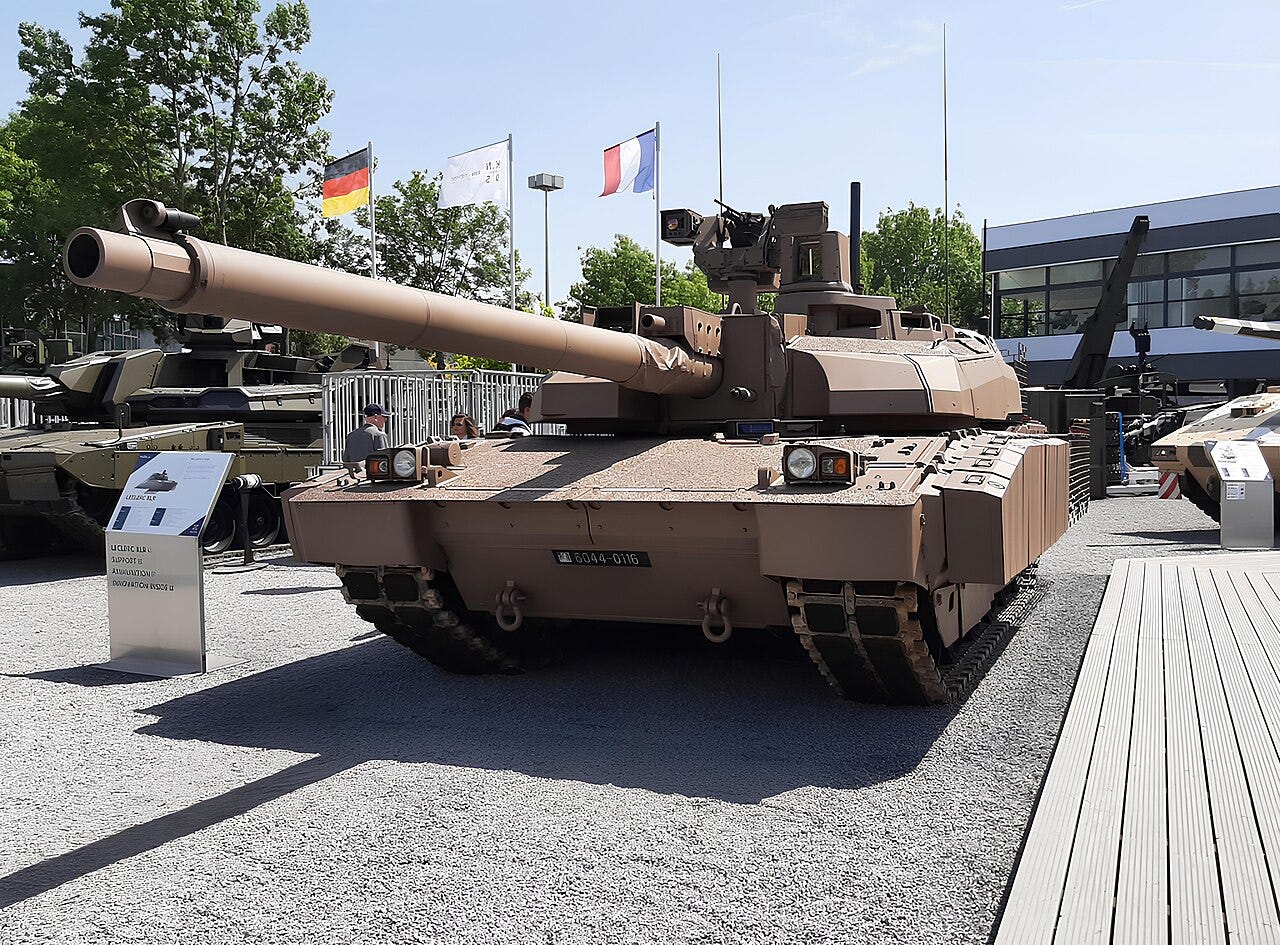
This image is used for illustrative purposes only.
At a Glance
France will allow Israeli defense companies to exhibit at Eurosatory 2026 (June 15–19, Paris Nord Villepinte) — but only their air defense and anti-missile systems. Offensive weapons are excluded by government order.
Israel’s Defense Ministry condemned the decision as “shameful” and politically motivated, arguing that no comparable restrictions are placed on other countries exhibiting at the show.
The move is the latest in a recurring pattern: total exclusion of Israeli firms from Eurosatory 2024, five Israeli stands shuttered at the Paris Air Show in June 2025 — each time, the same political balancing act between Gaza diplomacy and the interests of France’s own defense industry.
A pattern two years in the making
Eurosatory 2026 is far from the first chapter in this story. Since Israel launched its military campaign in Gaza following Hamas’s October 7, 2023 attacks — attacks that killed approximately 1,200 people in Israel and triggered a conflict that has killed tens of thousands of Palestinians — every major French defense trade show has become a diplomatic flashpoint.
In May 2024, the French government banned all Israeli defense companies from Eurosatory 2024, citing Israel’s military operation in Rafah, in southern Gaza. A commercial court in Paris initially overturned the ban, but a court in Bobigny — a suburb north of the capital — reinstated it, and ultimately went further, ordering organizers to prevent any Israeli defense industry representatives from entering the venue under any circumstances. The following year, at the Paris Air Show — the world’s largest aviation trade event — five Israeli company stands, including those of Israel Aerospace Industries (IAI) and Rafael Advanced Defense Systems, were enclosed behind large black panels on the show’s opening day after they were found to be displaying offensive weapons in violation of conditions set by the French government.
The 2026 decision represents a middle path: not total exclusion, but participation under strict conditions. Israel’s Defense Ministry rejected the framing, stating that France had also refused to allow Israeli government representatives to attend the show and had denied Israel an official national pavilion — making the participation not merely restricted, but effectively unofficial.
The line France is drawing — and why it matters
The offensive-versus-defensive distinction Paris has chosen carries both practical logic and political weight. By permitting Israeli air defense systems — technologies that protect civilian populations from missiles and drones — while banning offensive platforms, France avoids a complete break with Israel’s defense industry while projecting a clear signal on Gaza. It also sidesteps the legal vulnerability that came with the 2024 total ban, which courts found went too far.
But the line is harder to hold than it appears. Israel’s Defense Ministry argued that its offensive systems have demonstrated exceptional precision and effectiveness, and that their exclusion is driven as much by French commercial self-interest as by humanitarian concerns — a charge the French government has not publicly addressed. Critics of France’s policy have made a similar argument: restricting Israeli offensive weapons from a French trade show does nothing to reduce their operational use, and may primarily serve to manage French domestic political pressure rather than advance any coherent arms policy.
Why this matters beyond Paris
Eurosatory is not a French trade show that happens to attract foreign companies. It is, by visitor count and exhibitor scope, one of the two or three most important land and air-land defense exhibitions in the world. The 2026 edition is expected to draw more than 2,000 exhibitors from over 60 countries, with hundreds of official delegations and some 100,000 professional visitors.
France’s repeated use of the event as a diplomatic instrument — issuing restrictions through administrative decisions rather than legislative frameworks, each contested in court and resolved case by case — raises a broader question about the show’s standing. For foreign defense companies and government delegations, predictability matters.
An exhibition where a country’s participation terms can shift in the two weeks before opening is an exhibition whose reliability as neutral commercial ground is being tested.
Several European countries have restricted or suspended arms export licenses to Israel since the Gaza conflict began, suggesting this is not a uniquely French position. What distinguishes France’s approach is its choice to signal policy through trade show access rather than through formal export controls — a method that is more visible but also less legally durable.
The bottom line
France has found a formula that avoids a full diplomatic rupture with Israel and a third consecutive court battle — but it has not found a doctrine. The same political calculation that closes an offensive weapons stand at Villepinte in June 2026 leaves French arms export policy toward Israel formally unchanged. The real question is whether Europe will eventually build a coherent, legally grounded framework for arms sales to countries engaged in active conflicts — or continue managing the issue exhibition by exhibition, in temporary decisions that satisfy no one and resolve nothing.
Sources: France 24 · AFP · i24News · French Ministry of Defense (defense.gouv.fr)