
France bans CBD food products
A European rule ignored for seven years is now being enforced, upending a market of 2,500 specialty stores and 1,200 hemp farmers overnight.

At a Glance
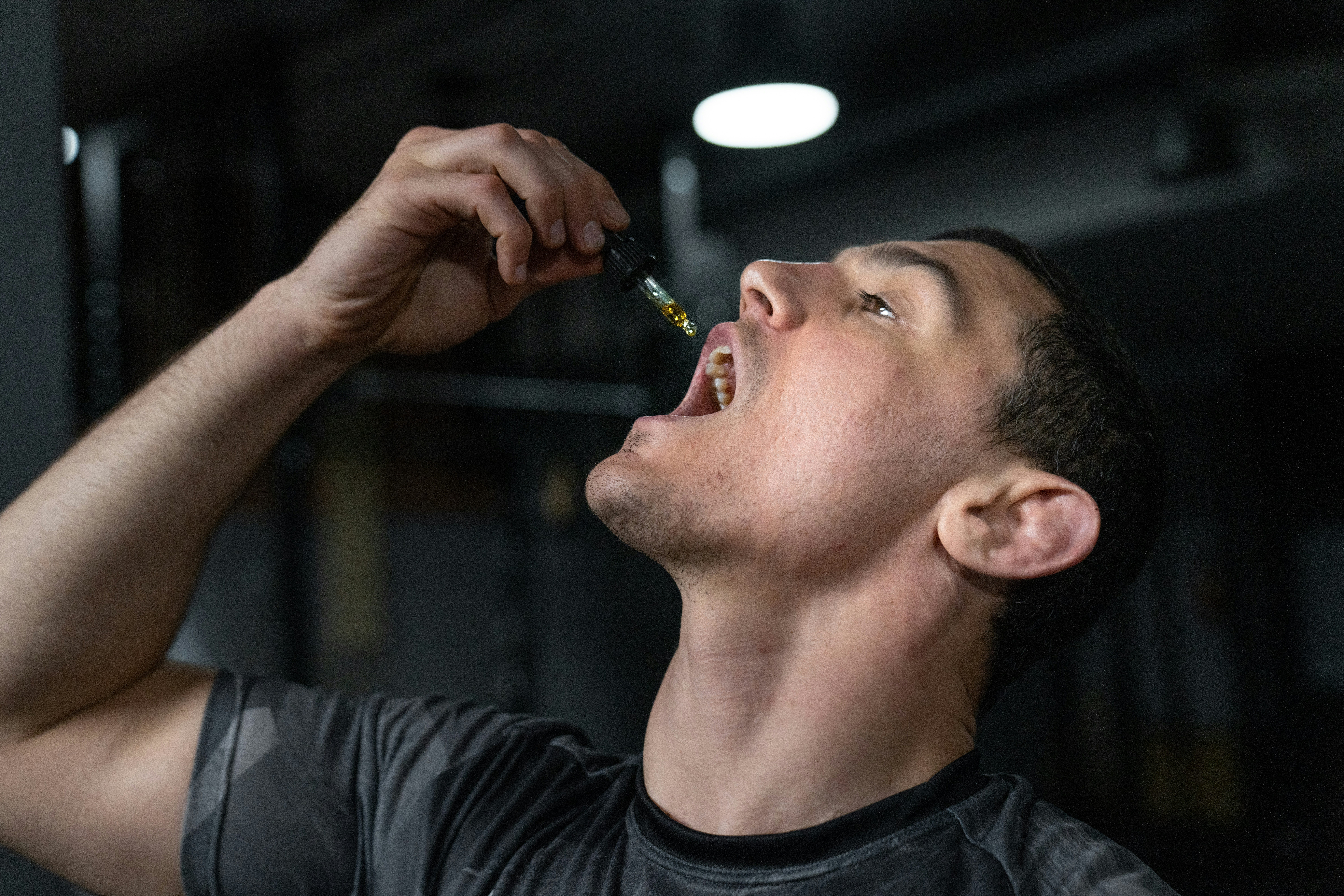
As of May 15, 2026, all food products containing CBD — sublingual oils, herbal teas, gummies, chocolates, capsules — have been pulled from shelves in France, as none have ever received EU authorization.
The ban applies an existing EU framework, the Novel Food regulation, that has been on the books since 2015 but went unenforced for seven years.
Flowers, resins, e-liquids, and cosmetics containing CBD remain legal; only ingested products are affected.
Seven years of tolerance, one brutal deadline
This is not a new law. It is the end of a regulatory fiction.
Since January 2019, the European Commission — the EU’s executive arm — has formally classified extracts of Cannabis sativa containing cannabinoids, including cannabidiol (CBD), as “novel foods” under Regulation (EU) 2015/2283. That framework, adopted in 2015, requires that any food ingredient not significantly consumed in the European Union before May 15, 1997 obtain prior authorization from the European Food Safety Authority (EFSA) — the EU’s equivalent of the U.S. Food and Drug Administration — before it can be sold. That authorization has never been granted for ingested CBD.
For seven years, France chose not to enforce this framework, allowing a legally fragile but economically thriving market to take root: more than 2,500 specialty stores, products stocked in herbal shops, pharmacies, and organic food chains, and hemp farmers who saw CBD as a lucrative way to diversify.
On April 15, 2026, the General Directorate for Food (DGAL), the French agriculture ministry’s food safety enforcement arm, summoned the sector’s main trade unions — UIVEC, SPC, Synadiet, and UPCBD — and announced a national inspection plan effective mid-May, with no grace period. By May 15, products had begun disappearing from shelves.
The scientific trigger: EFSA’s February 2026 ruling
The decisive shift came from Brussels, not Paris.
On February 9, 2026, EFSA published a major update to its assessment of CBD as a novel food ingredient. Its findings gave French authorities the technical backing they needed to end the implicit tolerance: the provisional safe daily intake was set at 0.0275 mg of CBD per kilogram of body weight — roughly 2 mg per day for a 150-pound adult. Most products on the market exceeded that threshold by wide margins.
French health agencies had also flagged concerns: according to reports from France’s national drug safety agency (ANSM) and food and environmental safety agency (ANSES), the number of reported intoxications linked to CBD products adulterated with undeclared substances appears to have increased in the months preceding the crackdown, though the full scope of those findings has not been independently confirmed at the time of publication.
The CBD food market’s economic toll
The economic impact is immediate and unevenly distributed.
Food products accounted for roughly half of the revenue of hemp farmers in France’s CBD supply chain, according to France’s public broadcaster. For specialty retailers, industry representatives estimate the proportion is similarly significant — though no independently verified figure is available for the retail segment specifically.
The Union of CBD Professionals (UPCBD) called the move outright irrational, warning that it threatens the survival of numerous specialty shops in city centers across France. The union also disputes the legal interpretation underpinning the DGAL decision, arguing that the EU framework leaves member states discretion they chose not to exercise.
The Confédération Paysanne — France’s third-largest agricultural union, which has been vocal on hemp issues — warned that the ban puts hundreds of producers, diversified farms, and short supply chains (direct farm-to-consumer distribution models) at serious risk.
What remains legal, and why the distinction matters
The ban does not target CBD itself. It targets the absence of regulatory authorization for its ingestion.
What remains fully legal: CBD flowers and resins intended for inhalation or vaporization — whose legal status in France was clarified by a ruling from France’s Council of State, the country’s highest administrative court, reportedly handed down in late 2022, according to sector representatives — as well as topical and cosmetic oils, e-liquids for vaping, creams and balms, and hemp seed-based food products or leaf infusions without flowering tops, which carry a documented history of consumption predating 1997.
The determining factor is not the presence of CBD but the intended use: ingestion or external application.
Analysis — When regulatory gray zones become business models
Several fault lines deserve naming.
Shared accountability. France did not invent the rule it is now enforcing. It chose, for seven years, not to apply it — allowing farmers and entrepreneurs to invest in a market built on shaky legal ground. That implicit tolerance functioned as a de facto government signal: it suggested that authorities had at least tacitly accepted the development of a sector whose regulatory consequences they were not prepared to manage. The abruptness of the enforcement — no grace period, no announced transition support — suggests the decision was driven more by European scientific pressure than by any coherent industry strategy.
A structural asymmetry. The Novel Food authorization pathway remains open. If a manufacturer files a complete dossier and receives EFSA approval, its products could return to market. But that process is lengthy — industry experts put it at anywhere between 18 months and three years — and expensive. The result could be a market restructured in favor of large industrial players capable of absorbing those costs, at the expense of the small producers and short supply chains the Confédération Paysanne represents. Whether that concentration actually materializes remains to be seen, but the structural incentive is real.
A European governance blind spot. The Commission classified CBD as a novel food in 2019 without establishing an emergency procedure or a clear processing timeline for pending authorization dossiers. Seven years later, not a single authorization has been granted. That gap allowed a market worth hundreds of millions of euros across the EU to develop without a solid legal foundation. The question of institutional responsibility for this regulatory limbo has not yet been raised publicly. It should be.
A template other sectors should watch. The pattern — implicit tolerance, economic development, sudden enforcement — is not unique to CBD. Other sectors involving novel substances, from certain dietary supplements to ingredients from regenerative agriculture, operate in comparable gray zones across the EU. France’s CBD crackdown illustrates the cost of reactive rather than proactive regulatory frameworks. For American readers, the parallel is not exact but instructive: the FDA has faced a near-identical standoff over hemp-derived CBD products since the passage of the 2018 Farm Bill legalized hemp cultivation in the United States, leaving the regulatory status of CBD food supplements unresolved for years. Europe’s version of that impasse is now ending — not with clarity, but with an enforcement order.
The bottom line
A sector born in a regulatory vacuum, tolerated by the state, then forced overnight to comply with rules that were always on the books: France’s CBD food ban is less an accident than a diagnostic.
It raises a question European institutions have not yet answered — how to treat markets that grow in the gap between a rule’s adoption and its enforcement. If a Novel Food authorization were eventually granted, who would benefit from the reconstituted market? The same actors as today, or only those who survived the elimination of the smallest players?
Sources: France Info · DGAL (national inspection plan, April 15, 2026) · EFSA (Novel Food CBD scientific opinion, February 9, 2026) · ANSM · ANSES · Regulation (EU) 2015/2283