
EU's €540M fertilizer plan: emergency aid or political cover?
EU pledges €540M to help farmers afford fertilizers. Behind the headline figure, a budget reallocation and a structural dependency that remains unsolved.

On June 12, the European Commission — the EU’s executive arm — announced €540 million to help European farmers buy fertilizers that have become unaffordable since the closure of the Strait of Hormuz in late February 2026. Christophe Hansen, the EU’s Agriculture Commissioner, presented the package as a commitment fulfilled. The number spread quickly: wire services, farm trade publications, public radio. Everyone noted the €540 million figure. Almost no one looked at where the money actually comes from, what conditions apply, and what it fails to address.
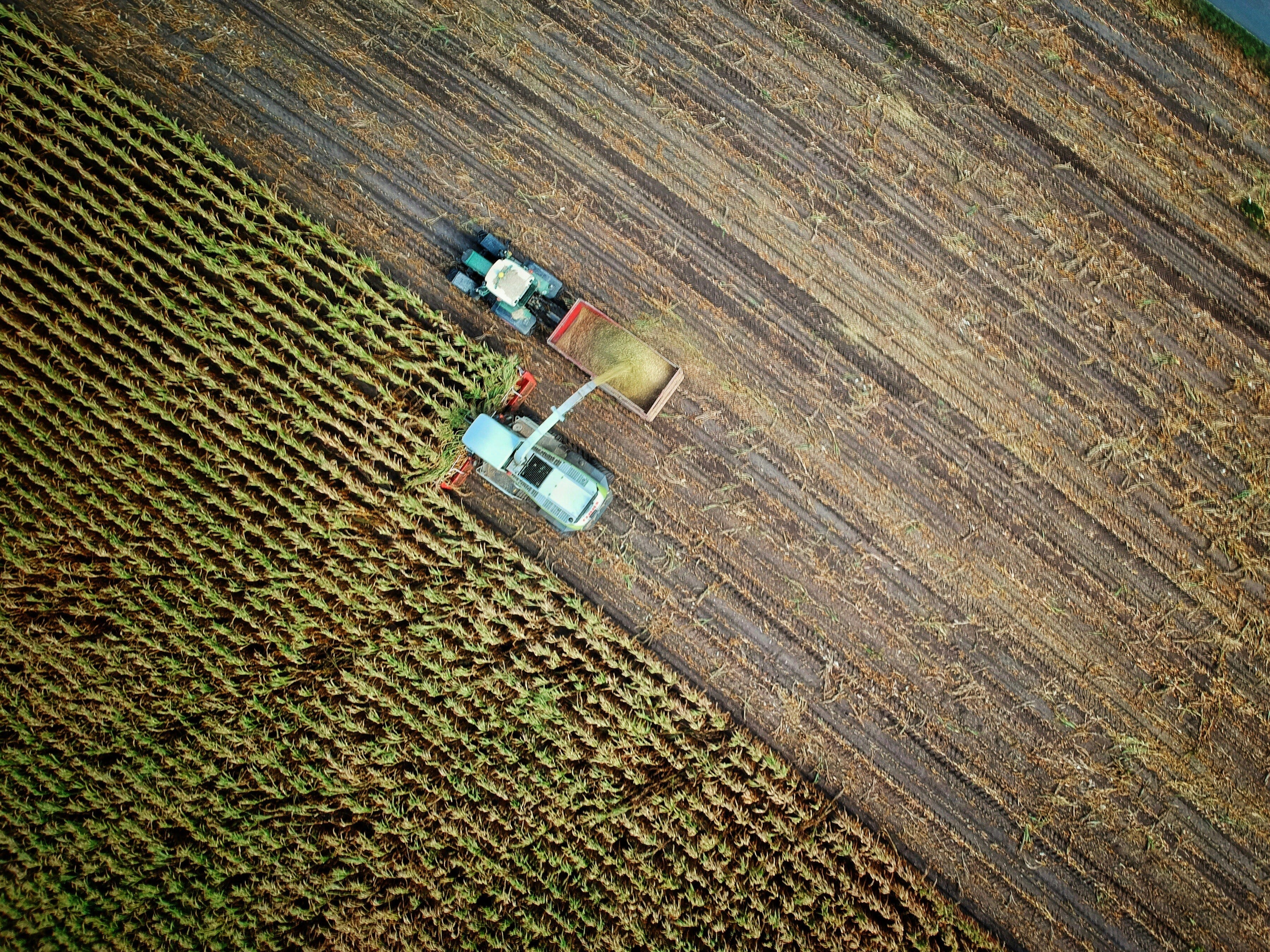
This image is used for illustrative purposes only.
At a Glance
The €540 million is a reallocation of the EU’s existing agricultural crisis reserve — not new European funding.
The headline figure of €1.5 billion in total support is conditional on voluntary co-financing by member states, which are under no obligation to contribute.
The crisis has exposed a structural vulnerability: between 40 and 45% of the fertilizers used by EU member states are imported from outside the bloc — and none of these €540 million will change that.
What the Commission actually proposed
On May 19, at a plenary session of the European Parliament in Strasbourg, the European Commission formally adopted a Fertilizer Action Plan — a response to the price surge triggered by the closure of the Strait of Hormuz on February 28, 2026. Since that date, maritime traffic through this 55-kilometer passage has fallen by 97%. Between 20 and 35% of the world’s fertilizer trade had passed through it, according to various institutional sources.
The plan was received coolly by the farming sector. Copa-Cogeca, the umbrella body representing European agricultural organizations and cooperatives, described it as “a profound disappointment” on the day of its release — signaling that the gap between what farmers expected and what the Commission proposed was significant from the outset.
On June 10, Piotr Serafin, the EU’s Budget Commissioner, told the European Parliament’s budget committee that a financial package would be raised to €500 million. Two days later, on June 12, Hansen made the final figure public: €540 million.
The mechanics are straightforward. The Common Agricultural Policy — the EU’s farm subsidy and support framework, roughly equivalent to the U.S. Farm Bill — includes an annual agricultural crisis reserve built from unused funds from prior budget years. €200 million remained in that reserve. The Commission is adding €300 million in supplementary credits from the EU’s 2026 budget. Total: €540 million.
These funds, normally distributed to member states in October, will be released early. Member states may then add national co-financing of up to 200% of the EU contribution — which would bring the total package to €1.5 billion. The conditional tense is appropriate here: that top-up is not automatic. It depends on the fiscal choices of each of the 27 member states. Final adoption by the European Parliament and member states is expected by late July 2026.
The mechanics beneath the announcement: emergency relief or political signal?
This plan arrives at a precise moment. By the end of 2026, EU member states must agree on the next Multiannual Financial Framework — the seven-year budget that will determine CAP funding levels beyond 2027. The first counter-proposals from the 27 member states, presented in recent days, envisage modest cuts relative to the Commission’s own proposals.
In that context, unlocking hundreds of millions for farmers in the name of geopolitical emergency is not politically neutral. It is a reminder that the CAP — routinely put under pressure in budget negotiations — plays a safety-net role that member states would struggle to replicate alone. The fertilizer plan illustrates exactly the function for which the agricultural crisis reserve was designed.
Hansen himself told Euronews that current geopolitical tensions “add to a serious fertilizer crisis that has been brewing for years.” That framing is not incidental: it positions the 2026 crisis as the aggravation of a long-running trajectory, not a one-off shock — which justifies structural responses, and therefore sustained budgets.
The second measure included in the June 12 package — targeted adjustments to the CAP giving member states greater flexibility in the support they can provide to their farmers — reinforces that logic: it delegates flexibility to national capitals while preserving the European framework.
What the data actually reveals: an ignored dependency, now aggravated
The real question the €540 million plan does not answer is this: how did the EU get here in the first place?
The answer is visible in the import figures. Between 40 and 45% of the fertilizers used by EU member states come from outside the bloc. For nitrogen fertilizers specifically, the EU imports roughly 30% of its needs; for phosphate fertilizers, the figure rises to approximately 70%. The geography of those imports is problematic: the Persian Gulf supplies nearly 43% of global urea exports. When the Strait of Hormuz closes, global markets contract instantly.
This dependency is not new. It was exposed during the 2022 energy crisis, when surging natural gas prices — the primary feedstock for nitrogen fertilizers — forced several European fertilizer plants to reduce or suspend production. Since 2023, plants accounting for 9% of EU ammonia production capacity have closed permanently. The EU’s domestic fertilizer output today remains 10 to 15% below its pre-Ukraine-invasion level.
Since the closure of Hormuz, urea prices have jumped by 70 to 80%. The global fertilizer index reached its highest point since October 2022. Nitrogen fertilizer plants in India and Bangladesh have already slowed output. The Food and Agriculture Organization of the United Nations (FAO) described the situation as “a systemic shock affecting global agri-food systems” — language that goes well beyond the European context.
According to a January 2026 Council of the EU document, fertilizers account for between 15 and 30% of production costs for European grain farmers, depending on the crop and member state. A 70% spike in urea prices, even partially offset by emergency aid, is only manageable by reducing application rates — with a delayed risk to crop yields in the 2026-2027 season that commodity economists are beginning to factor in.
Hansen has floated a longer-term option: encouraging the production of natural fertilizers, particularly farm slurry and recovered nitrogen from manure (known in EU policy language as RENURE), whose use is currently limited under EU nitrate regulations. Implementing that shift would require regulatory changes that the June 12 package does not commit to.
The stakes beyond Europe’s borders
The 2026 fertilizer crisis is the third in four years. Each had a different geography — the war in Ukraine, the European energy crisis, the Middle East conflict — but all revealed the same fragility: global agriculture depends on input supply chains that are geographically concentrated and exposed to geopolitical shocks.
The Persian Gulf, the narrow waterway between Iran and Oman, carried between one-fifth and one-third of the world’s fertilizer trade before the February 28 closure. A single military event was enough to simultaneously destabilize agricultural markets in Europe, South Asia, and parts of Latin America.
For American readers, the closest reference point is the USDA’s emergency relief programs — federal aid packages activated during severe weather events or trade disruptions. The structural difference is significant: the United States is a net exporter of nitrogen fertilizers and a low-cost natural gas producer. Europe imports. That asymmetry explains why the Hormuz crisis hits European farming in ways it does not hit North American agriculture.
What the EU is doing now — drawing down a crisis reserve and allowing member states to co-finance — is the equivalent of drawing on a line of emergency credit for a system that has not resolved its underlying exposure.
Analysis
A 2022 precedent left unresolved
The EU’s response to the 2026 fertilizer crisis repeats the logic of 2022 almost exactly: activate the CAP crisis reserve, extend flexibility to member states, announce the need to reduce dependency. In 2022, domestic production collapsed because of costly natural gas. In 2026, the import pipeline itself is blocked. The symptom differs; the underlying mechanism is identical — a dependency on imported inputs with no structural fix in sight.
Who decides, and why now
The June 12 proposal still needs to be approved by the European Parliament and member states, with a late-July target. That timeline matters: summer harvests begin in July and August. For farmers who need fertilizers for autumn crops, the timeline is workable. For those facing immediate cash-flow pressures on existing crops, it is late. Copa-Cogeca’s reaction to the May plan suggests the farming sector is well aware of this gap.
The 200% co-financing rule also creates a potential inequality across member states. Those with fiscal room — Germany, the Netherlands, France — can amplify the aid. Those under fiscal constraint — Greece, Romania, Bulgaria, whose agricultural sectors are often among the most exposed — may find it difficult to contribute.
A concrete scale
For context: €540 million spread across roughly 9 million farms in the EU amounts to approximately €60 per farm in direct distribution — a rough approximation that does not reflect actual allocation criteria, but suggests the scale of support relative to the scale of the shock.
The real question this €540 million package raises is not budgetary. It is strategic.
The bottom line
The immediate pressure has been managed. The underlying vulnerability has not.
What the June 12 plan does not address is how Europe will reduce its dependency on fertilizers imported from geopolitically volatile regions. Domestic nitrogen fertilizer production remains below pre-Ukraine-invasion capacity, with permanent plant closures accelerating since 2023. EU nitrate regulations constrain the use of organic alternatives. And the next Multiannual Financial Framework — which will determine the CAP’s resources for the next seven years — is being negotiated under pressure to cut.
Does the European Union have the political will to treat food security with the same urgency it has applied to energy security or semiconductor supply chains? For now, the answer remains in the conditional tense.
Sources: Reuters · AFP · France Info · Euronews · French National Assembly (written question no. 13547) · European Commission Fertilizer Action Plan (IP/26/1099, May 19, 2026) · Council of the EU (document 5554/26, January 2026) · Toute l’Europe · France Nature Environnement