
Eurosatory 2026: Europe gears up for a possible clash with Russia

At Villepinte, just north of Paris, the world’s largest defense and security trade show opened this week in an unusual mood: more than 2,000 exhibitors, official delegations from 93 countries, and one question hanging over every pavilion — how close is Europe to an actual confrontation with Russia? For the French army, the answer increasingly comes down to one word: drones.
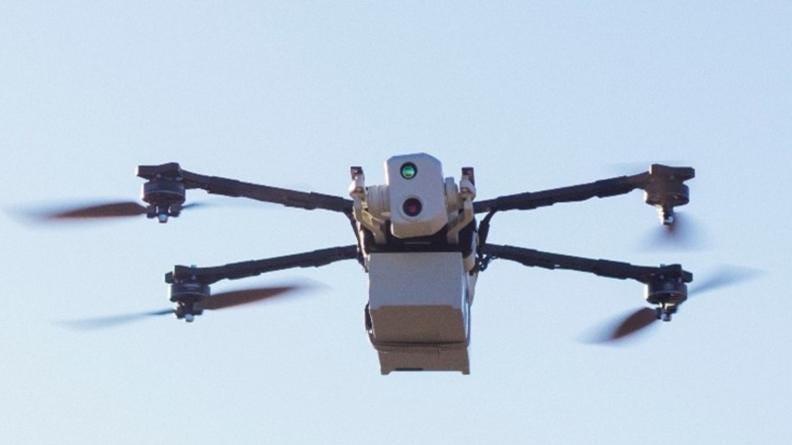
This image is used for illustrative purposes only.
At a Glance
Eurosatory 2026, the biennial defense and security trade show held June 15-19 in Villepinte, near Paris, has drawn more than 2,000 exhibitors and official delegations from 93 countries.
The French Army, which had 4,000 drones at the end of 2025, is acquiring 14,000 more, more than quadrupling its fleet.
The number of Ukrainian companies exhibiting has jumped from ten in 2024 to eighty this year.
A military rethinking its mission
For decades, defense priorities in France, like in most European countries, were not built around fighting a ground war on the continent. That era is ending. At the show, Lieutenant General Philippe de Montenon, commander of France’s Land Forces Command and head of the French Army’s Europe Command, said his troops are now preparing for the kind of fighting Ukrainian forces have waged since Russia’s invasion began. He said the odds of a clash with Russia on Europe’s eastern flank keep rising. “Our priority is to be ready for that shock, starting tonight,” he said.
This is the kind of war the French military leadership is bracing for: extremely costly in ammunition and in lives, and reshaped by three converging forces — the spread of drones, robotics, and digital warfare.
Drones: the battlefield’s star and its biggest headache
Walk the aisles at the fairground and the shift is everywhere: every tank on display now comes paired with its own anti-drone system, and every maneuver has a flying companion. The French Army, which had only 4,000 drones at the end of 2025, is acquiring 14,000 more — a volume officials say is enough to train troops at scale, with every brigade now running a unit dedicated to training drone operators. A live demonstration held the day before the show opened featured a Tundra 2 drone dropping a munition, a vivid preview of what manufacturers are pitching as the new normal in ground combat.
Kyiv, the new reference point for the defense industry
It was on Ukraine’s battlefields that drones became the defining tool of modern war — so much so that it’s now Ukrainian experts, not American ones, who have been called in to help Gulf states facing Iranian drone attacks since the Middle East war broke out in late February. That edge shows up in the numbers at this year’s event: eighty Ukrainian companies are exhibiting, up from ten at the previous edition in 2024. They’re showing off drones, robotic systems, and deep-strike missiles battle-tested against Russian forces. Charles Beaudouin, the show’s commissioner and a former senior French Army official, says Ukraine’s lead is now so wide that European manufacturers have little choice but to copy it directly.
What Villepinte says about Europe in 2026
The industry’s pivot toward drones and counter-drone systems isn’t just a trade-show trend. It reflects a deeper doctrinal shift: after decades focused on expeditionary missions abroad, European militaries are redirecting their efforts toward defending their own territory and their eastern flank. The French Army’s jump to roughly 18,000 drones (4,000 already in service plus the 14,000 now being acquired) could be an early sign of a similar move among other European partners, as “high-intensity” warfare becomes the new planning standard.
The growing footprint of Ukrainian companies raises a bigger industrial question for the European Union. The fact that Europe’s defense industry is leaning so heavily on expertise from a country at war, one that isn’t an EU member, could point to a new — and possibly temporary — kind of technological dependency rather than a one-off partnership. Whether that relationship leads to lasting skills transfer for European manufacturers, or fades once the war ends, remains an open question.
For a reader outside Europe, the picture of a defense show where every tank comes with its own anti-drone shield, and where Gulf states now seek out Ukrainian know-how over American expertise against Iranian drones, points to something bigger: drone warfare, born on Ukraine’s front lines, has become a military playbook exporting itself well beyond Europe.
The Bottom Line
Quadrupling a drone fleet in a year is one thing. Overhauling an entire military — doctrine, training, supply chains — to absorb that kind of scale-up is another.
Eurosatory 2026 puts a number on Europe’s rearmament.
Whether the pace of that industrial buildup can keep up with the speed at which the security picture in the East is said to be deteriorating is the question left hanging over this year’s event.
Sources: Euronews · France 24 (AFP)