
Europe's green economy: why waste management is its most profitable sector
The EU's waste management industry has become the single most lucrative segment of the green economy — a telling paradox as Brussels quietly rolls back the very regulations that fueled its rise.

At a Glance:
Waste management ranked as the EU’s most profitable green sector in 2023, generating roughly twice the output of its two closest rivals combined, with a workforce of close to one million across the bloc.
Green economy employment across the EU grew by more than two million jobs between 2014 and 2023, reaching 5.8 million workers — nearly doubling from 3.6 million a decade earlier.
As the sector continues to expand structurally, Brussels is loosening the regulatory framework that drove much of its growth, exposing the EU to a widening gap between economic momentum and political ambition.
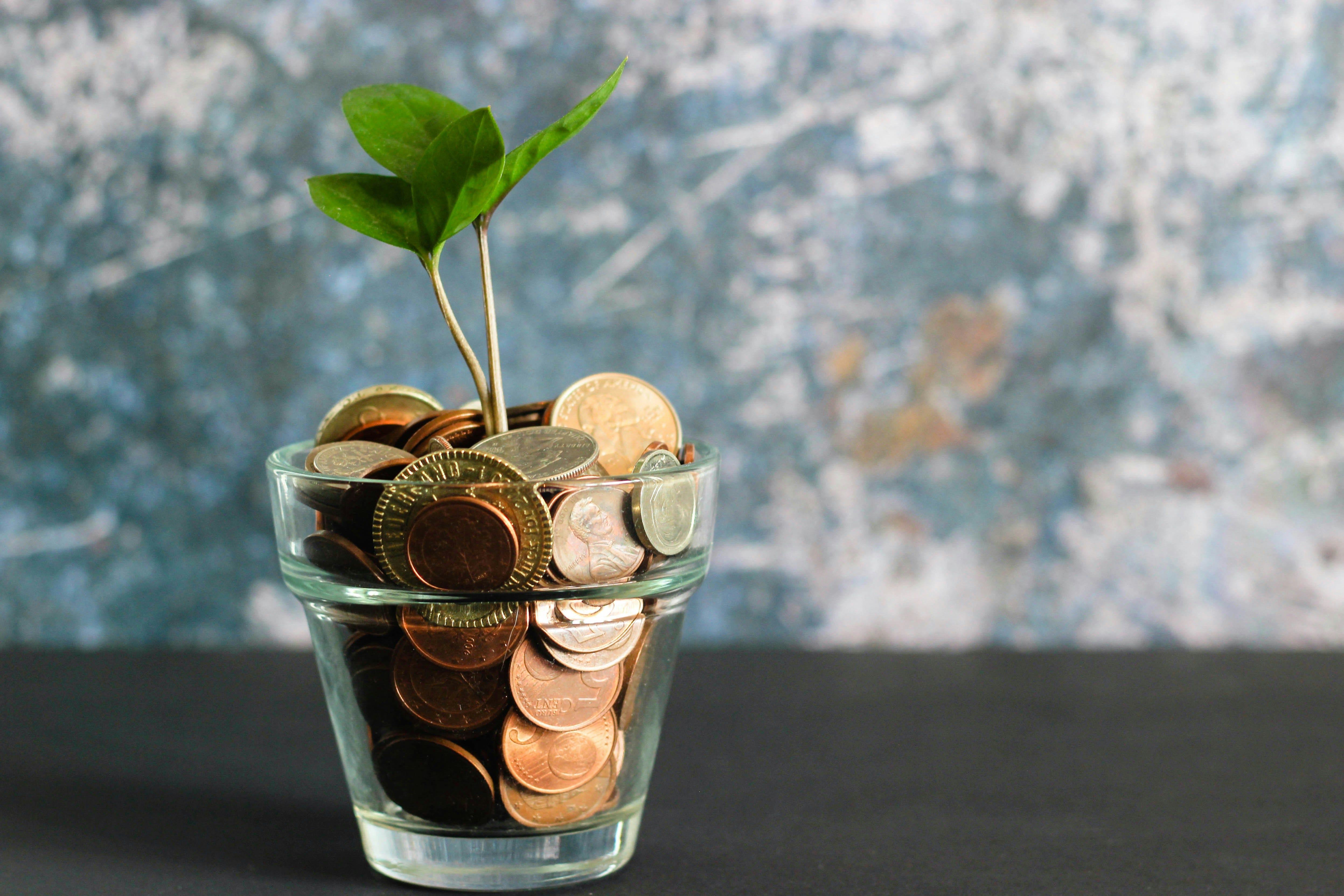
This image is used for illustrative purposes only.
Trash, the unlikely champion of Europe’s green transition
There is a certain irony in what the latest data from Eurostat, the EU’s official statistics agency, reveals: the most profitable segment of the EU’s green economy is not wind power, not solar, not electric vehicles. It’s garbage.
According to Eurostat’s Environmental Goods and Services Sector (EGSS) accounts — which measure output specifically linked to environmental protection and resource management, not the broader economic activity of these industries — waste management ranked as the EU’s top-performing green sector in 2023, generating roughly twice the output of the second and third most lucrative activities: wastewater management and materials recovery. Waste management is also the sector’s largest employer, with close to one million workers across the bloc.
That figure says something more significant than a sector ranking. It suggests that Europe’s green transition, in its most economically successful form, rests first and foremost on physical infrastructure — trucks, sorting facilities, processing plants, supply chains — rather than on breakthrough technologies.
A labor market being quietly reshaped
The EU’s environmental economy as a whole has grown at an average of roughly 8% per year since 2014. In under a decade, member states have nearly doubled their total output in this space, reaching €1.33 billion in 2023 — up from €0.68 billion in 2014, according to Eurostat’s EGSS accounts.
Employment has followed the same curve: 3.6 million jobs in 2014, 5.8 million by 2023, growing at an average of 5.5 percentage points per year. Behind waste management, energy efficiency activities employ more than 800,000 professionals. Renewable energy accounts for 785,000 jobs; soil and groundwater protection for nearly 680,000; and wastewater management for more than half a million workers.
These numbers describe a structural transformation of the European labor market, one that might recall — in scale and duration, though not in mechanism — the shift that industrial economies underwent during the services boom of the 1980s and 1990s. For American and Canadian readers, a partial point of reference could be the growth of the environmental services sector in the United States following the Clean Air Act and the establishment of the Environmental Protection Agency, though the EU’s common regulatory framework — binding across 27 member states — creates a different, and in some ways more fragile, set of incentives.
The Brussels paradox: green economy grows as green policy retreats
This is where the trajectory becomes uncertain. The green economy is expanding. Green policy is not.
In February 2025, the European Commission — the EU’s executive arm, which drafts legislation and oversees its implementation across member states — presented the Omnibus I package, designed to reduce the administrative and regulatory burden on businesses under the European Green Deal, the sweeping decarbonization program launched in 2019 under Commission President Ursula von der Leyen, who initiated the program at the start of her first term. Some analysts welcomed the move as necessary modernization. Others argued it amounted to deregulation rebranded as simplification — a distinction that matters when the rules being simplified are the ones that created market incentives in the first place.
In the same period, Brussels suspended negotiations on the Green Claims Directive, legislation designed to crack down on greenwashing. A proposal to reduce pesticide use was shelved following widespread farmer protests across Europe. The Nature Restoration Law — which set binding targets for rehabilitating degraded ecosystems — was substantially watered down before adoption.
This shift reflects the political realignment that followed the European Parliament elections of June 2024. The Greens lost significant ground; the new majority tilted toward a more cautious stance on environmental obligations, with competitiveness concerns — particularly vis-à-vis the United States and China — dominating the Commission’s new legislative agenda.
The question this raises is not ideological. It is structural and economic: can a green economy continue to grow at pace without the regulatory framework that was its primary driver? In other contexts — the post-Inflation Reduction Act slowdown in U.S. electric vehicle incentives, or the contraction of the British offshore wind sector following subsidy cuts — the answer has often seemed to be no, at least in the short term, though direct comparisons remain difficult given the different market structures involved.
The bottom line
Europe’s green economy has demonstrated that it can generate real value and jobs at scale, without waiting for the technology to mature. But much of that growth was induced by ambitious regulation that Brussels is now gradually unwinding. The real question is not whether the sector survives this course correction — it will. The question is whether the EU will continue to set the rules of the global green market, or whether it will cede that role to Washington and Beijing.
A green economy without green policy can still grow. But it may grow according to rules it did not write.
Sources: Euronews · Eurostat