
Europe's EV revolution that wasn't: how the continent lost the race it set for itself

Europe declared an ambitious 2035 electric vehicle target, significantly loosened it under industry pressure, and failed to build the industrial base that might have made it achievable — handing China a lead that tariffs alone cannot reverse.
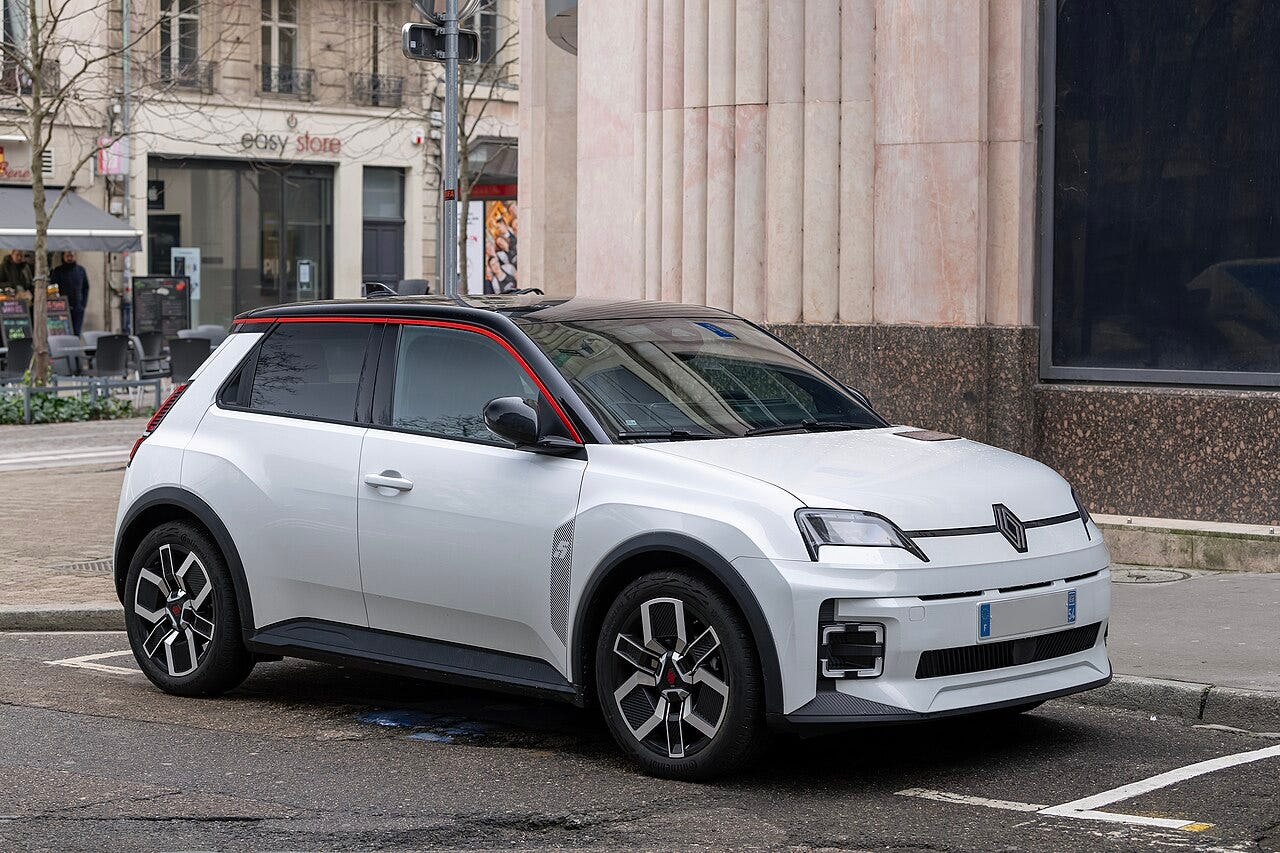
This image is used for illustrative purposes only.
At a Glance
Vehicles manufactured in China accounted for 14% of the European EV market in 2024, up from 2% in 2020 — a figure that includes Western brands built in Chinese factories; Chinese marques proper could represent 11% by end-2024, rising to 20% by 2027, according to Transport & Environment projections. Compensatory tariffs adopted in October 2024 have not reversed that trajectory.
A landmark report commissioned by the European Commission itself spelled out the problem bluntly: the EU pushed EV adoption without simultaneously converting its supply chain — structurally creating the industrial vacuum that China has filled.
By significantly loosening its 2035 all-electric target in December 2025, Brussels removed the main regulatory incentive pushing investment into the transition — a move that could strengthen, rather than weaken, the competitive advantage of the one player already fully positioned in the electric market: China.
In December 2025, the European Commission significantly loosened one of the most emblematic goals of its Green Deal: rather than requiring all new cars sold from 2035 to produce zero emissions at the tailpipe, manufacturers will now be allowed to continue selling a limited proportion of combustion engine and hybrid vehicles, provided they compensate for the resulting CO₂. The target shifted from 100% zero-emission sales to a 90% reduction in fleet emissions against 2021 levels. Stéphane Séjourné, Executive Vice President of the European Commission for Prosperity and Industrial Strategy, presented the revision as “pragmatic,” a concession to the difficulties facing the industry. European automakers, weighed down by stagnant EV sales and competitively priced Chinese rivals, had been lobbying for exactly this flexibility for months.
The move might be read as a reasonable adjustment to complex economic realities. It may well be. But it obscures a more uncomfortable question — one that neither Brussels communiqués nor automaker statements tend to raise directly: how did Europe end up in this position? Not through regulatory overreach — but because regulation and industrial investment were never aligned in the first place.
A sequence nobody puts together
The dominant narrative frames the situation as a trade war between a naïve Europe and an aggressive China. The institutional data tells a different story.
China designated New Energy Vehicles as a strategic industry in its “Made in China 2025” plan, adopted in 2015. The European Battery Alliance — the instrument meant to build a European battery supply chain — was only launched in 2017, already two years structurally behind. The Draghi Report, submitted to the European Commission in September 2024 by former European Central Bank (ECB) President Mario Draghi, stated it without equivocation: the push toward rapid EV market penetration in the EU was never accompanied by a synchronized push to convert the supply chain.
The 2035 target was adopted as binding regulation only in 2023. By then, Chinese battery gigafactories were already running at full capacity. In Europe, meanwhile, a significant share of the battery production capacity planned for 2030 risks being delayed, scaled back, or cancelled outright, according to Transport & Environment (T&E), the Brussels-based clean mobility research organization — with confirmed cancellations already reshaping the investment landscape. The Swedish battery startup Northvolt went bankrupt in late 2024. The British Britishvolt had preceded it. France’s ACC — Automotive Cells Company — on which Stellantis and other European automakers depend for battery supply, captured the mood with brutal clarity:
“The medium-term action plan reassures us. But to benefit from it, we’ll need to have survived long enough to get there.” [translated from French]
This is not a story of a trade war lost. It is a story of a structural misalignment between regulatory ambition and industrial investment.
What the data actually shows
The compensatory tariffs imposed in October 2024 — ranging from 7.8% to 35.3% per manufacturer, on top of the existing 10% base duty — did succeed in reducing Chinese EV imports into Europe. French customs data analyzed by INSEE, France’s national statistics institute, in its March 2025 economic note confirmed a significant contraction in Chinese EV imports across the second half of 2024.
What the same report highlights — and what mainstream coverage largely missed — is that the contraction in Chinese imports did not benefit domestic production. European EV manufacturing did not expand to fill the gap. The space vacated by Chinese imports was partly absorbed by weaker overall demand, not by additional European-made vehicles. Tariffs slowed Chinese progress; they did not create European competitiveness.
It is also worth separating two realities that aggregate figures tend to conflate. The 14% figure for EVs manufactured in China encompasses vehicles from Western brands — BMW, Tesla, Dacia — assembled in Chinese factories alongside genuine Chinese marques. BYD, Geely, SAIC and their peers represent a smaller share, but one that T&E projects could reach 11% of Europe’s EV market by end-2024 and 20% by 2027. That trajectory is continuing despite the tariffs.
The structural problem runs deeper than import volumes. Production costs in Europe are estimated at roughly 50% higher than in China, according to available sectoral analyses. That gap is not closed by customs duties. It is closed — if it can be closed — by years of coordinated investment in battery supply chains, raw material access, and workforce training.
The mechanics of the retreat
The October 2024 tariff vote exposed the EU’s internal fractures more clearly than any official communiqué. Germany, whose premium automakers — BMW and Mercedes among them — manufacture a significant share of their global output in China, abstained. Italy, Slovakia, and several other member states voted against. The tariffs passed by qualified majority, not unanimity — a political fragility that conditions their strategic staying power.
France, for its part, adopted a two-track position: supporting tariffs on one hand, while pushing for “local content” requirements — at least 75% of value added produced in Europe — on the other. That position, presented to the EU Competitiveness Council in May 2025, is coherent on paper. It collides with reality: European automakers themselves now depend heavily on Asian battery suppliers and component manufacturers. Requiring local content risks penalizing European players who, in the short term, have no local alternative to turn to.
The December 2025 revision of the 2035 target follows the same short-term logic. Facing record quarterly losses in 2024, Volkswagen — Europe’s largest automaker — led the industry’s call for “flexibility.” The Commission granted it. In doing so, Brussels removed the primary regulatory constraint that was forcing automakers to accelerate investment in the electric transition. The loosening eases cash flow today. It may defer the structural transformation for years.
The contradictions were not lost on critics across the spectrum. Greenpeace called the decision “bad news.” The Climate Action Network described it as “as symbolically devastating as it is fatal for the European automotive industry, its jobs, and the climate.” But Germany’s automotive federation, the VDA (Verband der Automobilindustrie), also rejected the plan — as insufficient, not as too ambitious. When advocates and opponents of the transition reject the same decision, it rarely signals a balanced compromise.
A problem bigger than cars
Europe’s automotive crisis illustrates a fundamental challenge facing all liberal democracies in industrial transition: long-term regulation does not produce industrial investment if it is not accompanied by coordinated short-term financial support.
The United States drew that lesson earlier. The Inflation Reduction Act (IRA), signed into law in August 2022, mobilized roughly $370 billion in tax incentives and subsidies for the energy transition, a substantial portion targeting the EV and battery supply chain. The mechanism is direct: rather than banning combustion engines, it makes building EVs on American soil financially attractive for manufacturers. The result was a wave of gigafactory investment announcements across the U.S. in the months following passage — including by several European automakers.
Europe has not been without its own instruments. The Important Projects of Common European Interest (IPCEI) framework for batteries has channeled public funding into the supply chain since 2021, and the European Investment Bank has backed several gigafactory projects, including the AESC plant in Douai. But these tools have operated at a different scale and with considerably less coordination than the IRA’s direct subsidies. The EU automotive action plan unveiled in March 2025 adds €1.8 billion for the battery supply chain — significant, but far below the European Commission’s own estimates of what building the 20 to 30 gigafactories needed to meet European demand by 2030 would actually require. The Draghi Report speaks of hundreds of billions; available public instruments mobilize a fraction of that.
Analysis
① The long arc. This is not the first time Europe has lost industrial ground through misalignment between policy ambition and concrete investment. Steel and textiles in the 1980s traced a comparable trajectory: high standards, underinvested industries, and Asian competition filling the gap. The difference with automotive is that the climate stakes make regulatory retreat more costly — not only economically, but in terms of the long-term credibility of European industrial policy.
② Power mechanics. The “legacy” automakers — those with the most to lose in the short term from a rapid transition — lobbied consistently for regulatory relief. It worked. It worked because those companies employ, directly and indirectly, 13.8 million Europeans, according to the Draghi Report — a figure that gives every government pause. But the lobbying for loosening could be read, paradoxically, as an implicit acknowledgment that electric is the only viable long-term path, with incumbents preferring to delay rather than fund the transition now.
③ The citizen’s stake. The 2035 revision has concrete consequences beyond automakers. Households that bought EVs expecting stable resale values supported by growing market adoption may find their calculations disrupted. Workers in the combustion engine supply chain, who had counted on a gradual, state-supported retraining, now face heightened uncertainty. And the 90% fleet emissions reduction target replacing the original 100% zero-emission mandate depends on carbon compensation mechanisms whose real-world credibility has yet to be established.
④ The real question. Can Europe still build a competitive electric automotive industry? Or is it drifting toward a model in which European automakers assemble vehicles using Asian batteries and electronics — while value creation migrates to Shenzhen and Seoul? The question is not rhetorical. The partnerships that Renault, Stellantis, and Volkswagen have struck with CATL, China’s dominant battery manufacturer, BYD, and LG Energy to secure battery supply are drawing a dependency that could become structural if European gigafactories fail to meet their timelines.
The bottom line
Europe still holds real assets: a skilled industrial workforce, a domestic market of 450 million people, and climate ambitions that remain — even after the December 2025 revisions — among the most demanding in the world. The AESC gigafactory in Douai, northern France, which opened in 2025 with European Investment Bank (EIB) financing to supply batteries for the electric Renault 5, shows the supply chain can be built.
But the more important question left open by the decisions of 2024 and 2025 is different: has Europe chosen to win this race — or chosen to lose as little as possible? The two strategies do not look the same, and the time it takes to answer that question may determine the outcome.
Sources: Mario Draghi, “The Future of European Competitiveness” (European Commission, September 2024) · INSEE, Economic Note March 2025 — Chinese vehicle imports · Transport & Environment, analyses 2024–2025 · European Commission, EU Automotive Industry Action Plan (March 2025) · Council of the EU, French note — Competitiveness Council, May 2025 · European Commission, CAFE Regulation revision, December 2025 · Coface, Europe-China automotive competitiveness analysis · European Investment Bank, AESC Douai financing