
Europe's AI dependency trap
The EU's AI gap is widening: American cloud giants and Asian hardware suppliers dominate Europe's tech backbone. A new report warns of a dependency trap.

The warning is blunt, data-driven, and hard to dismiss. While the United States tripled its AI-related imports since 2023 and Asia consolidated its grip on global tech supply chains, Europe’s imports in the same category grew by just 40% over the same period. That gap is not merely a statistic — it reflects a structural fragility that Allianz Trade, one of Europe’s leading credit insurance groups, has now put a name to in a report published in late May 2026: a potential “dependency trap.”
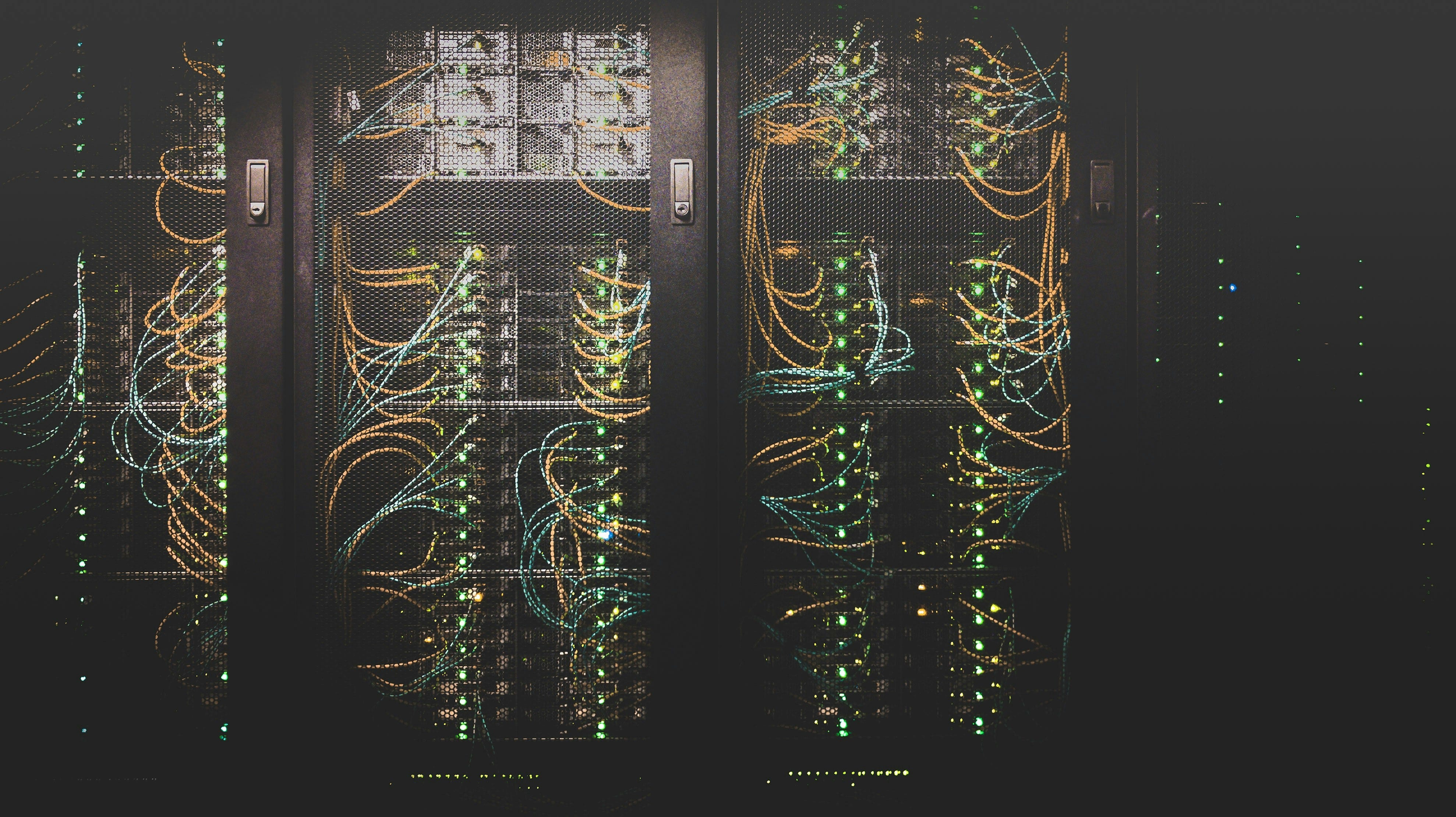
This image is used for illustrative purposes only.
At a Glance
Asia controls 65% of global AI-goods exports, with seven of the world’s top ten AI exporters based in the region; Europe imports more than half of its data center equipment from just five Asian countries: Taiwan, China, South Korea, Malaysia, and Vietnam.
American tech companies capture 80% of Europe’s cloud revenue and control 35% of the continent’s operational computing capacity, with nearly half of the infrastructure pipeline already earmarked for US hyperscalers.
Europe suffers from a “double deficit”: insufficient private capital and fragmented public policy, in contrast to the coordinated investment strategies deployed by both the United States and China.
A market that quadrupled in a decade
The global AI economy has expanded dramatically: from $1 trillion in 2014 to $3.8 trillion in 2025 — roughly €3.3 trillion at current exchange rates. That figure spans the full value chain: semiconductors, data centers, cloud services, enterprise software, and application platforms. It is precisely along this chain that Europe’s absence is most visible.
Asia has established itself as the dominant supplier of physical AI infrastructure, with seven of the world’s top ten AI exporters based there. Europe, by contrast, plays what the Allianz Trade report describes soberly as a “modest” role across the entire value chain. For a North American reader, the analogy is instructive: imagine the United States relying on a foreign oligopoly for most of its servers, cloud software, and graphics processors — the political and economic vulnerability that would create is exactly what Europe faces today.
The American stranglehold on European cloud
The sector-by-sector numbers tell a clear story. American tech giants — Google, Microsoft, Amazon Web Services — capture 80% of Europe’s cloud revenue. They also control 59% of enterprise software revenues in Europe and 73% of the customer relationship management software market. As a result, European players are left competing for the margins of a market whose rules were written elsewhere.
This configuration creates what the report describes as a “kill switch” risk: American providers could, in theory, restrict or cut off access to cloud services hosted outside Europe — whether under regulatory pressure or as a geopolitical instrument. That scenario is hypothetical but not implausible in an era of transatlantic friction, and it is not currently constrained by any binding legal framework.
The issue is not about attributing bad intentions to American companies. It is about recognizing that critical infrastructure — the data and computing power running European hospitals, governments, and businesses — rests on providers whose primary legal obligations run to Washington, not Brussels.
Europe’s double deficit: capital and coherence
What the report identifies as a “double deficit” is worth unpacking. On one side, a shortage of private capital: where large American companies pour hundreds of billions of dollars into AI infrastructure, Europe has struggled to produce comparable venture capital pools or state investment vehicles. On the other, regulatory fragmentation: each EU member state manages its own permitting procedures, grid connection standards, and environmental rules — with no unified European framework.
The practical consequences are tangible. Some European data center projects take four to five years to become operational, largely because aging power grids lack the capacity to absorb the enormous energy demands of new facilities. The report identifies complex permitting processes, land scarcity in urban areas, and environmental regulations as compounding factors. This timeline differential is not trivial: in a sector where deployment speed determines competitive position, it goes a long way toward explaining why American hyperscalers invest their own capital in Europe rather than finding local competitors there.
What Europe still has — and why it may not be enough
The report does not paint an entirely bleak picture. Europe retains genuine competitive advantages in three areas: industrial engineering, process-automation AI, and what might be called “regulatory AI” — solutions developed specifically to comply with the EU AI Act, the world’s first legislation to regulate artificial intelligence by risk category, adopted in 2024 with provisions phasing in through 2027. This last area could prove to be an exportable differentiator, if Europe successfully converts its regulatory burden into a global standard.
Sovereign cloud initiatives — notably in France and Sweden — aim to migrate certain public-sector services away from American platforms toward European-built alternatives. These projects send a positive signal, but their scale remains, for now, far below what the continent’s needs would require.
It is plausible that the combination of the AI Act, emerging sovereign cloud infrastructure, and the industrial ambitions of a handful of member states could gradually build a foundation for greater autonomy. That hypothesis, unconfirmed at this stage, assumes a level of political coordination that Europe has rarely produced at the pace a fast-moving technology sector demands.
Why the infrastructure gap is a sovereignty question
This report raises a question the data frames but does not directly answer: does Europe still have the means to be a strategic player in AI, or is it condemned to being merely a market?
The distinction matters. A market is consumed — it generates revenue for those who supply it. A strategic actor sets the rules, the standards, the terms. Europe showed with the GDPR that it can become a global legislator for the digital economy. It has not yet shown it can become a builder of the infrastructure that economy runs on.
The current dependency is not a technological inevitability — it is the cumulative result of a decade of underinvestment and institutional fragmentation. The United States has turned its private companies into instruments of geopolitical power. China has deployed its state as a strategic investor. Europe has produced regulations. That is necessary. It is not sufficient.
The real threat is not that Google or Amazon will cut off European cloud access tomorrow. It is that in ten years’ time, every productivity gain in a German factory, every medical decision in a Polish hospital, every financial transaction in Paris will run through infrastructure whose rules of engagement were written somewhere else.
The bottom line
Europe has a narrow window to prevent its AI infrastructure gap from becoming permanent. The question is not whether American companies are bad actors — they are not. It is whether a continental democracy can accept that its critical functions rest indefinitely on infrastructure it neither governs nor holds the keys to. The answer will not be found in insurance reports. It will be found in the budgets European governments choose to pass — or not — in the next twelve months.
Sources: Euronews · Allianz Trade